要点速览
- How Are Slot Canyons Formed? It's All About the Water
- Where in the World Can You Find Slot Cyans?
- Slot Canyon vs. Regular Canyon: What's the Actual Difference?
- Getting Ready to Explore: Safety is Your First Priority
- The Art of Exploring Slot Canyons: Tips for an Amazing Experience
- Answering Your Burning Questions About Slot Canyons
You've probably seen the photos. Streaks of light cutting through impossibly narrow corridors of red rock, creating waves of color on smooth, curved walls. Those mesmerizing images often come from places called slot canyons. But if you're asking yourself, "What are slot canyons, really?" you're in the right place. It's more than just a pretty picture. It's a specific, often fragile, and sometimes dangerous type of landscape that captures the imagination of hikers, photographers, and geology nerds alike.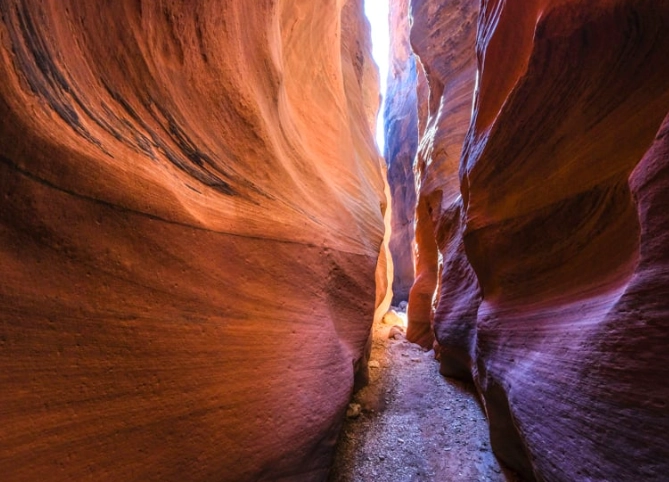
Let's cut through the Instagram filter and get to the heart of it. A slot canyon is a narrow canyon, significantly deeper than it is wide. We're talking tight. Some are so narrow you can touch both walls at the same time, while the walls themselves might soar dozens or even hundreds of feet above you. They're like cracks in the Earth's skin, carved not by a giant's axe, but by the persistent, patient work of water. That's the key difference from the wide, V-shaped valleys you might be used to. These are water's intimate, secret pathways.
The Core Idea: Think of slot canyons as the antithesis of the Grand Canyon. Instead of vast, open vistas, they offer an intensely focused, corridor-like experience. The world shrinks to the width of the crack and the patch of sky far above.
How Are Slot Canyons Formed? It's All About the Water
Understanding what slot canyons are means understanding how they're born. It's not a quick process. We're talking millions of years of very specific geological teamwork.
First, you need the right rock. Soft enough to be carved, but cohesive enough to hold a vertical wall without collapsing. Sandstone is the superstar here, especially in the American Southwest. Its grains are cemented together just right.
Now, imagine a flat plain of this sandstone. A rainstorm hits. The water doesn't soak in evenly; it finds a slight depression, a tiny crack, or a joint in the rock. That's the starting line. The next big storm sends more water down that same path. This water isn't gentle. It picks up sand, pebbles, and even rocks, turning into liquid sandpaper. The abrasive force of this sediment-laden water is what does the real cutting, scouring and sanding the walls deeper and deeper with each flash flood.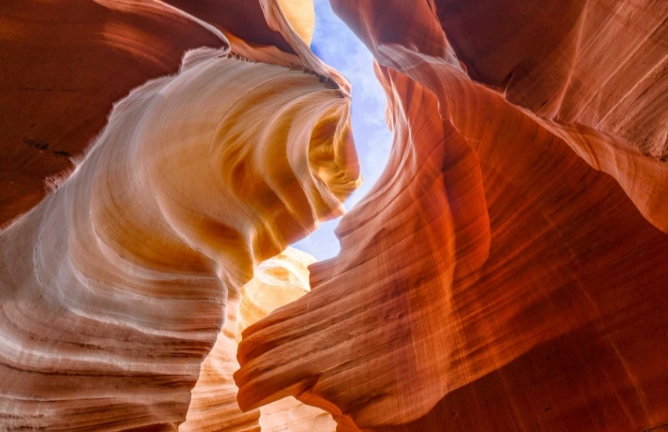
Here's the fascinating part. The force of the water is concentrated in the narrow channel. It doesn't erode the walls outward much; it focuses downward and slightly inward, polishing the walls smooth. Over millennia, the crack becomes a slit, the slit becomes a trench, and the trench becomes a breathtaking, sculpted slot canyon. The U.S. Geological Survey has great resources on the processes of erosion that create such landforms, though they don't focus solely on slots.
Wind plays a minor role in smoothing and finishing the walls, but make no mistake—water is the architect, the contractor, and the interior designer.
The Role of Flash Floods: Creator and Destroyer
This is critical. The very force that creates slot canyons is the number one danger to people inside them. A flash flood in a slot canyon is a terrifying and often deadly event. The canyon acts as a natural funnel, channeling water from a distant rainstorm (you might not even see the clouds!) into a raging torrent that fills the entire passageway in minutes. There's often nowhere to go.
So when we talk about what slot canyons are, we must talk about this dual nature. They are serene, beautiful, and ancient. And they are potential death traps if you don't respect the weather. The National Park Service has a stark and essential page dedicated to flash flood safety that should be required reading.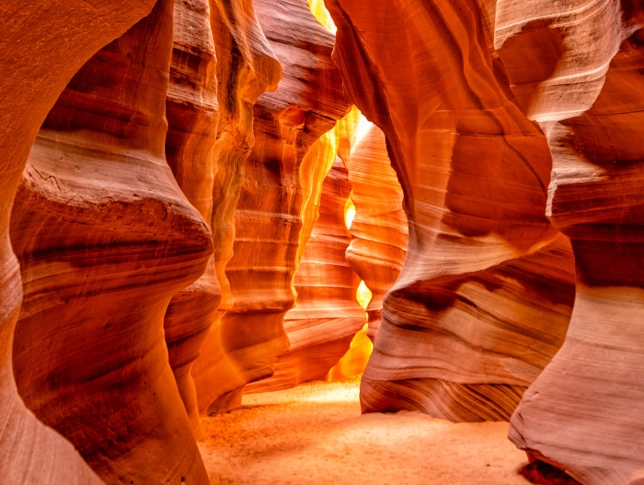
This isn't scare-mongering. It's the single most important piece of information about slot canyon hiking. Checking the weather forecast isn't enough. You need to understand the watershed and be ready to cancel your trip if there's any chance of rain within 50 miles. I've turned around at the trailhead more than once, and it's always the right call, no matter how disappointing.
Where in the World Can You Find Slot Cyans?
While the most famous examples are in the Colorado Plateau of the southwestern United States, they're not exclusive to it. You need the right recipe: the right rock (sandstone, limestone, granite) and a climate with sporadic but intense water flow.
The undisputed king of slot canyons is the American Southwest. Southern Utah, Northern Arizona, and Nevada are littered with them.
- Antelope Canyon (Arizona): The poster child. Its wave-like, flowing walls and famous light beams are iconic. It's also hugely popular and requires a guided tour.
- The Narrows (Zion National Park, Utah): This is hiking *in* a river through a massive slot canyon. An unforgettable experience, but water levels and flood risk dictate everything.
- Buckskin Gulch (Utah/Arizona): Often cited as one of the longest and deepest slot canyons in the world. A serious, remote, and committing multi-day hike.
- Little Wild Horse Canyon (Utah): A fantastic, non-technical beginner-friendly slot. Perfect for getting a feel for what slot canyons are all about.
But they exist elsewhere too. You can find stunning slot canyons in places like:
- Australia: The outback has incredible slots, like those in Karijini National Park.
- Cyprus: The Avakas Gorge is a magnificent limestone slot.
- Canary Islands, Spain: Barranco de las Vacas is a short but stunning example.
The common thread is always water finding its way through susceptible rock over a very, very long time.
Slot Canyon vs. Regular Canyon: What's the Actual Difference?
People throw the word "canyon" around a lot. So what makes a slot canyon special? It's all about proportions and process.
| Feature | Slot Canyon | Typical River Canyon (e.g., Grand Canyon) |
|---|---|---|
| Shape | Extremely narrow, often with parallel vertical walls. Depth is much greater than width. | Wide, V-shaped or stepped walls. Width is significant compared to depth. |
| Primary Carving Force | Focused, abrasive flash flooding. A torrent constrained to a narrow path. | Lateral erosion from a persistent river, plus weathering of the walls. |
| Wall Texture | Often incredibly smooth, polished, and sculpted with flowing curves and potholes. | Rougher, more angular, showing layers of rock and talus slopes. |
| Experience | Intimate, enclosed, corridor-like. Focus is on texture, light, and sound. | Expansive, panoramic. Focus is on vast scale and distant views. |
| Formation Speed | Can form relatively quickly (geologically speaking) in soft rock due to focused energy. | Forms over much longer timescales as the river slowly meanders and cuts down. |
So, while the Grand Canyon is a masterpiece of broad, landscape-scale erosion, a slot canyon is a masterpiece of focused, hydraulic precision. They answer different parts of the question "what are slot canyons?" by showing what they are *not*.
Getting Ready to Explore: Safety is Your First Priority
Okay, so you're intrigued. You want to see one for yourself. Smart. But heading into a slot canyon requires a different mindset than a regular hike. Here’s what you absolutely need to know.
The Non-Negotiable Safety Checklist
Before you even look at a trail map, internalize this list.
- Weather Obsession: Check not just the forecast for the canyon, but for the entire upstream area. Even a blue sky overhead is no guarantee. Use reliable sources like the National Weather Service for detailed forecasts and flash flood potential. If there's a 10% chance of rain, I treat it as a 100% chance of cancellation.
- Tell Someone Your Plan: Detailed plan. Which canyon, which route, when you expect to be out, and who to call if you're not. Cell service is usually zero.
- Know Your Escape Routes: As you hike, constantly look for places where you could climb out if you heard water coming. In many deep slots, these are few and far between, which is why trip selection is key.
- Listen: A distant rumble, a sudden change in wind, debris falling into the creek, or the smell of damp earth can be the only warnings of a flood. If anything feels off, get out.
Personal Rule: I never enter a slot canyon if the weather forecast mentions the words "isolated," "scattered," or "possible" in relation to thunderstorms. It's just not worth the gamble. The silence inside a slot is magical until it's filled with the sound of rushing water.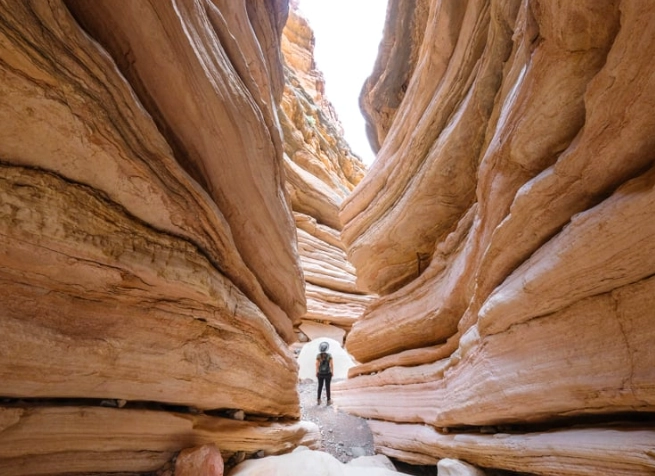
Essential Gear for Slot Canyon Hiking
Your regular daypack needs some upgrades.
- Sturdy, Grippy Footwear: Forget flip-flops. You need shoes with aggressive tread that can handle wet, slippery rock and sand. Approach shoes or hiking shoes are ideal. For canyons with water, neoprene socks are a game-changer.
- No Cotton: Wear synthetic or wool layers. Cotton kills—it gets wet, stays wet, and sucks heat from your body. Even in the desert, slots can be cool and damp.
- Headlamp: Even on a day hike. Some slots twist and turn enough to block sunlight, creating deep shadows. Or you might get delayed.
- Plenty of Water & High-Energy Food: More than you think. Scrambling and navigating use more energy than plain walking.
- Dry Bags: For your phone, camera, keys, and extra layers. You will likely encounter pools or seepage.
- First Aid Kit: Tailored for scrapes, sprains, and potential leg injuries from slips.
- Map & Compass/GPS: Know how to use them. The canyon mouth can look very different on your return.
For technical canyoneering (involving rappels, swims, etc.), this list expands dramatically to include ropes, harnesses, wetsuits, and specialized training. That's a whole different world.
The Art of Exploring Slot Canyons: Tips for an Amazing Experience
You've checked the weather, packed your gear, and found a suitable beginner canyon. Now, how do you make the most of it?
Timing is Everything
The best light in slot canyons is usually midday, when the sun is high enough to send beams directly down into the depths. This is especially true for photogenic spots like Antelope Canyon. However, this is also the most crowded time. For a more solitary experience, aim for early morning or late afternoon, though the light will be more sidelong, creating longer shadows and different colors.
Seasons matter too. Late spring, summer, and early fall are prime times in the Southwest, but that's also monsoon season—the peak of flash flood risk. Winter can be cold, with ice in the shadows, but the flood risk is minimal. There's always a trade-off.
Photography Without the Crowds (or a Pro Camera)
You don't need a $3000 camera to capture the feel of a slot canyon.
- Embrace the Shadows: Don't just point at the light beam. Look for the contrast between bright sandstone and deep blue shadow. Modern phone cameras handle HDR pretty well.
- Look for Details: The swirling patterns in the rock, a lone pebble wedged high on the wall, a patch of moss in a seep. These tell the story as much as the grand shot.
- Slow Down: Let your eyes adjust to the low light. Colors become more saturated. You'll start to see hues of purple, orange, and gold you missed at first.
- Tripod for Long Exposures: If you have one, it lets you capture the silky flow of any water in low light, turning obstacles into features.
Honestly, sometimes the best thing is to put the camera away for ten minutes and just look.
Leave No Trace – It's Crucial Here
Slot canyons are incredibly delicate. The polished walls show every mark.
- Don't Touch the Walls Unnecessarily: The oils from your skin can stain the rock and degrade the patina over time. This is a big one in popular slots.
- Stay on Established Trails/Paths: In the canyon bottom, this usually means walking in the wash. Don't create new social trails on the approaches.
- Pack Out EVERYTHING: This includes apple cores, peanut shells, and used toilet paper. There's no "away" in a slot canyon.
- Respect Wildlife: You might find frogs in pools, lizards on sunny ledges, or swallows nesting in crevices. Give them space.
Answering Your Burning Questions About Slot Canyons
Yes, they can be. The primary danger is flash flooding, as discussed. Secondary dangers include hypothermia (from cold water), falls on slippery rock, getting stuck in narrow sections, and dehydration. Risk is managed through preparation, knowledge, and conservative decision-making. A well-researched trip into a beginner canyon in perfect weather is low-risk. Venturing into a long, technical canyon without the right skills or weather check is extremely high-risk.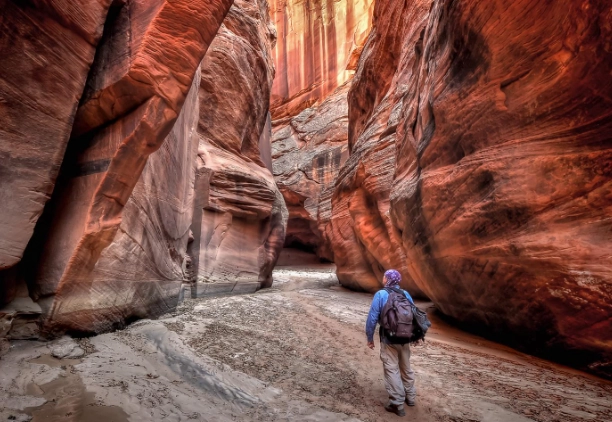
For many of the most famous and accessible slot canyons (Antelope, parts of Buckskin if not permitted), yes, a guide is required. This is for safety, conservation, and to manage impact. For others on public land, it's not required, but for your first few times, joining a guided trip or going with an experienced friend is a brilliant idea. They know the signs, the escape routes, and the rhythms of the land.
It's not recommended, especially if you're new to understanding what slot canyons are and how they behave. The buddy system is critical for safety. If one person gets injured, the other can go for help. That said, experienced canyoners do solo trips, but they have extensive training, carry satellite communicators, and are hyper-vigilant.
In the US, Little Wild Horse Canyon in Utah is the classic answer. It's non-technical (no ropes needed), relatively short as an out-and-back, stunningly beautiful, and has generally good cell service at the trailhead. It gives you the full, wow-factor experience of what slot canyons are with minimal objective danger, provided the weather is clear. Another great starter is the Spooky Gulch & Peek-a-Boo Gulch loop in the same area, though Spooky is *very* narrow and can induce claustrophobia.
Research is key. Guidebooks, reputable hiking websites, and forums will use terms like "rappels," "keeper potholes," "swims," or "downclimbing." If you see these, you need canyoneering skills and gear. If a route description says "non-technical" or "hiking," it generally means you can navigate it with hands and feet on the rock, no ropes. Always confirm the current conditions, as rockfalls or logjams can change a canyon's difficulty.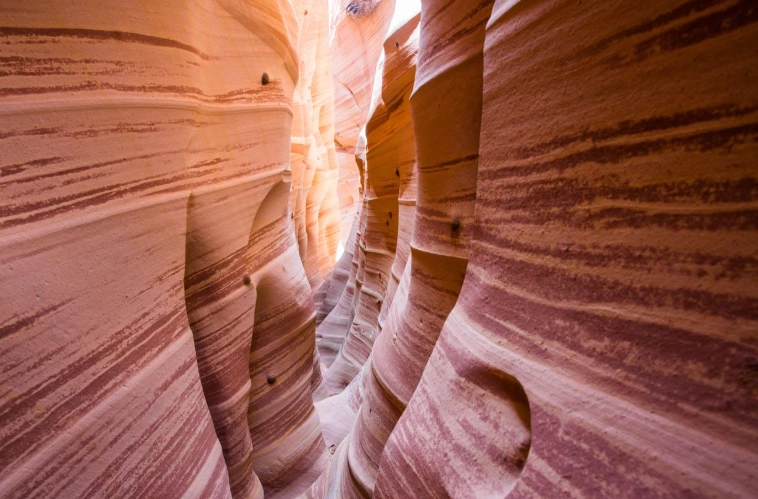
Final Thought: Understanding what slot canyons are is the first step toward appreciating them. They're not just a hike or a photo op. They're a lesson in geology, a test of preparedness, and a reminder of nature's power to create profound beauty in the most unexpected places—the narrow, hidden cracks of the world. Start simple, respect the rules, and you'll unlock one of the most unique adventures on the planet.
Reader Comments