Explore the Painted Desert
- Where Exactly is the Painted Desert and How Do You Get There?
- When to Visit: Chasing the Light (and Avoiding the Weather)
- What You're Actually Looking At: The Science Behind the Beauty
- Top Spots Not to Miss in the Painted Desert National Park
- Hiking and Activities: More Than Just a Drive-Through
- Planning Your Trip: The Nitty-Gritty Details
- Answers to Your Burning Questions (FAQs)
- Final Thoughts: Why This Place Sticks With You
Let's be honest, when you hear "Arizona," your mind probably jumps to the Grand Canyon first. Maybe Sedona's red rocks second. But sprawling across the high desert in the northeastern part of the state is a landscape that feels like it's from another planet—the Painted Desert National Park. It's not a separate national park, which is a common point of confusion, but rather the northern and most famous section of the Petrified Forest National Park. This detail trips up a lot of first-time planners.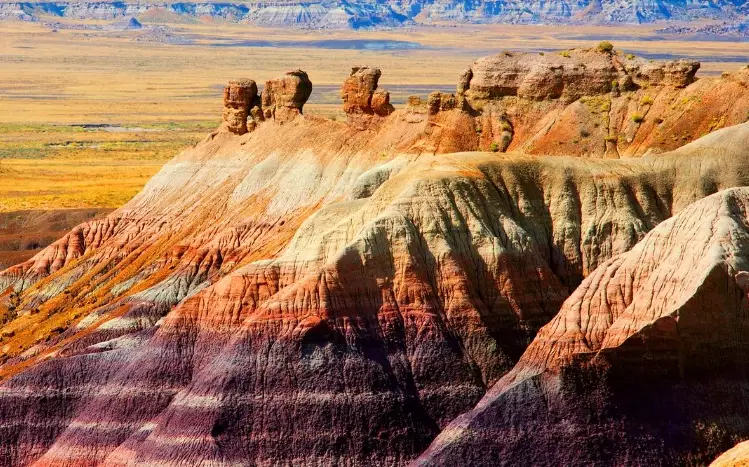
I remember my first visit. I'd seen pictures, sure. But pictures don't prepare you for the scale, or the silence, or the way the colors seem to shift while you're not even looking. It's a subtle place. It doesn't hit you over the head with grandeur like the Grand Canyon. It whispers. And if you lean in and listen, it tells an incredible 200-million-year-old story.
The name "Painted Desert" is perfectly apt. Imagine a vast, rolling badlands canvas where a giant took pastel chalks and swept them across the hills in broad, breathtaking strokes. You get bands of deep lavender, rich reds, soft grays, blues that look like distant smoke, and whites so pure they gleam in the sun. This isn't a static painting, though. Visit at sunrise, midday, and sunset, and you'll swear you're looking at three completely different landscapes. The light here is the real artist.
Where Exactly is the Painted Desert and How Do You Get There?
This is the first practical hurdle. The Painted Desert National Park visitor entrance is located off Interstate 40, about 25 miles east of Holbrook, Arizona. There's no big, sprawling gateway city. Holbrook itself is a classic Route 66 town with a retro vibe—it's your best bet for gas, basic supplies, and maybe a night's sleep in a themed motel. Flagstaff is about a 90-minute drive west and is a larger hub with more amenities.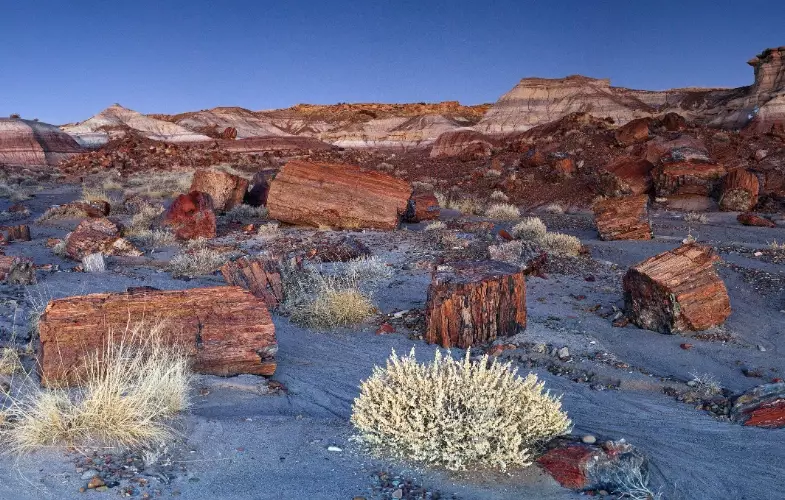
You have two main entry points, both part of the Petrified Forest National Park system:
- The North Entrance (Painted Desert Visitor Center): Right off I-40 at Exit 311. This is where most people start. You get your first iconic views almost immediately.
- The South Entrance (Rainbow Forest Museum): Near US Highway 180. You enter here if you're coming from the south, and you hit the petrified wood logs first, working your way north to the painted desert vistas.
The park is essentially a 28-mile north-south road connecting these two entrances. You can't drive straight through on a through-road; it's a park road with a dead end. So you either do a out-and-back from one entrance, or you drive the whole length, see everything, and exit the other side (which is what I recommend). Just remember, if you leave your car at one entrance, you're not getting back to it without a hitchhike or a second car!
When to Visit: Chasing the Light (and Avoiding the Weather)
Timing is everything here, more than almost any other park I've been to. It's all about the light hitting those colored clays.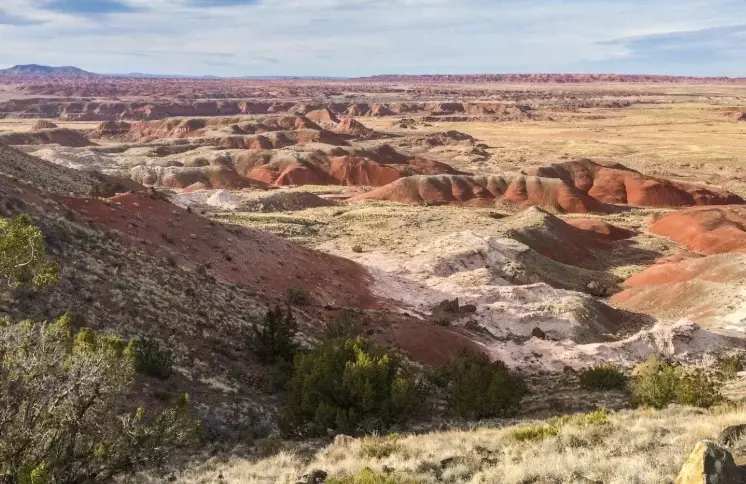
Best Time of Day: Hands down, sunrise and sunset. The low-angle light creates long shadows that define the contours of the badlands and makes the reds and lavenders absolutely sing. Midday sun tends to wash things out, making the colors look flatter. The good news? The park is relatively uncrowded, so you won't be fighting for a spot at the overlooks like you would at more famous sunrise spots.
Best Seasons:
Spring (April-May) and Fall (September-October) are the gold standard. Days are mild, nights are cool, and the light is perfect. Summer (June-August) can be brutally hot, with temperatures regularly soaring above 100°F (38°C). There's very little shade. If you go in summer, you must do all your activities in the early morning or late afternoon and carry gallons of water. Winter (November-March) is cold and windy, but it has its own stark beauty, and you'll often have the place to yourself. Snow dusting the colored hills is a magical sight.
What You're Actually Looking At: The Science Behind the Beauty
It's not just dirt. Those bands of color are layers of sedimentary rock and clay—mostly shale, siltstone, and mudstone—that were deposited by rivers and wind over hundreds of millions of years. The different colors come from different minerals.
- Reds and Oranges: Iron oxides (essentially rust). The more oxygen present when the sediment was laid down, the redder it is.
- Blues, Grays, and Lavenders: These come from manganese oxides and organic carbon (plant matter). These layers often formed in swampier, low-oxygen environments.
- Whites: Typically pure bentonite clay or volcanic ash layers.
Erosion is the sculptor. Wind and water have carved these soft layers into the fantastic mesas, buttes, and gullies you see today. It's a continuous process. The landscape you see now is just a snapshot in geologic time.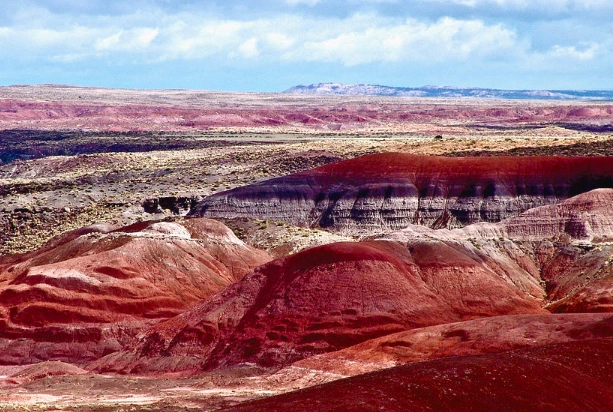
Top Spots Not to Miss in the Painted Desert National Park
The park road is designed for sightseeing, with plenty of pullouts. Don't just rush from one end to the other. Stop, get out, and listen to the wind. Here are the can't-miss spots, working from north to south.
The Painted Desert Visitor Center & Rim Trail
The main visitor center, the Painted Desert Visitor Center, is functional but honestly, it's on the smaller side. Grab your map, use the restroom (important out here!), and ask the rangers any questions. The real prize is right behind it: the start of the Painted Desert Rim Trail. This is an easy, mostly flat 1-mile round trip paved path that follows the edge of the mesa. It gives you your first real, up-close look at the vastness of the Painted Desert National Park landscape. Every turn offers a new composition of color and shadow.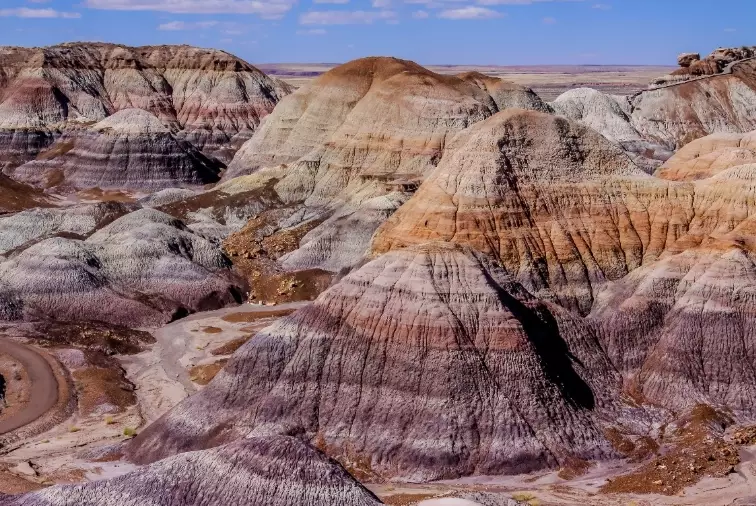
Tawa Point
A short drive from the visitor center, Tawa Point offers one of the most expansive panoramic views in the entire park. You can see for miles across the multi-hued wilderness. This is a prime sunrise location. There's a large parking area and a covered picnic shelter—a rare commodity.
Kachina Point & The Painted Desert Inn
This might be my favorite stop. Kachina Point itself has stunning views. But perched right on the rim is the historic Painted Desert Inn, a National Historic Landmark. It started as a tourist lodge in the 1920s made of petrified wood! The current adobe-style building dates to the 1930s and is a masterpiece of Pueblo Revival architecture. It's not an operating inn anymore, but it's open for you to walk through. The interior has amazing restored murals by Hopi artist Fred Kabotie. Standing in this quiet, historic building looking out over the timeless desert is a powerful experience. Rangers are often inside to tell stories.
Pintado Point
Further along, Pintado Point looks down into a particularly dramatic and deeply eroded canyon. You can really see the layer-cake geology here. The contrast between the bright red top layers and the darker purples below is intense, especially in late afternoon light.
Blue Mesa & The Blue Mesa Trail
This is where the scenery makes a dramatic shift. You leave the reds and enter a world of blue, purple, and gray badlands. The one-way Blue Mesa loop road takes you down into the heart of it. The Blue Mesa Trail is a must-do 1-mile loop hike (moderate due to some steep sections). It's the only trail that actually takes you down into the painted hills. Walking among the blue and purple mounds, you feel completely surrounded by the surreal landscape. The textures of the clay are incredible up close.
As you continue south, the landscape transitions again, leading you into the other half of the park's personality: the Petrified Forest. That's a whole other article, but the giant, crystallized logs are mind-boggling. The two areas together create this incredible narrative of ancient forests, river systems, and volcanic eruptions.
Hiking and Activities: More Than Just a Drive-Through
Most people treat the Painted Desert National Park as a scenic drive, and you can certainly see a lot that way. But to really connect with it, you need to get out of the car.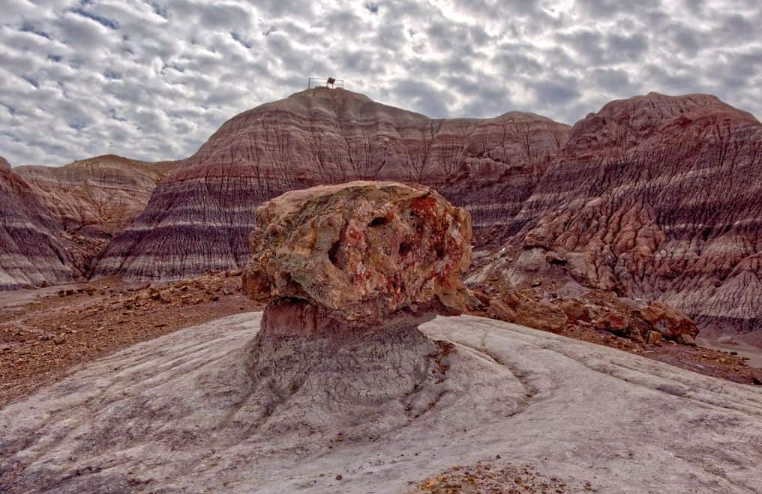
| Trail Name | Location | Length & Difficulty | What Makes It Special |
|---|---|---|---|
| Painted Desert Rim Trail | North (Visitor Center to Kachina Point) | 1.0 mi RT / Easy | Paved, accessible, classic rim views the whole way. |
| Blue Mesa Trail | Central (Blue Mesa Loop) | 1.0 mi Loop / Moderate | The only trail that descends into the painted hills. Otherworldly. |
| Puerco Pueblo Trail | Central/South | 0.3 mi Loop / Easy | Archaeological site—ruins of a 100+ room pueblo from 1250-1380 CE. |
| Newspaper Rock Overlook | Central/South | View from top / Easy | Not a trail, but use the viewfinders to see hundreds of ancient petroglyphs on the rocks below. |
| Wilderness Hiking | Anywhere off-road | Varies / Strenuous | The entire park is open for cross-country hiking. You need a free permit from a visitor center. For experienced navigators only. |
Beyond hiking, this is a paradise for photographers and painters. The light changes so fast you'll be constantly adjusting your settings. Bring a tripod, especially for sunrise/sunset and for the incredible night skies. Speaking of which, the park has very little light pollution. On a clear, moonless night, the Milky Way is stunningly visible arching over the silent, colored desert. It's hauntingly beautiful.
Planning Your Trip: The Nitty-Gritty Details
Let's get practical. A trip to the Painted Desert National Park requires a bit more forethought than your average city park.
- Fees: There's an entrance fee per vehicle, good for 7 days. It's very reasonable. Check the current fees on NPS.gov. America the Beautiful passes are accepted.
- Services: There is no food, gas, or lodging inside the park. The visitor centers have water and restrooms. Fill your tank and pack all the food and water you'll need for the day in Holbrook or Flagstaff.
- Cell Service: It's spotty to non-existent in most of the park. Download your maps and info ahead of time.
- Pets: They are allowed only in developed areas (parking lots, picnic areas) and must be leashed. They are not allowed on any trails, in buildings, or in the wilderness. It's too hot for them in the car, so plan accordingly.
- Leave No Trace: This is critical. Take all trash. Don't climb on fragile formations. And under no circumstances take any petrified wood, rocks, or artifacts. It's not just unethical; it's illegal. The park has check stations, and they do look.
Answers to Your Burning Questions (FAQs)
Final Thoughts: Why This Place Sticks With You
The Painted Desert National Park, as part of the greater Petrified Forest, doesn't always make the "top 10 Arizona" lists. It's quieter, more contemplative. It won't give you an adrenaline rush. What it gives you is a sense of deep time, of the slow, powerful forces that shape our world. It's a lesson in patience, written in layers of colored earth.
You come for the photos of striped hills, but you leave remembering the silence, the vast sky, and the feeling of walking through a painting that's still being painted, one grain of sand at a time. It's a reminder that some of the most beautiful things are found not at the end of a crowded trail, but spread out in plain sight, waiting for you to take the time to see them.
So, is it worth the trip off I-40? Absolutely. Just bring water, your patience, and your sense of wonder.
Reader Comments