Quick Guide
- Getting to Know the San Carlos Lake Boat Ramp
- The #1 Thing That Dictates Your Trip: Lake Levels
- Fishing at San Carlos Lake: Why the Boat Ramp is Your Gateway
- Rules, Permits, and Things You Absolutely Need to Know
- Launching Your Boat: A Step-by-Step Reality Check
- Answering Your Burning Questions (FAQ)
- Pulling It All Together: Your Pre-Trip Checklist
Let's talk about the San Carlos Lake boat ramp. If you're reading this, you're probably trying to figure out if it's worth the drive, what the launch is actually like right now, and whether you'll be able to get your boat in the water without a hassle. I've been there, staring at maps and old forum posts, trying to piece together the real story.
Here's the thing about San Carlos – it's a reservoir with a personality. Its water levels can change dramatically, and that directly affects everything about the boat ramp experience. A great year means easy launching and tons of water to explore. A dry year? Well, it can be a different ball game. This guide is going to cut through the noise and give you the straight facts, current tips, and honest expectations for using the San Carlos Lake boat ramp on your next fishing or boating trip.
Bottom Line Up Front: The main San Carlos Lake boat ramp is a concrete, multi-lane ramp. Its usability is entirely dependent on current lake levels. Always, and I mean always, check the water level before you go. A call to the local marinas or checking official sources can save you a long, disappointing drive.
Getting to Know the San Carlos Lake Boat Ramp
First off, location. The primary boat launch is situated on the eastern side of the lake, near the San Carlos Apache Tribe's recreation areas. It's not some hidden, dirt path (though those exist elsewhere on the lake). It's a developed facility, but its condition is a direct reflection of the lake's health.
I remember pulling up one spring after a good rainy season. The parking lot was decent, the concrete ramp was long and disappeared cleanly into the water – it was perfect. Another time, in a drier spell, the end of the ramp was high and dry, a good 20-foot gap of cracked earth between the concrete and the water's edge. That's the reality of a desert reservoir.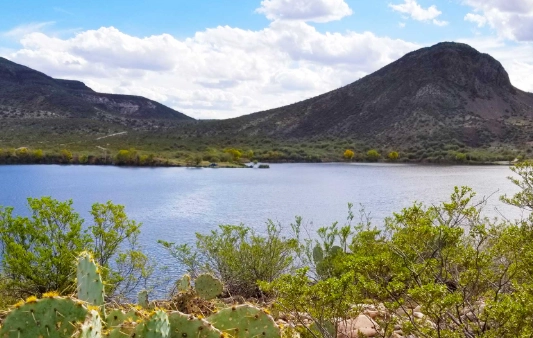
What the Ramp Itself is Like
The main ramp is concrete. Usually two lanes wide. It doesn't have the fancy floating docks you might see at a constant-level lake; it's more utilitarian. When the water is up, it's a straightforward launch. When the water is down, you might be backing your trailer down a steeper incline to reach the water. Four-wheel drive isn't a bad idea for your tow vehicle, just in case the gravel and dirt around the ramp are soft.
Facilities are basic. There's a parking area for vehicles and trailers. Don't expect a pristine, state-of-the-art restroom. Sometimes there's a vault toilet, sometimes not. It's best to come prepared as if there are no services. Pack out what you pack in.
My Personal Tip: If you have a larger boat (say, over 20 feet) or a heavy I/O, be extra cautious when water levels are reported as "low." The angle can get sharp, and submerging your trailer deep enough to float the boat off can be tricky. I've seen people struggle. Smaller aluminum boats and jet skis handle these conditions much better.
The #1 Thing That Dictates Your Trip: Lake Levels
You can't talk about the San Carlos Lake boat ramp without obsessing over water levels. This is the master key. The lake is fed by the Gila River and is managed primarily for irrigation and water storage by the San Carlos Apache Tribe. Recreation, while important, is a secondary use.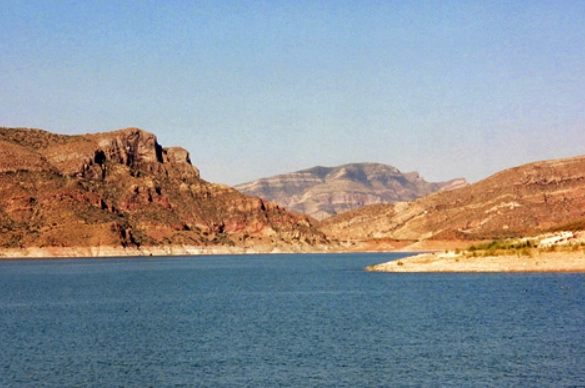
This means the lake can be drawn down significantly for agriculture. A "full" lake is a beautiful sight, but it's not the default state. Before you commit to a trip, this is your most critical research step.
How to Check San Carlos Lake Water Levels (The Right Way)
Don't rely on word of mouth from months ago. You need recent data. Here are the best ways:
- Official San Carlos Apache Tribe Resources: The Tribe often provides the most direct information. A quick web search for their official recreation or natural resources page can yield notices or contact info for current conditions.
- Call a Local Marina: If any concession operations are running (this varies year to year), a quick phone call is worth its weight in gold. They live it every day.
- Boating & Fishing Forums: Arizona-specific forums like those on Arizona Game & Fish Department website often have recent reports from anglers. Look for posts from the last week or two.
I once made the 3-hour drive based on a "the lake is fine" report from two months prior. It wasn't fine. The ramp was barely usable, and the fishing was slow. Lesson painfully learned.
Fishing at San Carlos Lake: Why the Boat Ramp is Your Gateway
Okay, so you've checked the levels, and the San Carlos Lake boat ramp is in business. Why are you going? For most, it's the fishing. And let me tell you, when it's good, it's really good.
San Carlos is renowned for its bass fishing—both largemouth and smallmouth. It also holds catfish, walleye, and crappie. The beauty of having a boat is accessing the coves, points, and submerged structures that shore anglers can only dream of.
| Target Species | Best General Season | Prime Techniques (From a Boat) | Notes & Personal Experience |
|---|---|---|---|
| Largemouth Bass | Spring (Pre-spawn/Spawning) & Fall | Flipping jigs into tules, crankbaits along rocky points, topwater early/late. | Spring can be magical. Found my personal best near a north-end cove accessible only by boat. |
| Smallmouth Bass | Spring & Fall | Drop-shot rigs on deeper rock piles, tubes, and small crankbaits. | They fight like crazy. Look for main-lake structures in 15-25 feet of water when it's warm. |
| Channel & Flathead Catfish | Summer Nights | Anchoring in coves with cut bait or live sunfish. | A fantastic summer night activity. The lake can produce huge flatheads. |
| Walleye | Spring & Early Summer | Trolling crawler harnesses or crankbaits along old river channels. | Hit or miss, but a real trophy when you find them. Early morning trolling can pay off. |
Without a doubt, using the San Carlos Lake boat ramp opens up the entire lake. You can run to the far north end where pressure is lighter, or work the flooded timber areas that hold big bass. Shore fishing has its spots, but the boat is a game-changer here.
"Access to the main San Carlos Lake boat ramp is the single biggest factor for a successful fishing trip there. It transforms the lake from a few accessible banks into thousands of acres of fishable water." – This is a sentiment you'll hear echoed by any regular angler.
Rules, Permits, and Things You Absolutely Need to Know
This isn't your standard state-run reservoir. San Carlos Lake is on the San Carlos Apache Reservation. That means their rules apply. Ignoring this is a surefire way to ruin your trip.
- Permit Required: You must have a valid San Carlos Apache Tribe Recreation Permit. You cannot use a standard Arizona state fishing license here. These permits are available at several locations, often in Peridot or at entry stations near the lake. Do not assume you can buy it at the ramp. Get it beforehand.
- Inspection Alert: Be prepared for a watercraft inspection. The Tribe, like many western agencies, is serious about preventing the spread of invasive quagga and zebra mussels. Your boat needs to be clean, drained, and dry. Having it recently washed with a receipt helps.
- Respect the Land: This is not just a lake; it's a homeland. Be respectful. Stay in designated areas, pack out all trash, and follow all posted rules. The privilege to recreate here can be affected by visitor behavior.
I've seen rangers turn boats away at the inspection point for having even a drop of water in the bilge. They're not kidding. Come clean.
Launching Your Boat: A Step-by-Step Reality Check
Let's walk through a typical launch at the San Carlos Lake boat ramp, assuming decent water levels.
- Prep Before the Ramp: Do all your prep work in the parking area. Load gear, install plugs, attach lines, loosen transom straps. Don't be that person who blocks the ramp for 20 minutes getting ready.
- Back Down: The ramp is usually decently wide. Take your time. If the water is low, you may need to back down further than usual. Have your driver-side window down so your spotter can be heard.
- Launch: Float the boat off. With low water, you might need to give it a slight shove. Please, for the love of all that's good, use a bow line. I watched a boat drift away once because someone thought they'd just hop in. Wind happens.
- Park: Pull your trailer up to the parking area. Park considerately—other people need space too.
- Retrieval: The process in reverse. Try to time your return to avoid the mid-afternoon rush when everyone is leaving. Power-loading (using the engine to drive the boat onto the trailer) is often frowned upon or banned as it erodes the ramp base. Winch it on.
What About Other Boat Ramps on San Carlos Lake?
The main ramp is the big one. But there are other, more primitive access points, especially when the lake is very high and water floods into secondary canyons. These are often dirt or gravel, best suited for smaller, tough boats and 4x4 vehicles. They offer more solitude but come with significant access and road condition risks. For your first few trips, stick to the main San Carlos Lake boat ramp. It's the reliable benchmark.
Answering Your Burning Questions (FAQ)
Here are the questions I had, and that I get asked the most.
Pulling It All Together: Your Pre-Trip Checklist
Let's make this actionable. Here’s your go/no-go list before heading to the San Carlos Lake boat ramp.
- ✅ Verified Lake Level: Checked a source less than a week old confirming sufficient water for launching.
- ✅ San Carlos Apache Tribe Permit: Purchased and in your wallet. Not an AZ state license.
- ✅ Boat Clean, Drained, Dry: Ready for inspection. No mussels, no weeds, no standing water.
- ✅ Vehicle & Trailer Ready: Tires aired, bearings checked, tow vehicle capable of potentially steep ramp recovery.
- ✅ Safety Gear: Life jackets for everyone, throwable, fire extinguisher, etc.—standard stuff, but don't forget it.
- ✅ Supplies: Food, water, sun protection, tools. Services are minimal. A spare tire for your trailer isn't a bad idea either.
- ✅ Realistic Expectations: Understand this is a dynamic, desert lake. The experience is tied to nature's whims. Embrace the adventure.
Look, San Carlos Lake is a special place. It's not a predictable, manicured urban reservoir. That's its charm and its challenge. The San Carlos Lake boat ramp is your portal to that experience. When the water is right, and you're gliding across the glassy surface at sunrise, rod in hand, you'll forget all the planning and checking. It's worth the effort.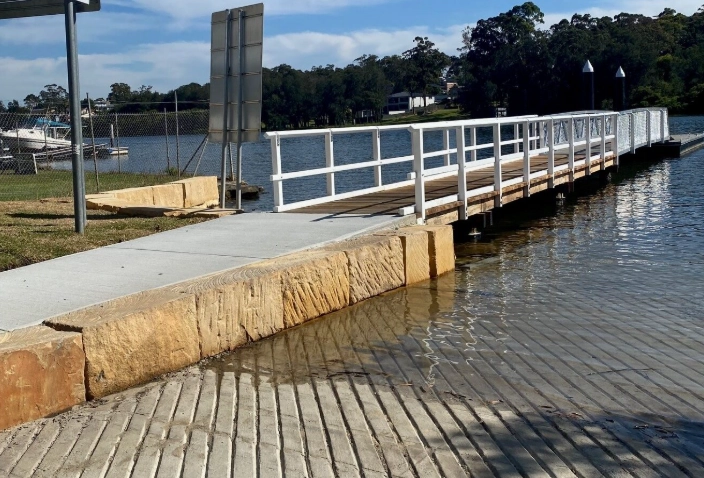
But that effort is key. A little homework on the front end—especially that critical lake level check—is what separates a legendary fishing story from a frustrating story about a long drive. Do the homework, respect the rules, and the San Carlos Lake boat ramp will be the start of a great day, not the end of a bad one.
See you on the water.
Reader Comments