Quick Navigation
- Pinpointing the Location: Coordinates, Nearby Cities, and Geography
- Navigating the Massive Forest: Key Districts and Entry Points
- How to Get There: Driving Directions from Major Hubs
- What You'll Find There: More Than Just a Location
- Practical Info for Your Visit (The Stuff Other Guides Skip)
- Common Questions About Tonto National Forest's Location
Let's be honest. You typed "Where is Tonto National Forest, Arizona?" into Google because a simple pin on a map isn't enough. You're probably planning a trip, maybe dreaming of desert hikes, lake views, or just escaping the Phoenix heat. You need to know more than just coordinates. You need to know what's around it, how to actually get there, and what you're getting yourself into.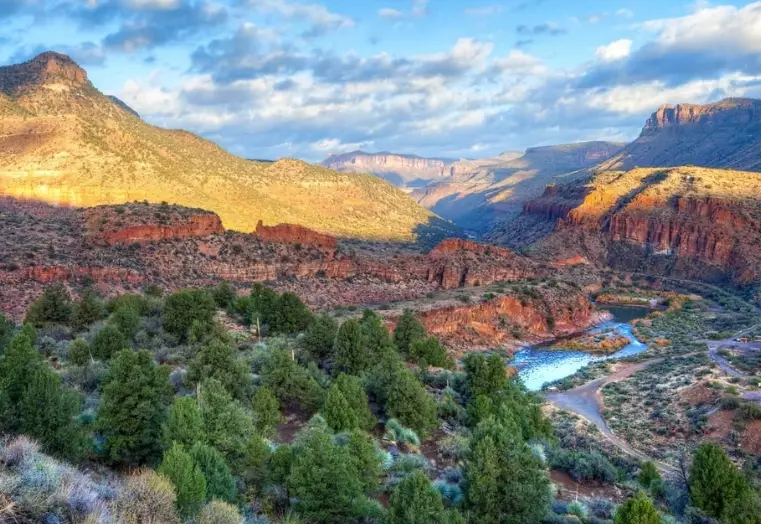
I've been there. The first time I heard about Tonto, I pictured a dense, pine-filled forest tucked away in some remote corner of the state. Boy, was I wrong. The reality of where Tonto National Forest is located is way more interesting, and frankly, more confusing than that.
Where is Tonto National Forest, Arizona? In the simplest terms, it's sprawled across a massive chunk of central Arizona, east and northeast of the Phoenix metro area. But calling it "east of Phoenix" is like calling the ocean "big"—technically true, but utterly useless for navigation. This place is a behemoth, covering nearly 2.9 million acres. That makes it the largest of the six national forests in Arizona and one of the biggest in the entire country.
The Core Answer: Tonto National Forest isn't in one spot. It's a vast, multi-layered region. Its official administrative headquarters is in Phoenix (at 2324 E. McDowell Rd, Phoenix, AZ 85006), but the land itself spans parts of Gila, Maricopa, Yavapai, and Pinal counties. Its boundaries stretch from the outskirts of the Valley of the Sun all the way up to the Mogollon Rim.
Pinpointing the Location: Coordinates, Nearby Cities, and Geography
If you're a purist who needs exact numbers, the rough geographic center of the forest is around 33.8° N, 111.2° W (that's the official spot for geocachers). But that point in the middle of the Mazatzal Wilderness doesn't tell you much, does it?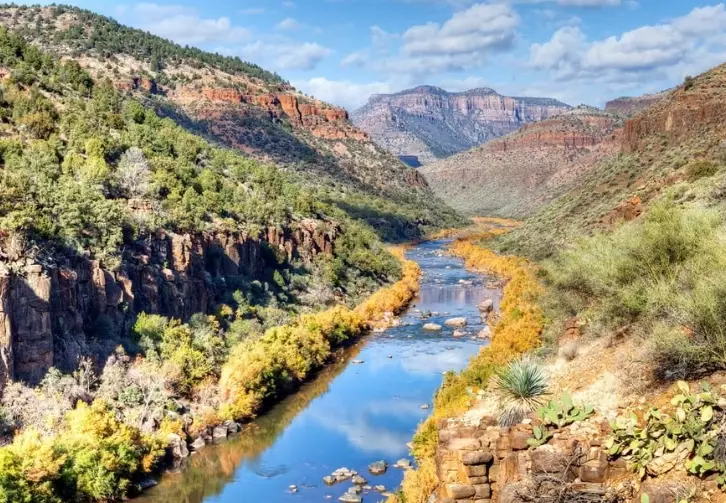
The real usefulness comes from understanding its relationship to the places you know. Figuring out where Tonto National Forest is located in Arizona means looking at its edges.
Major Cities and Towns on Its Doorstep
Tonto's genius is its accessibility. It's not some far-flung wilderness you need a plane to reach. It's right there.
- Phoenix (East Valley): This is the primary gateway. Cities like Scottsdale, Mesa, Apache Junction, and Fountain Hills literally bump up against the forest's western boundary. Drive east on the Apache Trail (State Route 88) or US 60, and you're in the Tonto within 30-45 minutes.
- Payson: Smack dab in the middle of the forest's northern section, Payson is the heart of the Mogollon Rim country. It's surrounded by Tonto on all sides and is a hub for accessing the northern lakes and rim trails.
- Globe/Miami: These historic mining towns sit on the forest's southern flank along US 60. They're your gateways to the southern stretches and the Pinal Mountains.
- Roosevelt Lake Area: The towns of Roosevelt and Tonto Basin are essentially *inside* the forest, centered around the massive Roosevelt Lake, which is wholly encompassed by Tonto lands.
The Lay of the Land: From Saguaros to Pines
This is the part most maps miss. The geography of Tonto National Forest, Arizona isn't uniform. It's a stunning vertical journey.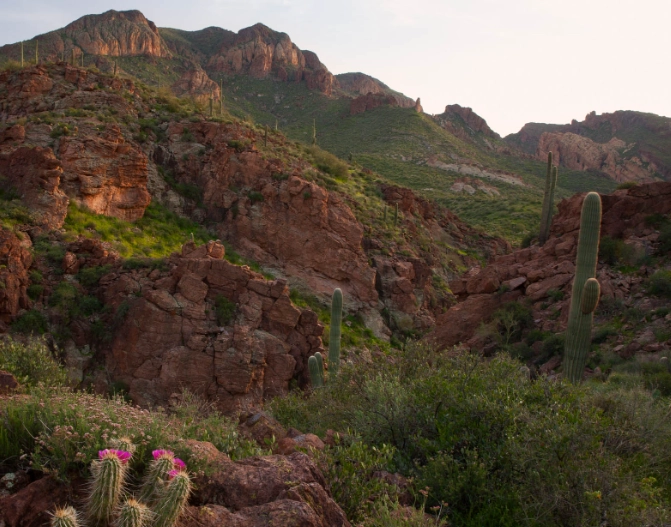
Start in the south and west, near Phoenix. You're in the iconic Sonoran Desert. Think saguaro cacti, rocky bajadas, and scorching heat. This is the Lower Sonoran life zone. As you drive northeast, towards the Mogollon Rim, you climb. The desert scrub gives way to chaparral, then to juniper and pinyon pine woodlands, and finally, up on the Rim itself (around 7,000 feet), you hit ponderosa pine forests. It's like driving from Mexico to Canada in a couple of hours.
This dramatic elevation change (from about 1,300 feet near the Salt River to over 7,900 feet on the Rim) is the single most important thing to understand about the forest's character. It answers two questions at once: where is Tonto National Forest and *what* is it? It's all of these landscapes rolled into one.
Navigating the Massive Forest: Key Districts and Entry Points
Tonto is so big it's managed in six ranger districts. For a visitor, thinking of it in four main chunks is easier. Knowing these helps you navigate the answer to "Where is Tonto National Forest located for the part *I* want to see?"
| Region / District | General Location (From Phoenix) | Key Features & Vibe | Best For |
|---|---|---|---|
| Cave Creek / Tonto Basin (West) | Directly NE, easiest access. | Saguaro Lake, Canyon Lake, Apache Trail, Lower Salt River. Desert beauty with water. | Quick day trips, kayaking, tubing the Salt River, scenic drives. |
| Globe (South) | East on US 60 (~90 mins). | Pinal Mountains, Oak Flat, Devil's Canyon. Rugged, historic, less crowded. | Solitude, mining history, challenging hikes. |
| Payson (North/Central) | North on SR 87 (~90 mins). | Mogollon Rim, lakes (Roosevelt, Apache, Canyon), Tonto Natural Bridge. Lush, high-country pine forests. | Camping, fishing, hiking in cooler temps, scenic rim roads. |
| Mazatzal Wilderness (Northwest) | North on I-17, then east. | Sheer wilderness. The rugged, roadless heart of the forest. The Mazatzal Mountains. | Serious backpacking, peak bagging, true wilderness experience. |
See how that breaks it down? If someone tells you they're "going to Tonto," your next question should be "*Which part?*" The experience near Cave Creek is worlds apart from the experience up near Payson.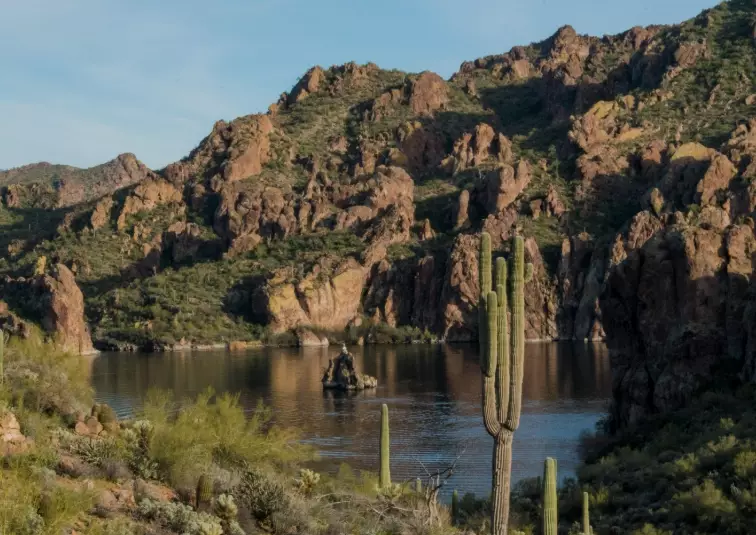
How to Get There: Driving Directions from Major Hubs
Here’s the practical, rubber-meets-the-road info you need. These aren't just generic directions; they're the routes you'll actually use.
From Phoenix Sky Harbor Airport (PHX)
- To the Western Lakes (Saguaro/Canyon): Simplest. Take AZ-202 Loop East to AZ-87 North (Beeline Highway). Exit at Bush Highway for Saguaro Lake or continue to SR 188 for Canyon Lake. You can be on the water in under an hour.
- To the Payson/Rim Country: Take AZ-87 North (the Beeline Highway) all the way. It's a beautiful, winding climb from desert to pines. Payson is about 90 miles north.
- To the Globe District: Take US 60 East straight through Apache Junction and into the mountains. Globe is about 90 miles east.
From Tucson
Head north on I-10 to Oracle Junction (near Casa Grande), then take SR 79 north to Florence Junction. From there, you can pick up US 60 west into the Globe district, or continue north on SR 79 to hit the back side of the Tonto Basin area near Roosevelt Lake. It's a longer, more scenic backdoor entry.
From Flagstaff
You'll come down from the high country. Take I-17 South to the SR 260 exit (near Camp Verde). Head east on SR 260, which climbs onto the Mogollon Rim and drops you right into the Payson district. This is a stunning drive along the rim top.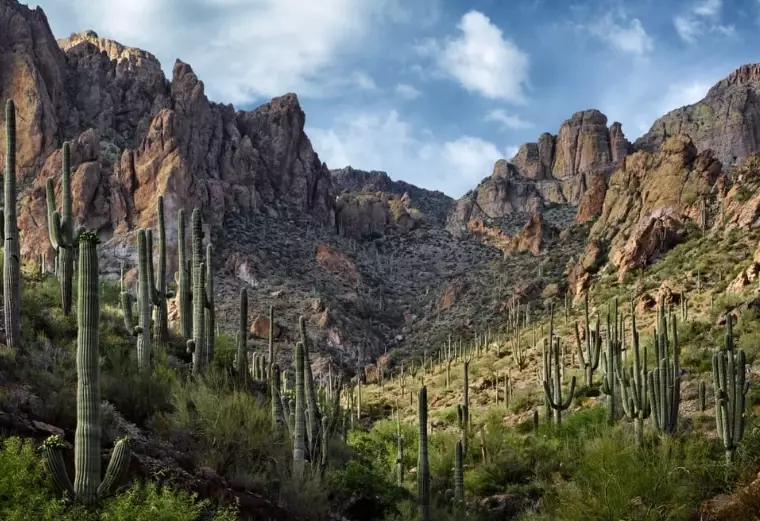
Critical Driving Tip: A huge part of where Tonto National Forest is located involves remote areas. Fill your gas tank in the last major town (Payson, Globe, Apache Junction). Cell service is spotty to non-existent on most forest roads. Download offline Google Maps or, better yet, carry a physical Tonto National Forest map from the U.S. Forest Service. Some of those Forest Roads can be... adventurous, to put it mildly.
What You'll Find There: More Than Just a Location
Knowing where Tonto National Forest, Arizona is is pointless if you don't know what's there. It's not an empty plot of land. It's packed with stuff.
- Lakes & Rivers: This is the big one. The Salt River flows through it, dammed to create a chain of reservoirs: Saguaro, Canyon, Apache, and Roosevelt Lakes. These are the playgrounds for boating, fishing, and swimming.
- Wilderness Areas: Over 590,000 acres are designated wilderness (Mazatzal, Superstition, Four Peaks, etc.). No roads, no bikes, just trails. This is the raw, protected heart of the forest.
- Scenic Drives: The Apache Trail (SR 88, partially unpaved), the Mogollon Rim Road (FR 300), and the Bush Highway are legendary for a reason.
- Archaeology & History: From Hohokam ruins to old mining ghost towns, history is layered into the landscape. The Tonto National Monument (run by the National Park Service) preserves stunning cliff dwellings. It's a must-see side trip that gives context to the land.
- Biodiversity: Because of the elevation zones, the wildlife list is insane. You could see desert bighorn sheep, coatimundi, black bears, mountain lions, and over 400 species of birds. The variety is mind-boggling.
Honestly, the sheer density of things to do is what makes the question "Where is Tonto National Forest?" so common. People hear about one specific thing—like kayaking on Canyon Lake or hiking the Wave Cave—and need to place it on the map.
Practical Info for Your Visit (The Stuff Other Guides Skip)
Alright, you've got the lay of the land. Now for the nitty-gritty that turns a Google search into an actual trip.
Seasons and Timing
This is non-negotiable. The desert lowlands (below 4,000 ft) are brutally hot from May to September. I'm talking dangerous, 110°F+ heat. The ideal time for those areas is October through April. The high country near Payson is pleasant in summer but can be cold and snowy in winter. Spring and fall are generally safe bets everywhere, but always check conditions.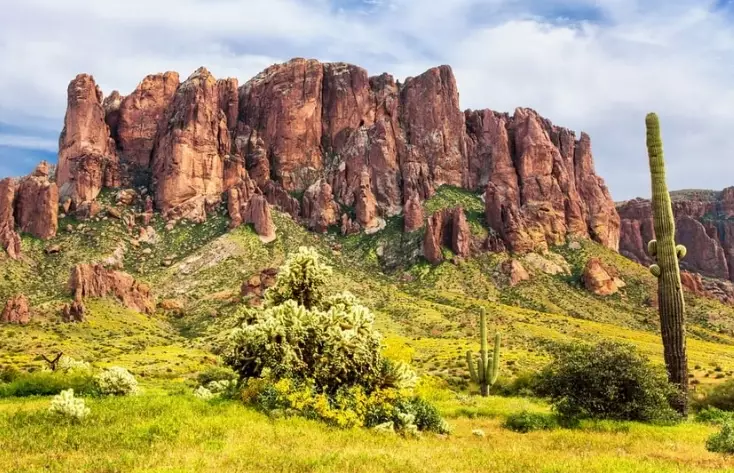
Passes and Fees
Most of the forest is free to access, but developed sites cost money. You'll need a Tonto Day Pass ($8) or an America the Beautiful Interagency Pass ($80/year) to park at most trailheads, boat launches, and picnic areas. You can buy these online or at local vendors. Don't get a ticket—they check frequently.
Key Rules & Safety (The Unfun but Vital List)
- Fire Restrictions: This is a tinderbox. Campfire and smoking restrictions are common, especially in summer. ALWAYS check the current Tonto NF Alerts page before you go. A stray spark can cause a catastrophe.
- Water: There is no safe drinking water in the backcountry. Always carry way more than you think you need. I mean it. A gallon per person per day is a good minimum for desert hiking.
- Flash Floods: Dry washes (arroyos) can turn into deadly torrents in minutes during a monsoon storm (July-Sept). Never camp in a wash. Check the weather.
- Road Conditions: Many forest roads require high-clearance vehicles, especially after rain. A sedan can get you to many main sites, but if you want to explore deeper, you'll need an SUV or truck.
Common Questions About Tonto National Forest's Location
Is Tonto National Forest near Sedona or the Grand Canyon?
Not really. Sedona is about 2 hours north of Phoenix in the Coconino National Forest. The South Rim of the Grand Canyon is about 3.5 hours north. While you could technically drive from the Payson part of Tonto to Flagstaff and then to these places, they are separate destinations. Tonto is its own, massive entity.
What's the closest major airport?
Phoenix Sky Harbor (PHX), no contest. It's about 30 minutes from the forest's western boundary.
Can I visit as a day trip from Phoenix?
Absolutely. This is one of Tonto's biggest draws. The lakes (Saguaro, Canyon) and lower Salt River are perfect for half-day or full-day adventures. Hikes like the Hieroglyphic Trail or the Wind Cave Trail are classic Phoenix-area day hikes that are actually within Tonto National Forest, Arizona.
How is it different from the Superstition Mountains?
The Superstition Wilderness is a part of Tonto National Forest. It's a specific, rugged mountain range within the forest's boundaries, located east of Apache Junction. So when you hike in the Superstitions, you're hiking in Tonto.
Is it all desert?
This is the biggest misconception. No! As we covered, only the lower third is classic Sonoran Desert. The upper elevations are full of pine forests, meadows, and cool mountain streams. The Sonoran Desert ecosystem is incredible, but it's just one chapter of Tonto's story.
The question "Where is Tonto National Forest, Arizona?" doesn't have a single-point answer. It has a layered, geographical, and practical answer. It's a sprawling, elevation-diverse realm that starts at Phoenix's back door and climbs to the edge of the Colorado Plateau. It's defined by the cities that border it, the roads that penetrate it, and the drastic change in scenery from its lowest to its highest points.
Understanding this—the *context* of its location—is what turns a vague idea into a real, plan-able adventure. You're not just looking for a dot on the map. You're figuring out which gateway to use, what landscape to expect, and what kind of experience you want. Now that you know where it really is, the real fun begins: deciding which part of it to explore first.
My advice? Start simple. Pick one of the four regions from the table, check the forest service website for alerts, buy your pass, and go. The place has a way of pulling you back to see what's around the next canyon rim. Just remember to bring extra water.
Reader Comments