Quick Navigation
- So, How Did This Giant Salt Pan Even Form?
- Breaking Down the Salar: More Than Just Salt
- What's It Actually Like to Visit the World's Largest Salt Desert?
- Beyond the Obvious: The Lithium Question and Local Life
- How Does Salar de Uyuni Compare to Other Salt Flats?
- Frequently Asked Questions (Stuff You Really Want to Know)
- The Final Word on the Largest Salt Desert in the World
Let's cut to the chase. When people ask "what is the largest salt desert in the world?", the answer is singular and spectacular: the Salar de Uyuni in Bolivia. I remember first seeing a picture of it – this endless, blindingly white plain with a mirror-perfect sky on the ground – and thinking it had to be photoshopped. It looked like another planet. Turns out, it's very real, and it's right here on Earth, sitting pretty in the Andes mountains.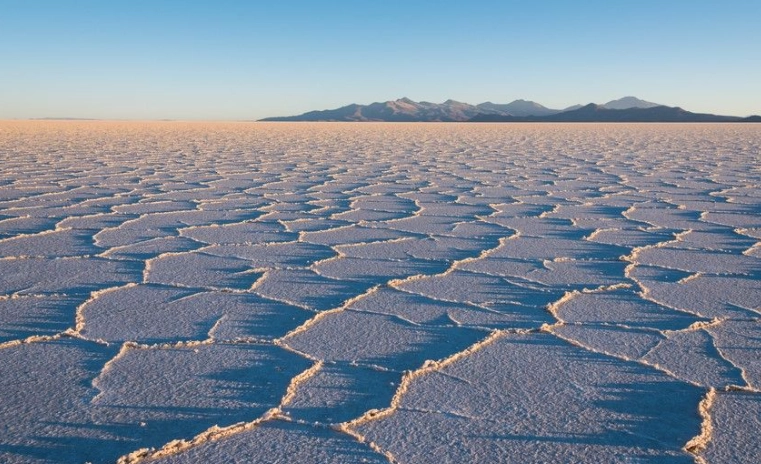
But calling it just a "salt desert" feels like calling the Grand Canyon a "big ditch." It undersells the experience completely. This place is a geological marvel, an economic resource, a photographer's dream, and honestly, a bit of a logistical puzzle for travelers. It's over 10,000 square kilometers of crusty salt, which is a number that doesn't mean much until you're standing in the middle of it with nothing but white in every direction. You feel incredibly small.
The Straight Answer: The largest salt desert in the world is the Salar de Uyuni in southwestern Bolivia. With an area of approximately 10,582 square kilometers (about 4,086 square miles), it dwarfs all other salt flats on the planet. To give you an idea, that's larger than some countries, like Puerto Rico or Cyprus.
So, How Did This Giant Salt Pan Even Form?
This isn't just a puddle that dried up. The story of Salar de Uyuni is an ancient one. Tens of thousands of years ago, this area was part of a giant prehistoric lake called Lake Minchin, and later, Lake Tauca. As the climate changed and the Andes mountains continued their slow rise, the lake eventually dried up, leaving behind two major lakes (Poopó and Uru Uru) and two major salt flats – Coipasa and the king, Uyuni.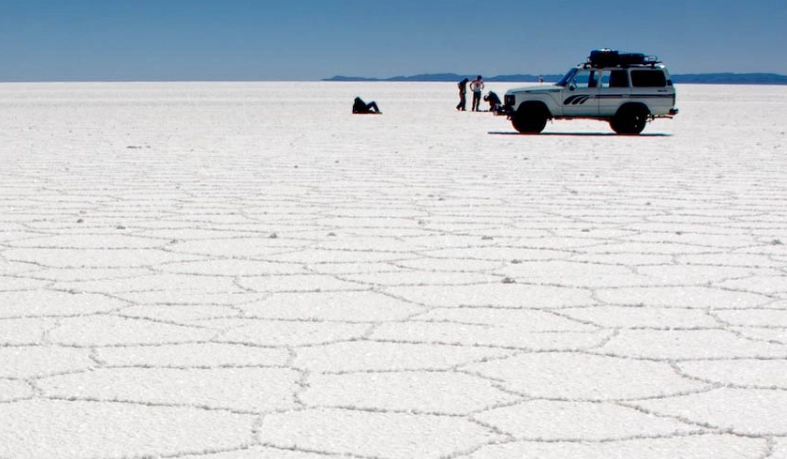
The process is ongoing. Mineral-rich water from the surrounding mountains still flows into the basin. There's no drainage outlet, so when the water evaporates under the fierce altiplano sun, it leaves behind the salts and minerals. It's a slow, continuous layering process that has created this vast crust, which in some places is over 10 meters thick.
Think about that for a second. You're driving on a 10-meter-thick slab of salt. It's mind-boggling.
Breaking Down the Salar: More Than Just Salt
When you search for "what is the largest salt desert in the world," you probably just want the name. But the real juice is in what makes it tick.
The Raw Numbers (They're Impressive)
| Feature | Detail | Why It Matters |
|---|---|---|
| Total Area | ~10,582 sq km (4,086 sq mi) | Confirms its status as the undisputed largest salt desert in the world. |
| Elevation | 3,656 meters (11,995 ft) above sea level | This is high altitude. Altitude sickness is a real concern for visitors. |
| Salt Crust Thickness | Average 2-3 meters, up to 10+ meters at the center | A massive reservoir of salt and lithium. |
| Estimated Salt Volume | About 10 billion tonnes | It's a virtually inexhaustible resource. |
| Key Resource | World's largest lithium reserve (50-70% of global reserves) | This makes it geopolitically and economically crucial for the future. |
That last point about lithium is huge, and it's a double-edged sword. Bolivia sits on a goldmine (a lithium-mine?) for the electric vehicle era. The U.S. Geological Survey has detailed reports on global lithium resources, and Salar de Uyuni is always the headline act. You can read their latest assessment on the USGS website. It's a complex issue – the potential for economic development versus environmental and social impacts on local communities. It's not just a pretty landscape; it's a focal point for the future.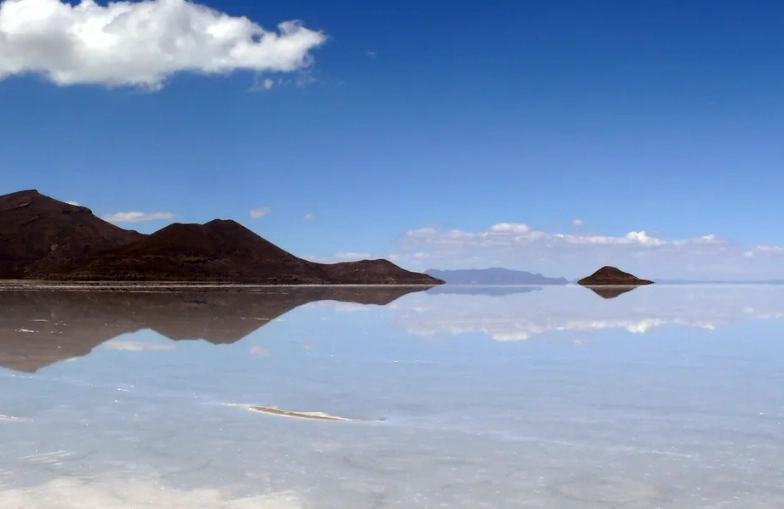
The Two Faces of Uyuni: Dry Season vs. Wet Season
This is the most crucial thing to understand before you even think about booking a ticket. The largest salt desert in the world has two completely different personalities.
The Dry Season (May to October): This is when you get the iconic, cracked hexagonal patterns on a solid, blinding white surface. The sky is usually clear, the driving is easy on the solid salt, and you can visit places like Isla Incahuasi (the cactus island) with ease. The downside? It's cold. Bone-chillingly cold at night, especially in June and July. And the famous "mirror effect" is mostly absent.
My Personal Take: I went in July. The daytime under the sun was pleasant with a jacket, but the night in a basic salt hotel was an experience. The walls are made of salt blocks, which is cool until you realize how little insulation they provide. Pack your warmest clothes, no joke.
The Wet Season (December to April): This is when the magic happens for photographers. A thin layer of rainwater covers the salar, creating the world's largest natural mirror. The reflections of the sky are surreal. However, this comes with big trade-offs. Access to the center and islands like Incahuasi can be restricted or impossible because the salt crust softens. Tours get rerouted, and the famous perspective photos become trickier. Also, it's the rainy season in the Andes, so storms can roll in.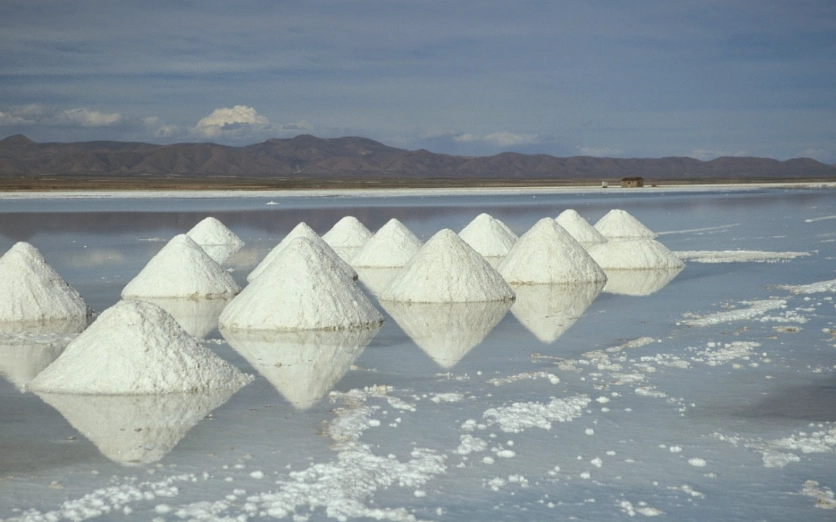
So, which is better? It depends entirely on what you want. For mirror photos and ethereal beauty, brave the wet season. For exploration, easier travel, and seeing the salt patterns, choose the dry season. The shoulder months (November, late April) can be a gamble but sometimes offer a mix.
What's It Actually Like to Visit the World's Largest Salt Desert?
You don't just show up. A visit to Salar de Uyuni is an expedition. Most people base themselves in the town of Uyuni, a somewhat rough-around-the-edges outpost that exists almost solely for tourism to the salt flat. From there, you book a tour – usually a 4x4 jeep shared with 5-6 other people and a driver/guide.
The classic tour is a 3-day, 2-night loop that goes deep into the salar and then out to the surrounding colored lagoons, geothermal fields, and rock formations. It's a stunning landscape that feels Martian.
Pro Tip You Won't Find in Most Guides: Be very selective with your tour company. This is one place where paying a bit more makes a world of difference in vehicle safety, guide knowledge, and food quality. I heard horror stories of broken-down jeeps and miserable guides from budget operators. Do your research on recent reviews.
A typical first day focuses solely on the largest salt desert in the world. You'll hit key spots:
- The Train Cemetery: Rusting old locomotives on the outskirts of Uyuni. It's interesting for 20 minutes.
- Colchani: A small village where you see artisanal salt processing. They make souvenirs from salt.
- The Vast White Expanse: Then you drive onto the salt. The sheer scale hits you. Your driver will find spots for the famous forced-perspective photos (think: holding a giant toy dinosaur). It's touristy but fun.
- Isla Incahuasi: In the dry season, you visit this hilly island covered in thousand-year-old giant cacti, a surreal sight in the middle of the white plain.
- Sunset: Watching the sunset over the salar, with colors reflecting off the salt crystals, is unforgettable.
Then you spend the night in a hotel made of salt blocks. Yes, the walls, the floor, the beds, the tables – all salt. They usually ask you not to lick the walls (seriously).
Beyond the Obvious: The Lithium Question and Local Life
It's impossible to talk about Salar de Uyuni without acknowledging the lithium mining. The Bolivian government, through its state-owned company YLB, is trying to develop the resource. It's a hot topic. Proponents see it as a path to development and wealth for a historically poor nation. Critics worry about water usage in an arid region, pollution, and whether the benefits will truly reach local communities like the quinoa-growing and llama-herding families who live around the salar.
The UNESCO World Heritage Centre lists the "Bolivian Andean Plateau" as a tentative site, noting its unique geology and ecosystems. The development pressure adds complexity to its conservation.
When you visit, you might see pilot extraction plants. It's a reminder that this landscape is dynamic, both naturally and economically.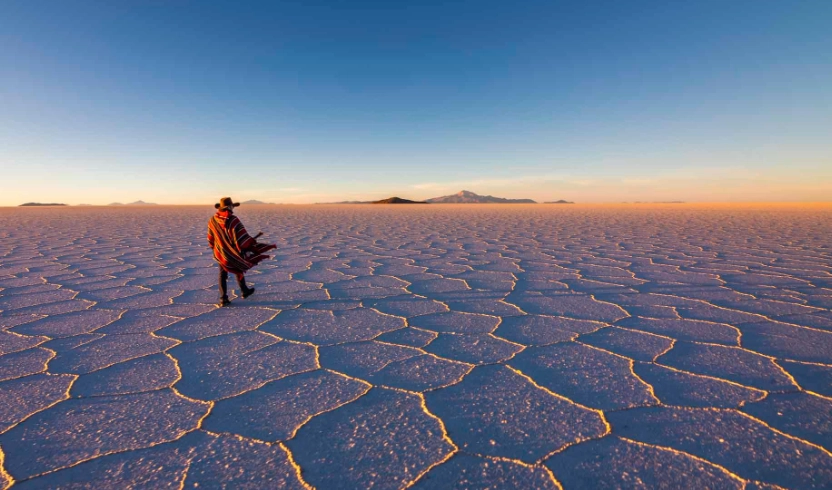
How Does Salar de Uyuni Compare to Other Salt Flats?
People often wonder how it stacks up. The second largest is often said to be Salinas Grandes in Argentina, but it's less than a tenth the size. The Bonneville Salt Flats in the US are iconic for speed records, but they're tiny in comparison. Here’s the thing: once you know what is the largest salt desert in the world, the others feel like practice runs. Uyuni is in a league of its own in terms of sheer, uninterrupted scale and accessibility.
Frequently Asked Questions (Stuff You Really Want to Know)
Let's tackle some practical stuff that pops up after you learn what is the largest salt desert in the world.
Is it safe to travel on the salt flats?
Generally, yes, with a reputable guide. During the dry season, the crust is solid enough for vehicles. In the wet season, guides know the safe paths. Never venture onto the salar alone in a private vehicle. It's easy to get disoriented, and getting stuck in a briney mud patch is a real risk.
What should I pack?
- Sunglasses: The glare is intense. You'll get a headache without them.
- Sunscreen (high SPF): The altitude means stronger UV rays. Reapply constantly.
- Lip balm with SPF: The wind and dry air are brutal.
- Layers of clothing: Temperatures swing wildly from day to night.
- Waterproof shoes/boots: Especially in the wet season, but useful in the dry season too when the ground can be damp in spots.
- Camera protection: The fine salt dust is corrosive. Keep your gear in a bag when not in use.
How do you get there?
The main gateway is La Paz, Bolivia's capital. From there, you can take an overnight bus (a long, bumpy journey) or a short flight to the city of Uyuni. The flight is more expensive but saves a lot of time and discomfort.
Can you stay on the salt flats?
Not in the absolute center, but there are several hotels built on the edges using salt blocks. They have basic amenities (some now have private bathrooms and heating). It's a unique experience, but manage your expectations – it's about the novelty, not luxury.
The Final Word on the Largest Salt Desert in the World
So, what is the largest salt desert in the world? It's Salar de Uyuni. But that's just the label. It's a place of extreme beauty and harsh conditions, of ancient geology and modern economic ambition. It challenges you with its altitude, rewards you with sights you can't see anywhere else, and makes you think about the resources beneath our feet.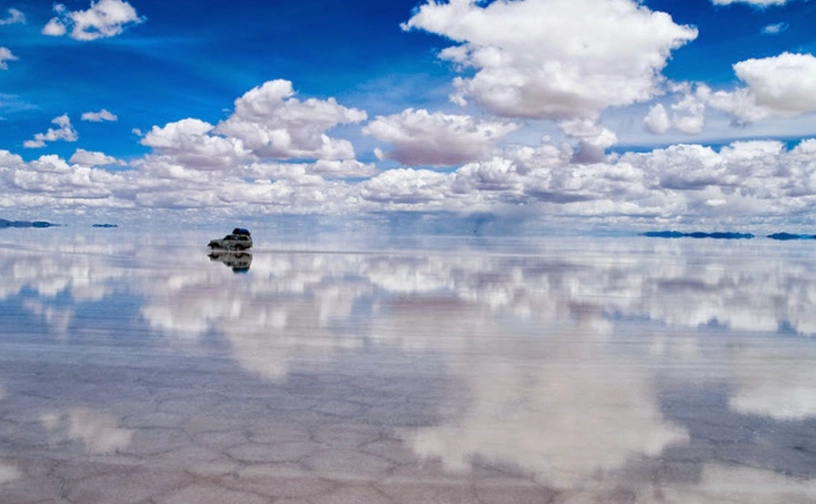
Visiting it isn't always comfortable or easy. The tours can be bumpy, the toilets basic, and the cold can seep into your bones. But standing in that immense, silent whiteness, or seeing the sky melt into the ground during the wet season, is a feeling that sticks with you. It's a powerful reminder of how weird and wonderful our planet can be.
If you go, go with respect – for the altitude, for the environment, and for the local communities navigating the changes coming to their backyard. The largest salt desert in the world is more than a photo op; it's a living, evolving place.
Reader Comments