Journey Highlights
You're on a train, winding through mountains. The view out one window is a solid rock face. You lean over to the other side, and there, far below, you see the locomotive itself, curving back around ahead of you, looking like it's chasing its own tail. That moment of disorientation, that sheer "wow" factor, is the magic of a horse curve railroad. It's not just a turn; it's a spectacle, a piece of living engineering history that turns a journey into an event.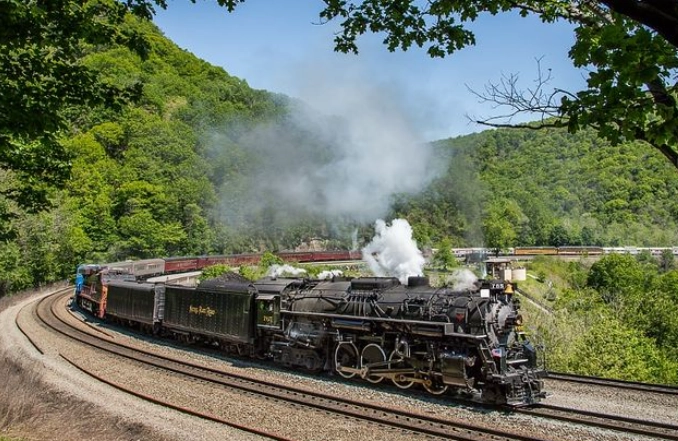
I remember my first one clearly. It was in the Pennsylvania hills, and I spent a good five minutes convinced the map was wrong before the penny dropped. That's the thing about horse curve railroads – they're geographic problem-solvers that double as pure theater.
Why Build a Railroad That Doubles Back on Itself?
The story of the horse curve railroad is fundamentally a story of stubbornness versus geography. In the 19th century, railroad barons and engineers faced a brutal challenge: how to push iron rails across continents riddled with mountains, canyons, and impossible slopes. Tunneling was brutally expensive and slow with the technology of the day. Straight-up climbs were a non-starter for steam locomotives; they'd simply lose traction and stall.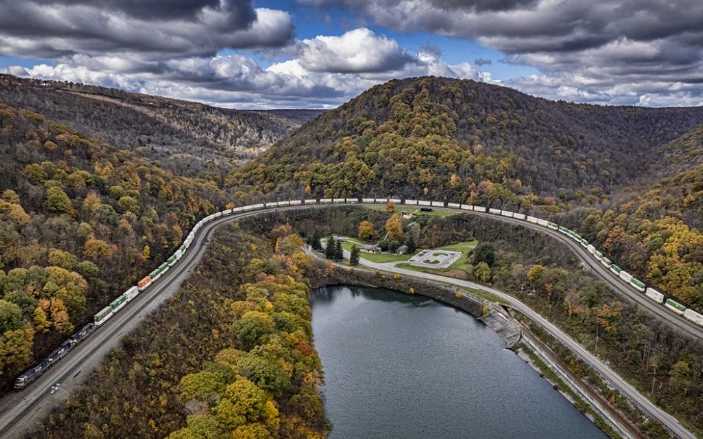
The horse curve was the elegant, if circuitous, solution. Think of it as a switchback trail for trains. By designing a track that looped around, engineers could maintain a gentle, manageable grade (usually between 2-3%) while still conquering a massive hill. It was a trade-off: longer track for feasible incline. The most famous early examples, like the legendary Horseshoe Curve near Altoona, Pennsylvania, built by the Pennsylvania Railroad in 1854, were marvels of civil engineering that opened up entire regions to commerce.
It wasn't just about getting over a hill, though. These curves also solved the problem of confined spaces. In deep river canyons or narrow mountain passes, a looping horse curve railroad allowed engineers to fit a necessary length of track into a tight area, descending from a canyon rim to the river below in a series of dramatic loops. The Georgetown Loop in Colorado is a perfect, picturesque example of this.
The Engineering Muscle Behind the Magic
Building one of these things was – and still is – no small feat. It required moving mountains, literally. We're talking about massive cuts through rock, enormous embankments built up from valley floors, and retaining walls that had to hold back immense pressure.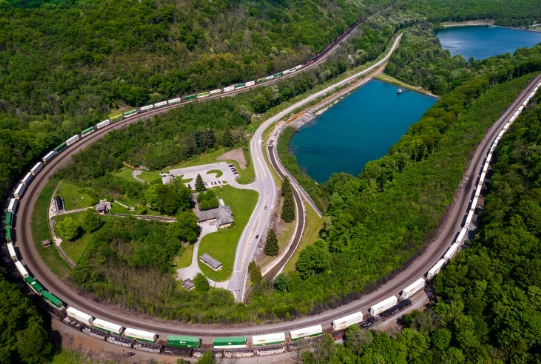
Grading and Excavation: The Backbreaking Work
Before dynamite was widely used, this work was done by hand crews, often immigrants, using picks, shovels, and black powder. The amount of earth moved for something like the Altoona curve is staggering. They had to create a stable, level shelf for the tracks on what was essentially a mountainside. Drainage was a huge concern too; water running down the hill could wash the whole thing away, so elaborate culvert and ditch systems were integral to the design.
Track Laying and Stability on a Curve
Laying track on such a severe, elevated curve presented unique problems. The outer rail is super-elevated (banked) to help counter centrifugal force and keep trains from tipping, a calculation that depends on expected speed. The roadbed itself had to be incredibly stable to prevent settling or shifting, which could derail a train. Engineers often used local stone for robust, lasting retaining walls, many of which are still holding strong over 150 years later. You can get a sense of the sheer scale of this work from historical records at the Penn State University Libraries, which house archives from the Pennsylvania Railroad.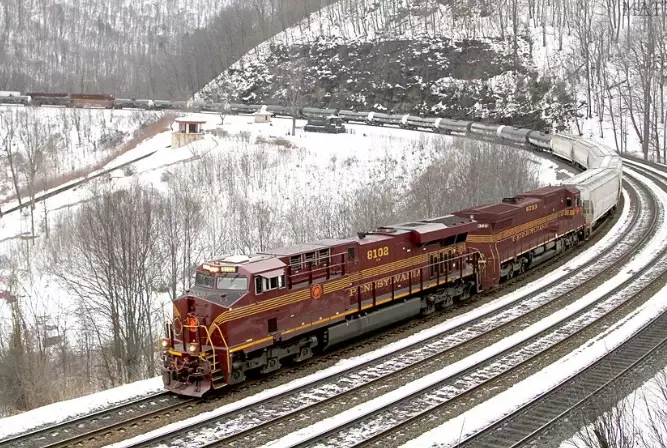
Maintaining a horse curve railroad is its own special headache. Inspection crews have to constantly check for rock slides, drainage issues, and track alignment. In winter, keeping the rails clear of ice and snow on an exposed mountainside is a constant battle.
Top Horse Curve Railroad Locations You Can Actually Visit
Thankfully, many of these engineering wonders aren't just for freight trains. Plenty are the centerpieces of scenic tourist railways or visible from public viewpoints. Here’s a rundown of some of the most accessible and spectacular ones.
| Name & Location | Why It's Special | Best Way to Experience It | My Personal Take |
|---|---|---|---|
| Horseshoe Curve (Altoona, PA) | The granddaddy of them all. A National Historic Landmark, it's over 150 years old and still a major Amtrak and freight corridor. The scale is immense. | Visit the official Railroaders Memorial Museum incline funicular to the overlook. Watching a mile-long freight snake around is hypnotic. | The museum is good, but the real show is free from the park below. Bring a radio scanner to hear the engineers talk. It's industrial ballet. |
| Georgetown Loop (Colorado) | A stunning 19th-century narrow-gauge engineering feat in a beautiful canyon. It features a dramatic trestle bridge within the loop. | Ride the historic steam train operated by the Georgetown Loop Railroad. The open cars are the best. | Touristy? Sure. But utterly worth it. The smell of coal smoke and the creak of the wooden coaches make it feel authentic. The bridge photo op is unmatched. |
| Tehachapi Loop (California) | An active spiral loop where the track passes over itself via a tunnel. You can watch a train's locomotives pass over its own caboose. | Drive to the public viewing area off Highway 58. It's a magnet for railfans. Check the Caltrans site for road conditions first. | It's all about patience. Wait for a double-stacked container train. Seeing that long metal snake coil around itself is a mind-bender. Bring water and sunscreen—it's exposed. |
| Cass Scenic Railroad (West Virginia) | A former logging line with brutal grades and sharp curves, including several horse curve-style bends climbing Bald Knob. | Take the steam-powered shuttle to the top. The sounds of the Shay locomotive struggling up the grade are unforgettable. | This is raw, powerful railroading. It's not sleek or fast. It's a museum piece that still works for a living. The view from Bald Knob is breathtaking, if the weather cooperates. |
| Darjeeling Himalayan Railway (India) | A UNESCO World Heritage Site with multiple dramatic loops and reverses, like the famous Batasia Loop. | Ride the "Toy Train" from New Jalpaiguri to Darjeeling. The open windows are part of the charm. | An utterly chaotic and wonderful experience. The train moves at a walking pace, which is perfect for soaking in the Himalayan vistas and the life along the tracks. It's less about the precise engineering and more about the whole surreal journey. |
Choosing just one is tough. It depends on what you're after: raw industrial power or pristine scenic beauty.
Planning Your Trip: A Realistic Checklist
Visiting a horse curve railroad isn't like going to a theme park. A little planning prevents a lot of frustration.
- Check the Schedule (For Tourist Lines): Most heritage railroads don't run daily, especially outside peak season. Book tickets well in advance for steam specials.
- For Active Rail Lines (like Tehachapi or Altoona): Train traffic is unpredictable. You might see 10 trains in an hour or none for three. Use apps like TrainWhistle or listen to AAR railroad radio frequencies to get a sense of activity. The Federal Railroad Administration doesn't publish schedules, but local railfan groups often have good Intel.
- Pack Like a Pro: Sunscreen, hat, water, snacks, a portable chair, and a good zoom lens. Weather changes fast in mountain areas.
- Safety is Non-Negotiable: Never, ever trespass on active tracks. Use designated viewing areas. Freight trains are much quieter and faster than they appear, and they can't stop quickly.
- Manage Expectations: The light might be wrong for photos. The train might be a short, unimpressive one. That's part of the adventure. The setting itself is the history.
Your Horse Curve Railroad Questions, Answered

The Last Word: More Than Just a Track
At the end of the day, a horse curve railroad is a testament to human ingenuity. It's a solution that acknowledges the landscape's challenge instead of just blowing through it. It forces a slower pace, both on the train and for the observer. In a world obsessed with the fastest, most direct route, these elegant loops remind us that the journey itself, the way you get there, can be the entire point.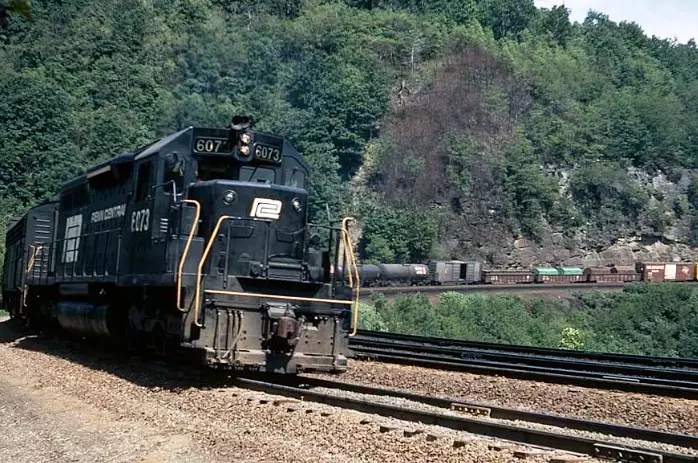
They are places where you can literally see the history of transportation laid out in iron and stone. You can stand where 19th-century surveyors stood, see the problem they faced, and admire the elegant, looping answer they drew across the skyline. Whether you're a hardcore railfan, a history buff, or just someone who appreciates a great view, seeking out a horse curve railroad is a uniquely rewarding experience. It connects you to the gritty reality of building a nation, one dramatic bend at a time.
So pick one from the list, do your homework, and go. Wait for that train. Feel the rumble. Watch the geometry in motion. You won't forget it.
Reader Comments