You've seen the pictures—a thunderous curtain of water plunging over a sheer granite cliff, framed by rainbows and drenched hikers on a stone staircase. That's Vernal Fall. But between that postcard image and actually standing there, soaked and breathless, is a world of geography, planning, and hard-won local knowledge most blogs gloss over. Having hiked this trail in every season for over a decade, I can tell you the Vernal Falls geography is more than just a point on a map; it's a dynamic, powerful landscape that demands respect and rewards preparation.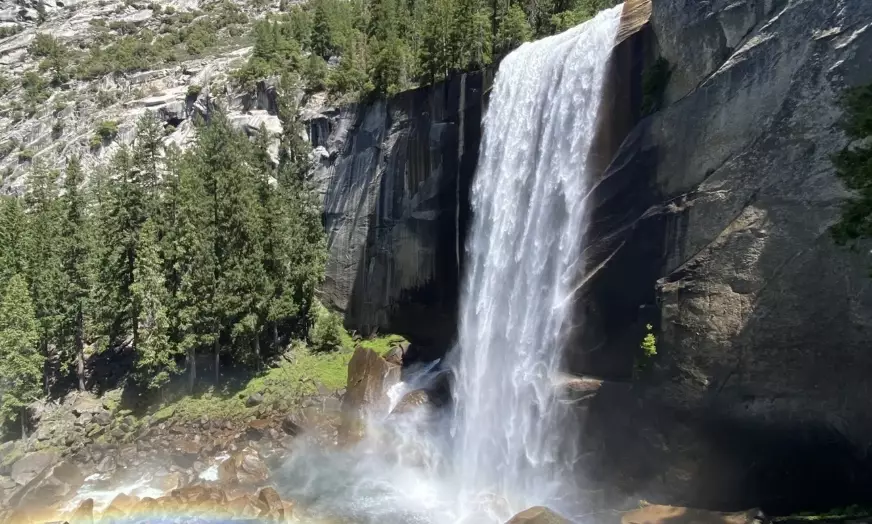
Let's get straight to it. Vernal Fall is a 317-foot (96.6-meter) waterfall on the Merced River in Yosemite National Park, California. The classic hike to its foot is the Mist Trail, a 2.4-mile round trip with about 1,000 feet of elevation gain that feels much steeper. It’s a moderate-to-strenuous hike, not a casual stroll. The park is open 24/7, but access is governed by the $35 per vehicle park entrance fee (valid 7 days). You don't need a separate permit for the day hike. Most people start from the Happy Isles trailhead, reachable via the park's free shuttle (Stop #16) or by parking early (I mean, really early) in the Yosemite Valley lots.
Your Quick Trail Map to Vernal Falls
The Hike Breakdown: Mile-by-Mile on the Mist Trail
Everyone talks about the "Mist," but few prepare you for the full-body experience. Here’s what the geography of the trail actually feels like underfoot.
Mile 0-0.5 (The Warm-Up): From Happy Isles, you’re on a paved, sloping path alongside the Merced River. It’s wide and busy. You'll cross a bridge with your first good upstream view of the fall. This is the last easy moment. Turn back if you're already struggling.
Mile 0.5-1.0 (Entering the Gorge): The pavement ends, and the real climb begins. The trail narrows, the river noise amplifies, and you start gaining elevation steadily on granite steps. You can feel the humidity rising.
Mile 1.0-1.2 (The Mist Zone): This is it. The trail curves into the granite-walled gorge directly opposite the waterfall's base. Depending on the season, you’re not in mist—you’re in a horizontal rainstorm. The 600+ granite steps are perpetually wet and slick. The roar is deafening, rainbows are constant, and you will be drenched to the skin. There is no avoiding it. A rain jacket is a joke here; you need a waterproof shell with sealed seams. This section is the heart of the Vernal Falls geography experience.
I’ve seen people in jeans and cotton hoodies turn into shivering, miserable sponges by the top. Don't be that person.
Vernal Falls Hike at a Glance
Trailhead: Happy Isles (Shuttle Stop #16)
Round-Trip Distance: 2.4 miles to footbridge / 3-4 miles to top & back via loop
Elevation Gain: ~1,000 ft to footbridge
Difficulty: Moderate to Strenuous
Park Fee: $35 per vehicle (7-day pass)
Best Time: May-June for peak flow, Sept-Oct for fewer crowds
Critical Gear: Sturdy hiking shoes with grip, waterproof layer, water (2L minimum), trekking poles (highly recommended for knees).
The Top and the Loop Back Option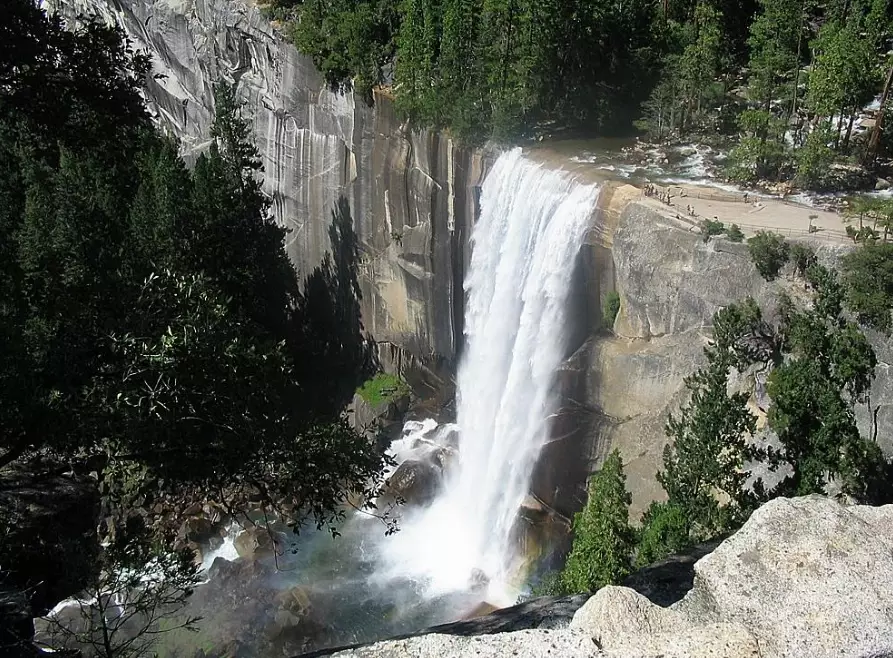
Reaching the footbridge at the top of the stairs gives you the iconic frontal view. Many turn around here. If you continue, you can cross the bridge and see the Emerald Pool at the fall's crest (swimming is illegal and deadly—currents sweep people over). For the return, I never go back down the wet stairs. It's a knee-wrecking, slippery hazard.
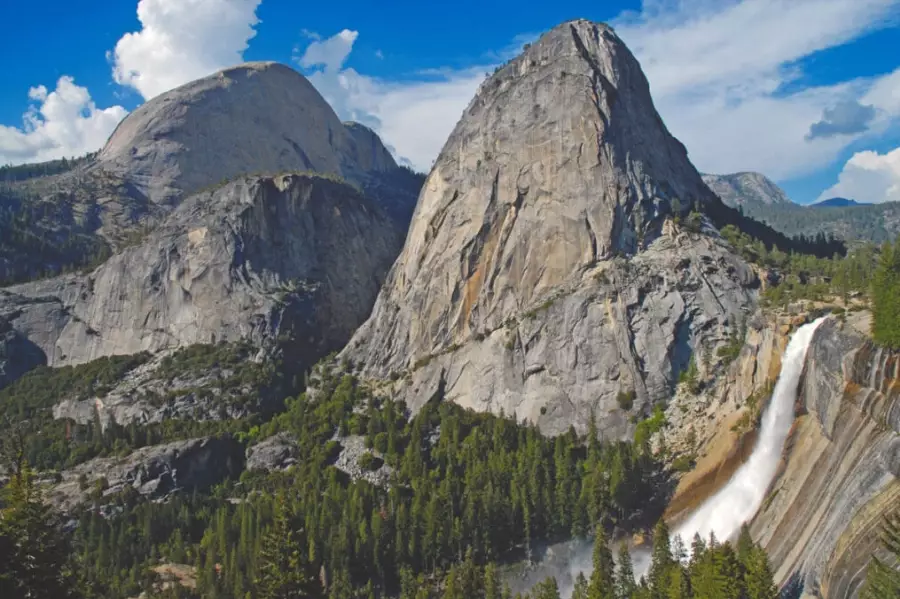
Instead, take the John Muir Trail (JMT) loop back. It’s a mile longer but graded for mules, so it’s a gentler, sustained descent with breathtaking panoramic views of the valley and Liberty Cap that the Mist Trail completely misses. This is the single best piece of advice I give to every hiker.
| Route Option | Distance (RT) | Key Feature | Best For | My Recommendation |
|---|---|---|---|---|
| Mist Trail to Footbridge | 2.4 miles | The immersive mist & frontal view | Time-crunched, fit hikers wanting the core experience | Solid, but prepare for a wet, steep climb. |
| Mist Trail Up, JMT Down (Loop) | ~3.4 miles | Full experience + safer descent & epic views | Almost everyone. The ideal, smarter route. | This is the way. Protects your knees and adds scenery. |
| JMT Both Ways | ~4+ miles | Dry, panoramic, less crowded path | Those with mobility concerns, very young kids, or in icy conditions | You miss the mist, but it's a fantastic, more accessible alternative. |
The Rock's Story: How Vernal Falls Formed
Vernal Fall isn't just water falling off a cliff. The cliff itself tells a 100-million-year story. The waterfall exists because of a specific interplay between two different types of granite—a fact most visitors never learn.
The sheer face is made of incredibly hard, resistant granite. Right at its base, however, is a slightly softer, more jointed granite layer. Over millennia, the relentless force of the Merced River, loaded with abrasive sediment, preferentially eroded this softer rock. This undercutting process is what maintains the vertical drop. If the rock were uniform, the river would have carved a steep slope, not a perfect waterfall.
The National Park Service geology resources explain this process in detail, highlighting how Yosemite's waterfalls are masterpieces of differential erosion. The "giant's staircase" morphology of the Mist Trail—those huge steps you climb—are also glacial artifacts, where the glacier plucked massive blocks of rock along natural joints.
Look for the dark, vertical stains on the cliff face. Those are "desert varnish," a manganese and iron oxide deposit formed by water seepage over thousands of years. They’re like natural timelines on the rock.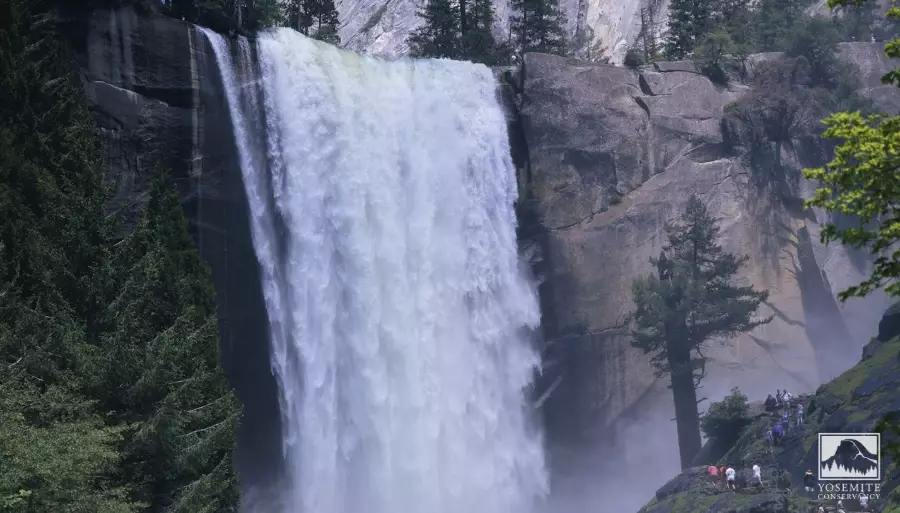
Getting the Shot & Staying Safe: Non-Negotiables
The desire for the perfect photo causes more problems here than anything else. People scramble off-trail onto wet, sloping granite for a better angle. Every year, there are serious falls.
Safety is Geography Too
The Vernal Falls geography creates specific hazards:
- Wet Granite: It's as slippery as ice. Use trekking poles and focus on footing, not your phone.
- High Water & Swift Currents: In spring, the Merced River is a monster. Stay back from the river's edge, especially above the fall. The Emerald Pool is a notorious killer.
- Hypothermia: Being soaked in cold mist with wind chill can drop your core temperature fast, even in summer. That waterproof shell is for safety, not just comfort.
- Crowds: The trail is narrow. Step aside to let faster hikers pass, and don't block the path for photos.
Check the Yosemite National Park website for current trail conditions. In late fall through spring, the Mist Trail stairs often close due to ice, making the John Muir Trail the only safe option.
Local Secrets & Strategic Alternatives
Here’s what you won't find on the official park map. About 2/3 of the way up the John Muir Trail, a small, unmarked spur trail branches off to the right (looking uphill). It leads to Clark Point. This viewpoint offers a stunning, diagonal profile view of both Vernal and Nevada Falls that few ever see. It’s a quiet place to eat a snack away from the crowds.
Most people think they have to choose between Vernal and Nevada Falls. If you're feeling strong, you can do both in a long half-day using the loop strategy: Mist Trail to Vernal, continue up to Nevada Fall, then descend the longer John Muir Trail back to the valley. It's a brutal but epic 6-7 mile loop with over 2,000 ft of gain.
My personal favorite time? A weekday afternoon in October. The summer hordes are gone, the water is still flowing nicely from the high-country melt, and the autumn light on the golden oak leaves is magical. You might even have the mist mostly to yourself.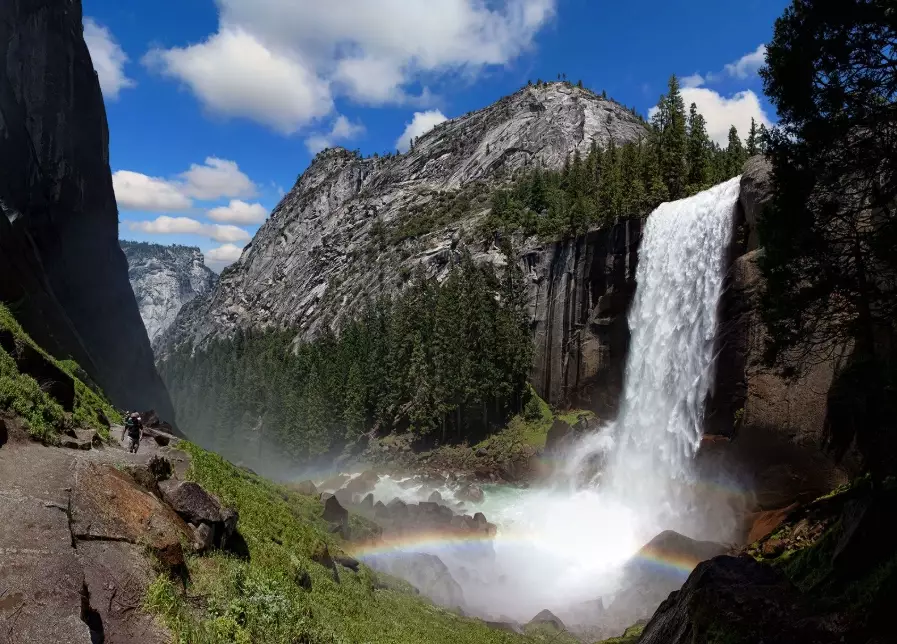
Your Vernal Falls Questions, Answered
 Vernal Fall is more than a checkbox on a Yosemite itinerary. It's a lesson in power, geology, and preparation. Understand its geography—from the ancient granite under your feet to the microclimate of mist in the gorge—and you'll move from being just a visitor to someone who truly engages with the landscape. Plan for the wet, respect the climb, take the JMT down, and you'll have an experience that’s infinitely more rewarding than just another hike.
Reader Comments