Explore the Guide
If you've typed "Where is San Carlos Lake located?" into Google, you're probably looking at a map of Arizona, maybe planning a fishing trip, or just curious about this sizable blue spot in the middle of the state's rugged terrain. You'll get a basic answer pretty quick—it's in Gila County, east of Phoenix. But honestly, that answer feels a bit thin, doesn't it? It's like saying the Grand Canyon is "in northern Arizona." Technically true, but it misses all the good stuff.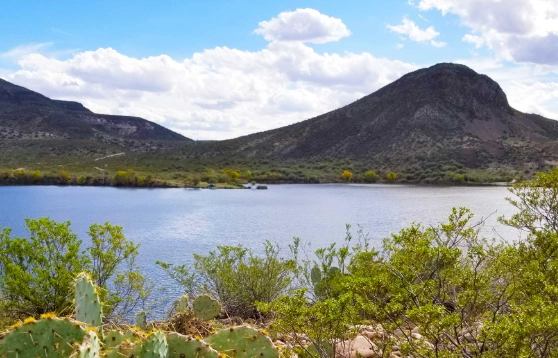
Let's dig deeper. The location of San Carlos Lake isn't just a set of coordinates; it's a story about water, history, and the landscape. It sits in a basin surrounded by the kind of scenery that makes you want to pull over and just stare. We're talking about the foothills of the Pinal Mountains to the west and the massive sprawl of the San Carlos Apache Indian Reservation all around it. The lake itself is the centerpiece, a giant reservoir created by the Coolidge Dam on the Gila River.
So, to nail down the precise location of San Carlos Lake: Find the town of Globe in central Arizona. Head about 20 miles southeast. You're now in the heart of the San Carlos Apache Reservation, and the lake is right there. Its main body stretches north-south for a good long distance, filling the valley. The nearest significant community is the town of San Carlos, which sits on its eastern shore. If you're coming from the Phoenix metro area, it's a drive of roughly 120 to 140 miles east, depending on your starting point. That puts it firmly in the "doable for a long weekend" category for Arizonans.
I remember the first time I drove out there. From the Phoenix sprawl, the landscape slowly changes. The saguaros thin out, the hills get rockier and more dramatic. You pass through Globe-Miami, towns with a strong mining history etched into their buildings. Then you enter the reservation lands, and the sense of space really opens up. You're not just going to a lake; you're traveling into a specific and significant part of Arizona.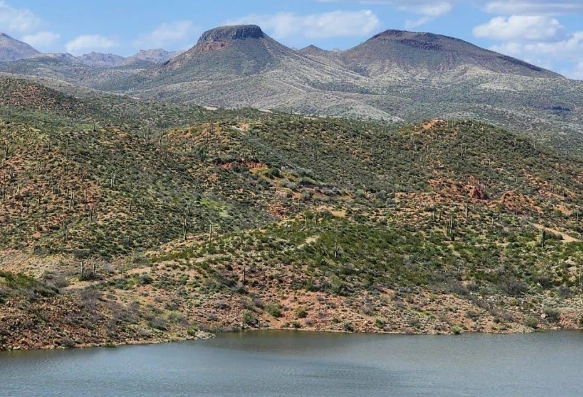
The Lay of the Land: Geography and Coordinates
Okay, let's get specific for the map nerds and trip planners. Where is San Carlos Lake located in terms of hard data? The main body of the reservoir lies at approximately 33°09′N 110°28′W. The dam that creates it, Coolidge Dam, is a historic concrete multiple-arch buttress dam, and it's worth seeing in its own right—it has this monumental, almost ancient Roman aqueduct feel to it, which is ironic given its 1920s construction date.
The lake isn't a neat circle. It's long and winding, following the old Gila River channel. At full capacity (which, let's be real, in the Arizona desert is a rare and glorious sight), it can stretch over 20 miles long and have a shoreline that meanders for nearly 150 miles. That's a lot of coves and inlets to explore. The elevation is around 2,550 feet above sea level, which means it's a bit cooler than the low desert Phoenix basin, but it can still get fiercely hot in the summer.
Key Location Fact: San Carlos Lake is entirely within the boundaries of the San Carlos Apache Indian Reservation. This is a crucial piece of information for visitors. Access, permits, and rules are governed by the San Carlos Apache Tribe. You're not just visiting a state park; you're a guest on tribal land. A little respect and awareness go a long way. Always check current regulations before you head out.
The surrounding geography is what they call basin and range. Think broad, flat valleys interrupted by sudden, sharp mountain ranges. The lake fills one of those basins. To the west, you've got the Pinal Mountains. To the east and south, it's the rough, rolling hills of the reservation. The result is a 360-degree view that's pretty hard to beat, especially at sunset when the rocks turn a deep, glowing red.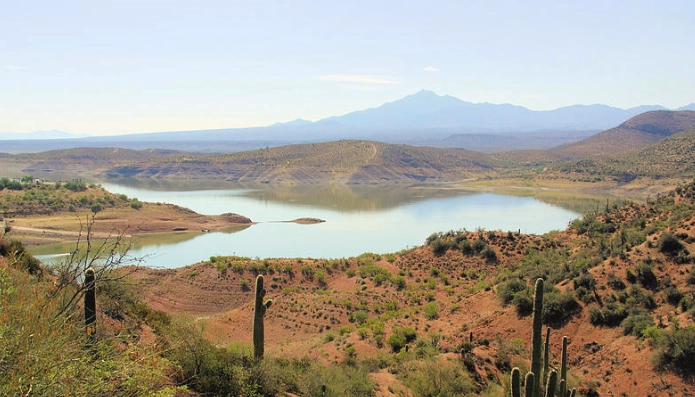
How Did It Get There? The History Behind the Location
You can't really talk about where San Carlos Lake is without asking *why* it's there. It didn't just appear. Its location was chosen for very specific, practical reasons that have everything to do with taming the unpredictable Gila River.
Back in the early 20th century, the push was on for irrigation projects in the Southwest. The idea was to store the Gila's seasonal floodwaters to support agriculture in the surrounding valleys. Engineers scouted the area and zeroed in on this spot—a natural narrows in the Gila River valley, perfect for anchoring a dam. Construction on Coolidge Dam started in 1926 and finished in 1928. When they closed the gates, the valley slowly filled, creating the San Carlos Lake we see (or hope to see) today.
It's fascinating to think that the location of San Carlos Lake was essentially picked because of good geology for a dam site. The lake's shape is literally the ghost of an older river valley, now filled with water. That history is part of the landscape you're looking at.
The dam and lake are managed by the U.S. Bureau of Reclamation, but as mentioned, the land is tribal. This dual stewardship is another unique aspect of its location. For authoritative details on the dam's construction and specs, the Bureau's website is the gold standard. It’s a bit dry (no pun intended), but it’s the real deal.
I find the history adds a layer to the visit. You're not just at a recreational spot; you're at a piece of early 20th-century engineering ambition, sitting on land with a cultural history that stretches back millennia. It's a lot for one lake to hold.
Getting There: Roads, Routes, and Access Points
Alright, so you know where San Carlos Lake is located on the map. Now, how do you actually get your tires on the ground there? This is where the "located in Gila County" answer completely falls apart. Access is everything.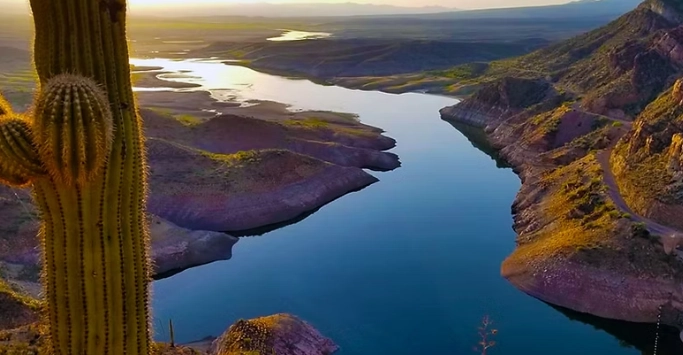
The primary artery is U.S. Route 70. If you're coming from the Phoenix area, you'll take AZ-177 south from Globe-Miami, which hooks into US-70. This road runs along the eastern side of the lake, offering some great vantage points. From Tucson, you'd head north on I-10, then cut over on AZ-77 through Winkelman, picking up US-70 near Peridot.
But here's the thing—the public access points aren't super obvious or plentiful. You need to know where to turn off the highway. The main developed recreation areas are on the western side of the lake, and to get to them, you have to cross the dam or go around the northern end.
| Access Point Name | Location (Relative to Lake) | What You'll Find | Best For |
|---|---|---|---|
| Point of Pines | Southwest shore, via W. Coolidge Dam Rd | Main boat launch, campgrounds (often primitive), pit toilets. The most popular spot. | Boat launching, shoreline fishing, camping. |
| Meddler Point | Northwest shore, via a longer dirt road | More secluded, another boat launch, dispersed camping. Can be rough going. | Getting away from crowds, if there are any. |
| Battaglia Point | Roughly mid-lake on west side | Shore access, less developed. | Shore fishing, picnicking. |
| Areas off US-70 | Eastern shore | Informal pull-offs and dirt tracks leading to the water. No facilities. | Quick access, sightseeing, bank fishing if you scout a spot. |
A word of caution: Those dirt roads to the western access points? They can range from graded and decent to rutted and rocky, especially after rain. A high-clearance vehicle is strongly recommended, and 4WD isn't a bad idea if you're venturing to Meddler or beyond. Don't trust your low-slung sedan unless you enjoy anxiety.
You also need a permit. A San Carlos Apache Tribal Recreation Permit is required for all recreation on the lake. You can usually get these at local stores in Globe, Peridot, or San Carlos, or sometimes at self-pay stations near the major access points. Fees change, so it's another thing to check on the San Carlos Apache Tribe's official website or call ahead. Nothing ruins a trip faster than a fine.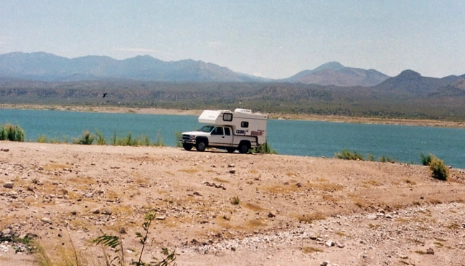
What's It Like? The Vibe and What to Do
Knowing where San Carlos Lake is located is one thing. Knowing what to expect when you arrive is another. This isn't Lake Tahoe or Lake Powell with their marinas and resorts. The vibe is rustic, remote, and deeply connected to the desert.
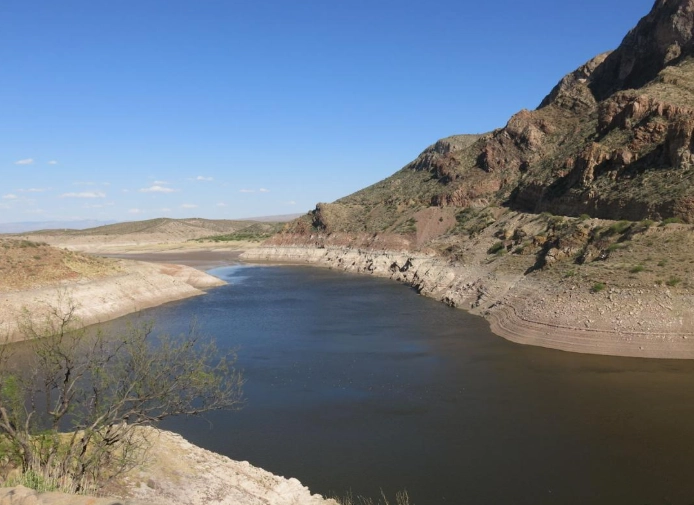
First, the water level. This is the big variable. In wet years, it's a sprawling, impressive lake. In drought years—which are frequent—it can shrink dramatically, leaving vast mudflats and concentrating the water in the old river channel. This affects everything: boat launch accessibility, fishing success, and even the view. Check the current water level on the Bureau of Reclamation's reservoir data site before you make big plans. I've driven out with a boat in tow only to find the launch ramp high and dry. Major buzzkill.
My personal take? The low-water years can be strangely beautiful in a stark, post-apocalyptic way. The exposed geology is incredible. But if your heart is set on waterskiing on a vast expanse, it can be a disappointment. Manage your expectations with the water report.
Fishing is the main draw. The lake is famously stocked with and produces huge flathead catfish. We're talking potential record-breakers. It also has largemouth bass, crappie, and sunfish. The fishing can be fantastic, but it's not easy. The lake is big, the structure changes with water levels, and the fish are wise. It feels more like an accomplishment when you land one.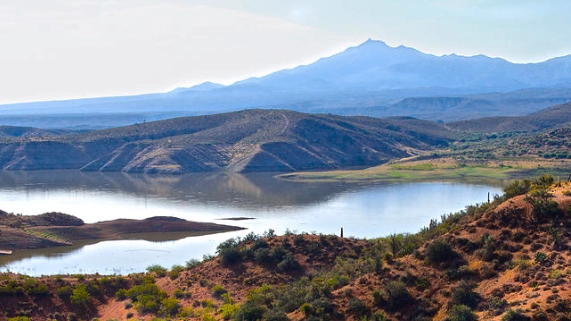
- Boating: All types are allowed—motorboats, kayaks, canoes. The water can get choppy when the wind whips down the valley, so be prepared.
- Camping: Mostly primitive. Pit toilets if you're lucky, no hookups. It's pack-it-in, pack-it-out. The night skies, though, are absolutely unreal due to the lack of light pollution.
- Wildlife: Beyond fish, you might see bald eagles, herons, coyotes, and plenty of desert birds. It's a quiet, watchful place.
Don't come expecting a snack bar or a gift shop. Come expecting solitude, big skies, and the challenge of a truly wild-feeling reservoir. The beauty of its location is in that isolation.
Answering Your Burning Questions (FAQs)
Let's tackle some of the specific questions that pop up when people are figuring out where San Carlos Lake is located and what it means for their trip.
 It's closer to Phoenix, but not exactly "near." From downtown Phoenix, it's about a 2.5 to 3-hour drive depending on traffic and your final destination on the lake. From Tucson, it's more like 3 to 3.5 hours. It's firmly in the "destination" category, not a quick afternoon escape for most people.
Wrapping It Up: More Than Just a Dot on the Map
So, where is San Carlos Lake located? It's at 33°09′N 110°28′W, in Gila County, Arizona, on the San Carlos Apache Indian Reservation, created by Coolidge Dam on the Gila River, accessible via US-70 and a network of dirt roads.
But that's just the skeleton. The flesh on the bones is the experience: the long drive through mining country into wide-open reservation land, the sight of that concrete dam holding back the blue (or brown, depending), the struggle to find the right turn-off, the absolute quiet that descends once you're there. Its location dictates its character—remote, resilient, and deeply tied to the rhythms of the desert and the management of a scarce resource.
It's not a polished, easy recreation destination. It can be challenging, dusty, and frustrating if the water's low. But that's also its appeal. You go to San Carlos Lake to get away from the manicured parks and the crowds, to test your fishing skills against legendary catfish, and to see a piece of Arizona that feels raw and real.
If your search for "where is San Carlos Lake located" was the first step in planning a trip, I hope this gives you a much fuller picture. Do your homework on permits and water levels, pack plenty of water and supplies, and go see this massive, moody piece of Arizona for yourself. Just don't forget the bug spray in the summer. Trust me on that one.
Reader Comments