Quick Guide
- Where Exactly is Navajo Point and How Do You Get There?
- What You'll Actually See from the Navajo Point Overlook
- Navajo Point vs. Its Neighbors: Which Viewpoint is Best?
- The Practical Stuff: Fees, Facilities, and Timing Your Visit
- Photography Tips for Navajo Point (From an Amateur Who's Messed Up)
- Answering Your Navajo Point Questions (The FAQs Everyone Actually Has)
- The Final Word: Making Your Navajo Point Decision
So, you've heard about Navajo Point. Maybe you saw a breathtaking photo online, or a friend mentioned it in passing. Now you're wondering—what's the big deal? Is it just another crowded viewpoint, or is there something more? Let's cut through the noise. I've been there more times than I can count, in every season, at every hour. Sometimes it's magical, and sometimes... well, let's just say I've learned a few lessons the hard way so you don't have to.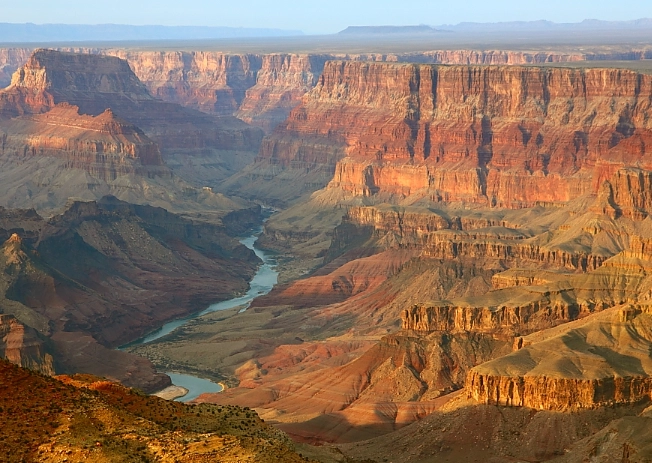
This isn't a fluffy travel brochure. It's the straight talk you need to plan a visit that's actually worth your time. We're going to cover exactly where it is (and more importantly, where it isn't), how to get there without the hassle, what you'll actually see, and the secrets most visitors completely miss. By the end, you'll know if Navajo Point is right for your trip and exactly how to make the most of it.
Where Exactly is Navajo Point and How Do You Get There?
This is where most guides give you a vague answer. Not this one. If you plug "Navajo Point" into Google Maps, it might try to take you on a wild goose chase. Let's get specific.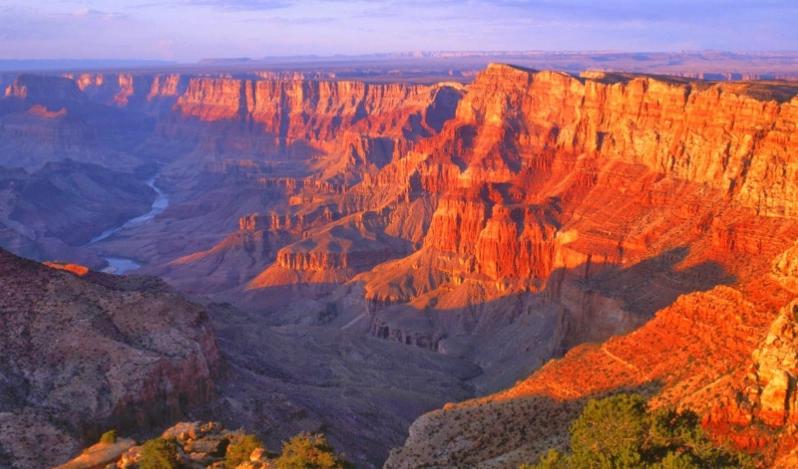
Navajo Point is located on the South Rim of the Grand Canyon within Grand Canyon National Park. It's not near the main visitor center village. You need to head east on Desert View Drive (Arizona State Route 64). From Grand Canyon Village, it's about a 25-mile drive. You'll pass landmarks like Yaki Point and Grandview Point before you get there. The turn-off is clearly marked. Look for the sign that says "Navajo Point" and a small parking lot. If you reach the Desert View Watchtower, you've gone about a mile too far east.
Honestly, the first time I went, I missed the turn. It's easy to do if you're not paying attention.
Now, how you get there depends entirely on your style:
- By Car: The most flexible option. You control your schedule. The parking lot is modest—maybe 20-25 spaces. In peak summer season (June-August), it can fill up by mid-morning. My advice? Go for sunrise or late afternoon. You'll have a better shot at a spot and infinitely better light.
- By Park Shuttle: Here's a crucial update that many outdated articles miss. The Hermit Road (Red) Route shuttle does NOT go to Navajo Point. Not even close. To reach Navajo Point via shuttle, you need to take the Hikers' Express Shuttle very early in the morning (like, 5 am early) to get to the South Kaibab Trailhead and then... it's a very long walk along the road. This is impractical for most visitors. The park's official shuttle page is the definitive source for current routes. For most people, a car, tour, or bike is the realistic choice for accessing Navajo Point.
- By Tour Bus: Many guided tours from Flagstaff, Sedona, or Las Vegas that include the "Desert View" segment of the park will stop at Navajo Point. It's a efficient, no-hassle way to see it, but you're on the tour's clock, usually getting 20-30 minutes.
- By Bicycle: This is a fantastic, underrated way to experience Desert View Drive. The road has a wide shoulder for most of the route. Riding from the village to Navajo Point is a serious commitment (it's a climb on the way back!), but you can also bring bikes on the park shuttle (with racks) to shorten the trip. The solitude on two wheels is special.
What You'll Actually See from the Navajo Point Overlook
Okay, you've parked. You walk to the wall. What's in front of you? It's not just a "pretty view." Let's break down the panorama, because knowing what you're looking at makes it ten times more meaningful.
Directly below and to the west, the Colorado River makes a sweeping curve. This is the heart of the Grand Canyon. You can often see Hance Rapid, one of the river's major rapids, churning with whitewater. On a quiet day, you might even hear its distant roar—a powerful reminder that this landscape is alive and moving. Looking east, your eye is drawn to the Desert View Watchtower, perched on the next promontory. It looks close, but hiking there along the rim is not an option—the terrain is broken and dangerous.
Further east, the canyon's character changes. The walls take on different hues, and you can see where the Palisades of the Desert section begin. To the north, the view seems endless. On a exceptionally clear day, you can see landmarks like Wotan's Throne and Vishnu Temple deep in the canyon. But let's be real—the clarity of the air is everything. On hazy days (increasingly common in summer due to wildfires or regional pollution), those distant features melt into a blue-gray blur.
The view west is arguably the "classic" Grand Canyon vista—layers upon layers of buttes, temples, and plateaus receding into the distance. This is where you truly grasp the scale.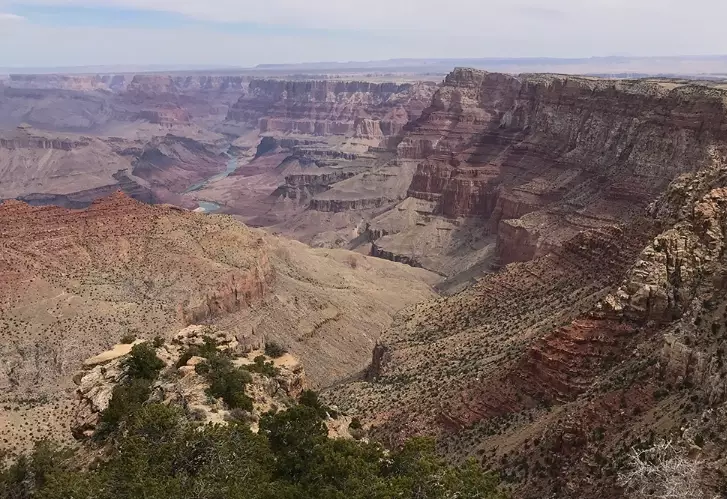
Navajo Point vs. Its Neighbors: Which Viewpoint is Best?
You don't have unlimited time. Should you prioritize Navajo Point over Lipan Point or Desert View? It depends on what you want.
| Viewpoint | Key Feature | Crowd Level | Best For | My Personal Take |
|---|---|---|---|---|
| Navajo Point | Highest elevation, panoramic river view, sees Hance Rapid. | Medium-Low | Photography, contemplation, avoiding major crowds. | The all-around winner for a balance of view and peace. My go-to. |
| Lipan Point | Widest, most expansive unimpeded view down the canyon. | Low | Grasping sheer immensity, sunrise. | View is jaw-dropping, but facilities are minimal. More raw. |
| Desert View | Watchtower, visitor center, trading post, widest amenities. | High | First-time visitors, families, shopping, amenities. | Feels commercial. The view is great, but the experience is crowded. |
| Moran Point | Dramatic view of the redwall limestone layer. | Low | Geology enthusiasts, seeing color contrasts. | Spectacular for specific geology, but view feels more "framed." |
See what I mean? Navajo Point often hits the sweet spot. It has the height and the river view without the intense commercial pressure of Desert View. The experience at Navajo Point feels more connected to the canyon itself.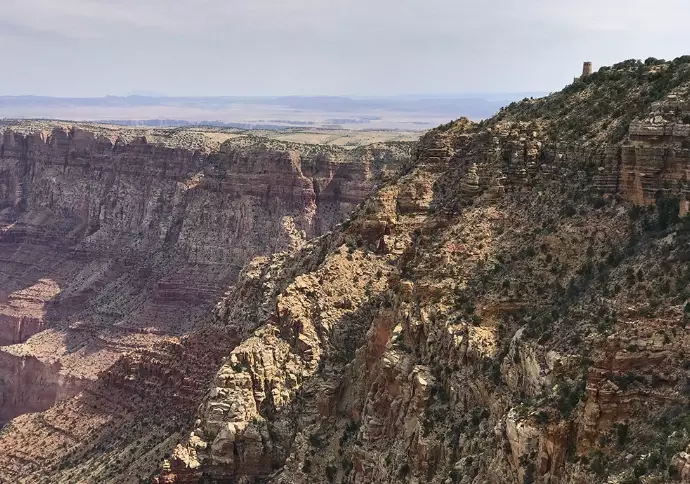
The Practical Stuff: Fees, Facilities, and Timing Your Visit
Let's talk logistics. Dreams of a perfect visit die on the rocks of poor planning.
Fees: To reach Navajo Point, you must enter Grand Canyon National Park. There's no separate fee for the point itself. You pay the standard park entrance fee per vehicle (good for 7 days). Check the latest fees on the National Park Service website, as they do change. If you're visiting multiple parks, the America the Beautiful annual pass is a no-brainer.
Facilities: This is important. There are NO restrooms, NO water fountains, and NO gift shops at Navajo Point. It's a parking lot, a paved path to the wall, and the wall itself. The nearest real facilities (restrooms, water, snacks) are at the Desert View Visitor Center, about a mile east. Plan accordingly. Never, ever hike or drive in this arid environment without ample water in your vehicle.
Best Time to Visit:
- Season: Spring (April-May) and Fall (September-October) are ideal. Temperatures are mild, crowds are thinner than summer, and the light is beautiful. Winter can be stunning with snow on the rims, but Desert View Drive may close temporarily after storms. Summer (June-August) is crowded and can be very hot on the rim, though it's cooler than down in the canyon.
- Time of Day: This is non-negotiable for a good experience. Sunrise is absolute magic at Navajo Point. The sun rises behind you, illuminating the canyon walls gradually. You'll share the space with a handful of dedicated photographers and early birds. Late afternoon until sunset is the other golden window. The warm light bathes the canyon. Midday (10 am - 3 pm) offers the least interesting light (harsh shadows) and the highest chance of crowds and full parking.
Photography Tips for Navajo Point (From an Amateur Who's Messed Up)
You want that killer shot. I get it. Here's what I've learned through trial and error.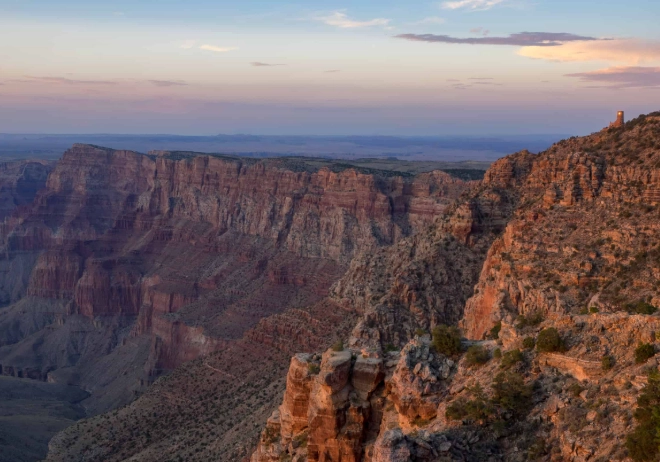
Gear: A wide-angle lens (16-35mm full-frame equivalent) is essential to capture the sweep. But don't forget a telephoto zoom (70-200mm or more). This is the secret weapon. Use it to isolate details—the curve of the river, the textures of a distant butte, the Watchtower in the distance. A sturdy tripod is a must for sunrise, sunset, and any long exposures. The wind can be brisk up there.
Composition: The classic shot is the wide panorama. But look for foreground interest. The twisted trunk of a juniper tree near the wall can frame your shot beautifully. Use the stone wall itself as a leading line. For sunset, position yourself so the Watchtower is in your frame to the east—it will catch the last light long after the main canyon is in shadow.
My biggest mistake? Not checking my camera settings after walking from a warm car into the cold morning air. Condensation fogged my lens for the first 10 minutes of sunrise once. Devastating.
Beyond the Obvious Shot: Walk a bit along the rim (on the safe side of the wall!) to the east. There are slightly different angles that include more of the river. In winter, look for frost or snow patterns on the plants near the rim. They make incredible foregrounds.
Answering Your Navajo Point Questions (The FAQs Everyone Actually Has)
Is Navajo Point worth it if I only have one day at the Grand Canyon?
It depends on your priorities. If your one day is based at the main village area and you want to do a short hike (like the Rim Trail) and hit the visitor centers, then the 50+ mile round trip to Navajo Point is a significant time commitment. However, if you're driving into the park from the east (like from Page/Lake Powell or the Navajo Nation), then stopping at Navajo Point is a perfect, less-crowded introduction before you hit the busier village. For a first-time visitor with one day coming from the south, I'd recommend focusing on the village area and maybe Desert View if you want to go east. For a repeat visitor or a photographer, yes, it's absolutely worth carving out the time.
Can you hike from Navajo Point into the canyon?
No. There is no maintained trail from Navajo Point into the inner canyon. The terrain is extremely steep, unstable, and dangerous. The only way to hike down into the canyon from the nearby area is via the South Kaibab Trailhead (a few miles west) or the Grandview Trail (further west). Attempting to create your own route from Navajo Point is a recipe for disaster, requiring rescue or worse. Stick to established trails.
What about accessibility? Is Navajo Point wheelchair-friendly?
This is a mixed bag. The parking lot has designated accessible spaces. The path from the lot to the main overlook wall is paved and relatively level, making it accessible for wheelchairs and strollers. However, the pavement can have cracks and uneven spots from winter freezing. The viewing area itself is a flat, paved platform behind the wall. The view through the wall is through gaps between the stones, which can be at an awkward height for some seated visitors. It's accessible, but not perfectly optimized. The facilities limitation (no accessible restrooms on-site) is also a major consideration.
I keep hearing about the "Navajo Loop Trail." Is that at Navajo Point?
Common confusion! No, they are completely different places. The Navajo Loop Trail is a famous and fantastic hike in Bryce Canyon National Park in Utah, hundreds of miles away. It's named for the Navajo people, as is Navajo Point. The similarity in names causes endless mix-ups online. You cannot hike the Navajo Loop from Navajo Point at the Grand Canyon.
The Final Word: Making Your Navajo Point Decision
Look, Navajo Point isn't for everyone. If you need a visitor center, a coffee shop, and a curated experience with guardrails every two feet, you'll be happier at Mather Point or the Village.
But if you want a taste of what the Grand Canyon felt like to earlier visitors—a place of immense quiet, staggering scale, and a direct connection to the landscape—then Navajo Point delivers. It asks a little more of you in terms of planning (bring water, use the bathroom first, check the weather), but it gives back so much more in return: space to breathe, unobstructed views, and a sense of discovery that the more processed viewpoints have lost.
My recommendation? If you have a half-day or more to explore the eastern South Rim, make Navajo Point your primary stop. Pair it with a quick visit to the Desert View Watchtower for its cultural history and facilities, and maybe a stop at Lipan Point on the way back if you're chasing the perfect sunset. That combination gives you variety, depth, and a truly memorable Grand Canyon experience that goes far beyond the postcard snapshot.
At the end of the day, standing at Navajo Point, watching the light play across a billion years of history, you'll forget about the drive, the planning, the minor hassles. That's the point. That's why you go.
Reader Comments