You've seen the photos. A perfect, emerald-green alpine lake cradled by towering peaks in Rocky Mountain National Park. Emerald Lake is one of those iconic Colorado hikes that lives up to the hype, but getting there requires a bit more than just lacing up your boots. Having hiked this trail in every season over the last decade, I've seen people make the same subtle mistakes—like showing up at the wrong time of day for photos, or worse, driving all the way to the park without the required permit.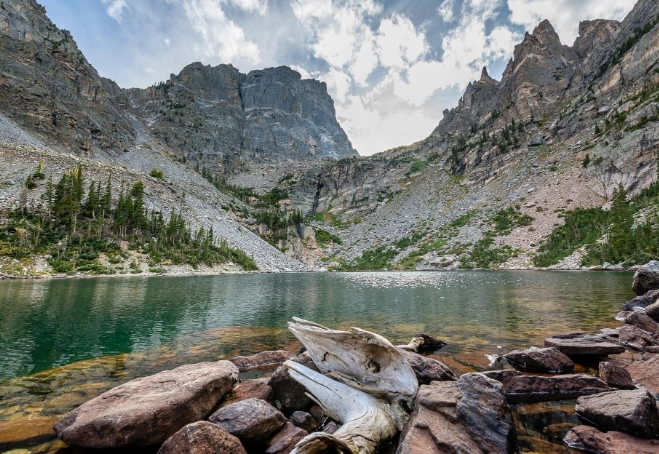
This guide cuts through the generic advice. I'll give you the exact details on the Emerald Lake trail conditions, how to navigate the timed entry system, where to find that perfect reflection shot, and a few local secrets most first-timers completely miss.
Your Quick Trail Guide
The Essentials at a Glance: Emerald Lake sits at 10,110 feet in Rocky Mountain National Park. The hike from the Bear Lake Trailhead is a 3.6-mile round trip with about 700 feet of elevation gain. You need a Rocky Mountain National Park entrance pass AND, from late May through mid-October, a Timed Entry Permit for the Bear Lake Road Corridor to access the trailhead between 5 a.m. and 6 p.m. Reserve these well in advance on Recreation.gov.
How to Get to Emerald Lake Colorado
Let's talk logistics first, because this is where most plans get derailed. Emerald Lake isn't a standalone destination; it's a key feature within Rocky Mountain National Park (RMNP).
The trail starts at the Bear Lake Trailhead. From the town of Estes Park, you take Highway 36 to the Beaver Meadows Entrance Station. After paying your park fee ($35 per vehicle, valid 7 days), you'll turn onto Bear Lake Road. This is a scenic 9-mile drive that ends at the large parking lot for Bear Lake.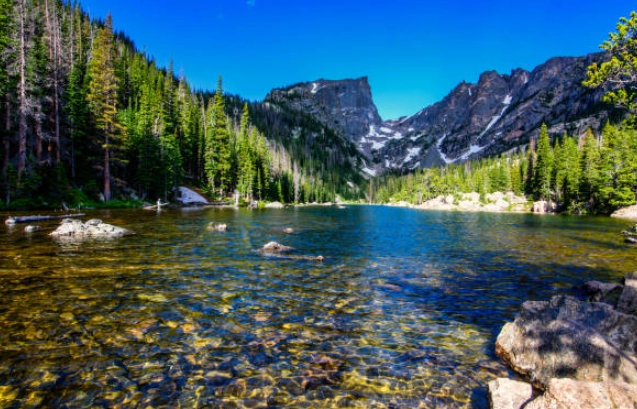
Here's the critical part: From late May through mid-October, you cannot just drive to this trailhead between 5 a.m. and 6 p.m. without a Timed Entry Permit + Park Access reservation. This system manages overwhelming crowds. If you arrive without one, you'll be turned around. You can book these permits on Recreation.gov when they're released (first batch months in advance, second batch at 5 p.m. MT the day before). If you miss out, your only option is to enter the corridor before 5 a.m. or after 6 p.m., which changes your hiking and photography plans completely.
Outside of that summer/fall window, you only need the standard park pass, but winter brings its own challenges with snow-packed, icy roads and trails.
The Hike to Emerald Lake: A Step-by-Step Trail Guide
Trailhead Access and Parking
The Bear Lake parking lot fills incredibly fast, often by 5:30 a.m. in peak summer. If it's full, you must use the Park & Ride shuttle from the Glacier Basin or Estes Park Visitor Center lots. The shuttle is free and runs frequently. Honestly, taking the shuttle can be less stressful than fighting for a parking spot. The shuttle schedule is posted on the National Park Service website for RMNP.
The Route: Bear Lake to Emerald Lake
This isn't just one lake; it's a three-lake progression that makes the hike constantly rewarding.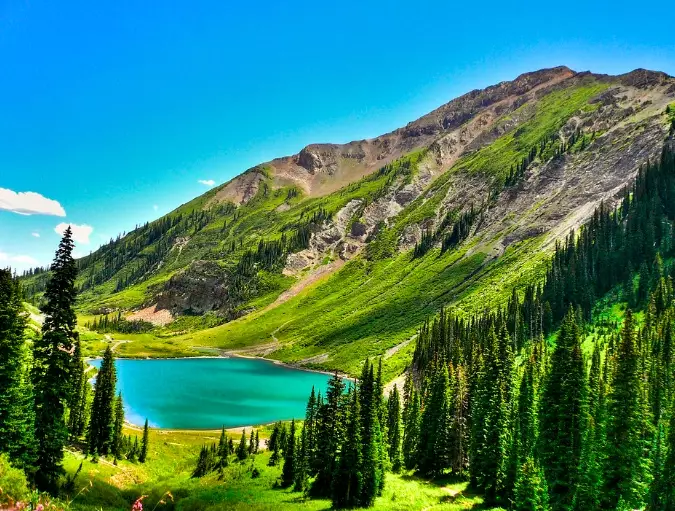
From the trailhead, you immediately get a view of Bear Lake. The wide, well-defined path heads right (south). Within 0.5 miles of gentle climbing, you reach Nymph Lake. It's covered in yellow lily pads in summer—a nice warm-up.
The next 0.6 miles to Dream Lake are the steepest section. The trail climbs through pine forest with occasional rocky steps. Emerging at Dream Lake is the first "wow" moment. It's a long, narrow lake framed by Hallett Peak and Flattop Mountain. The trail skirts its north shore.
The final 0.7 miles from Dream to Emerald Lake involve more climbing over rocky terrain. You'll pass through a boulder field. Keep an eye out for a small, unmarked social trail to the right about 0.2 miles before Emerald Lake; it leads to a fantastic overlook of Dream Lake from above—a view most hikers miss.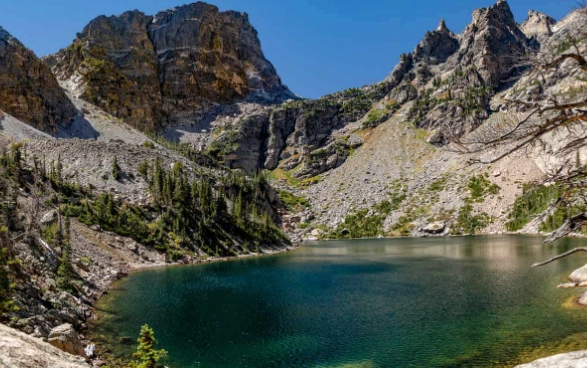
Then, you crest a rise and there it is: Emerald Lake. The color is real. It's caused by glacial flour—fine rock particles suspended in the water that scatter sunlight. Tyndall Gorge forms a dramatic backdrop with Hallett Peak (12,713 ft) and Flattop Mountain looming overhead.
What to Expect on the Trail
Distance: 3.6 miles round trip.
Elevation Gain: ~700 ft.
Difficulty: Moderate. The altitude is the real challenge. At over 10,000 feet, even fit lowlanders can get winded. Take it slow, drink water.
Trail Condition: Well-maintained dirt and rock. Can be muddy in early summer (snowmelt) and icy/snowy from October through June. Microspikes are essential in off-season months. Check current conditions on the RMNP website or at a visitor center.
Time: Allow 2.5 to 4 hours, depending on your pace and how long you linger at the lakes.
A common mistake is rushing to Emerald Lake and ignoring the other two. Each lake has a different character. Budget time to enjoy them all.
Best Time to Visit Emerald Lake for Color and Conditions
The lake's famous color is most intense under specific conditions. It's not always a vibrant emerald.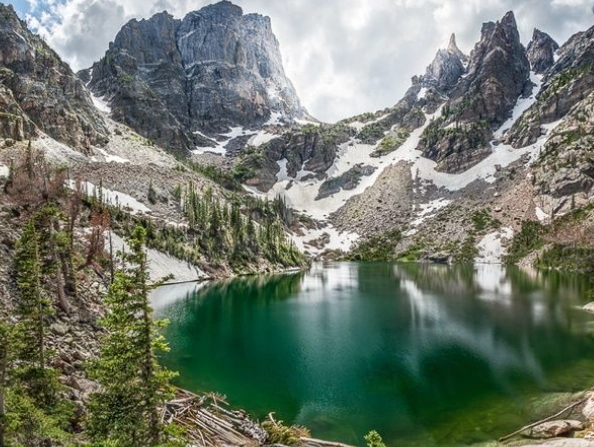
| Season | Pros | Cons & Considerations | Lake Color & Trail Condition |
|---|---|---|---|
| Summer (July-Aug) | Wildflowers, stable weather, all trails clear. | Crowds peak. Thunderstorms most afternoons (hike early!). Timed Entry Permit required. | Good color, but can appear more muted on windy days when surface is choppy. |
| Fall (Sept-Oct) | Aspen gold in lower valleys, fewer crowds after Labor Day, crisp air. | Unpredictable weather. Early snows possible. Permits required through mid-Oct. | Often the BEST color. Calmer winds, clear water, stunning contrast with golden foliage. |
| Winter (Nov-Apr) | Solitude, snowscapes, no permits needed. | Extreme cold. Trail is a snowshoe route. Avalanche awareness needed near the lake. Road may close temporarily after storms. | Lake is frozen and snow-covered, appearing white. The "emerald" is hidden, but the scenery is magical. |
| Spring/"Mud Season" (May-June) | Snowmelt creates waterfalls, dynamic scenery. | Trail can be a slushy, muddy mess. Lingering snowfields can be treacherous. Permits start late May. | Color can be brilliant as melting ice reveals the water, but access to the full shoreline may be blocked by snow. |
My personal favorite is late September. The summer crowds have thinned, the air is clear, and the lake is often like a mirror in the morning. I've seen people come in mid-July at noon, find the lake windy and crowded, and leave disappointed. Timing is everything.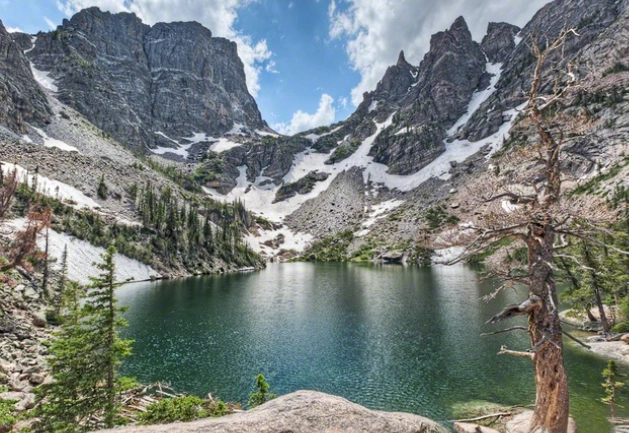
Photographing Emerald Lake: Pro Tips for Stunning Shots
Getting a postcard shot requires more than a smartphone snap from the shore. Here’s what most photography guides don’t tell you.
Light is King: The sun rises behind the peaks that frame the lake. This means mornings offer the best, softest light on the water and peaks. By afternoon, the sun is high and harsh, and the gorge walls are in shadow. For the best chance at a reflection, you need to be there at or just after sunrise, before the wind picks up. Yes, that means a very early start (think 3-4 a.m. from Estes Park to make a sunrise hike).
Location Scouting: The obvious spot is the rocky shore at the trail's end. Don't stop there.
- Walk along the right (east) side of the lake. About 100 yards down, there’s a cluster of large boulders that offer a slightly elevated, less crowded perspective.
- In late summer when water levels are lower, you can sometimes find small, clear pools in the rocks along the edge that create perfect foreground elements.
- If there's no wind, get low. Place your camera just inches above the water to maximize the reflection.
Gear Advice: A wide-angle lens (16-35mm full-frame equivalent) is great for capturing the scale. A polarizing filter is your secret weapon. It cuts glare on the water's surface, allowing you to see the rocks beneath and saturates the blue sky and green water. Rotate it until the color pops. A tripod is non-negotiable for sunrise or low-light shots.
One subtle error? People forget to turn off their polarizer when shooting the forest sections of the trail. It can make the pine trees look unnaturally dark and contrasty.
Where to Stay and Eat Near Emerald Lake
You’re not camping at the lake (it's not allowed). Your base will be Estes Park, about a 40-minute drive from the trailhead without traffic.
Accommodation: Book months in advance for summer.
- Budget-Friendly/Lodge Vibe: The YMCA of the Rockies - Estes Park Center offers cabins and lodge rooms. It’s massive, has great views, and is closer to the park entrance.
- Mid-Range/Classic: The Stanley Hotel. Yes, the "Shining" hotel. It’s historic, beautiful, and you pay for the legend. Rooms can be pricey.
- Splurge/Seclusion: Look for private cabins or condos on VRBO/Airbnb in the surrounding areas like Glen Haven or Allenspark for more space and quiet.
Food & Coffee: You need fuel for an early hike.
- Coffee & Breakfast: Kind Coffee on Elkhorn Ave opens early (6 a.m.) and is a local favorite for strong coffee and breakfast burritos to-go.
- Post-Hike Burger: The Rock Inn Mountain Tavern south of town has a great patio and live music. Solid burgers and local beers.
- Pizza: Antonio's Real New York Pizza is the real deal if you're craving a slice after a long day.
Don't rely on finding great food inside the park itself. Pack plenty of snacks, lunch, and at least 2 liters of water per person for the hike.
Reader Comments