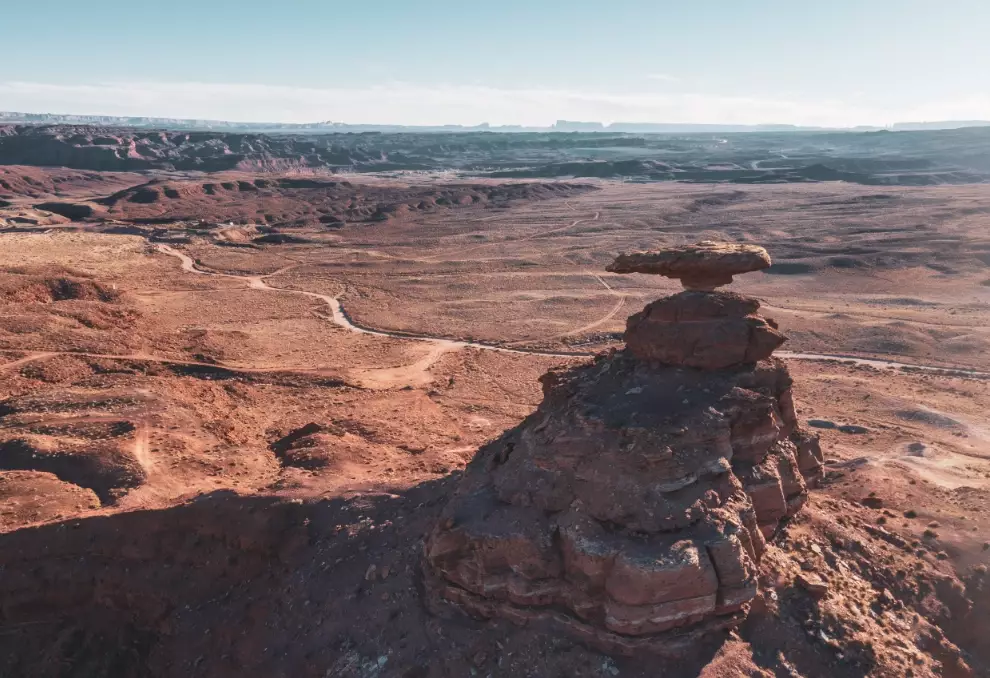
You see it in pictures: a giant sombrero-shaped rock perched precariously on a cliffside in the middle of the Utah desert. Mexican Hat is one of those roadside landmarks that makes you do a double-take. But here’s the thing most blogs don’t tell you—if you just pull over, snap your photo, and leave, you’re missing the entire point of this place.
This region isn't a single attraction; it's a gateway. A gateway to some of the Colorado Plateau's most jaw-dropping, crowd-free geology. I’ve driven through here half a dozen times over the years, and my mistake the first time was treating Mexican Hat as a checkbox. The magic happens when you use it as your starting point for a deeper exploration.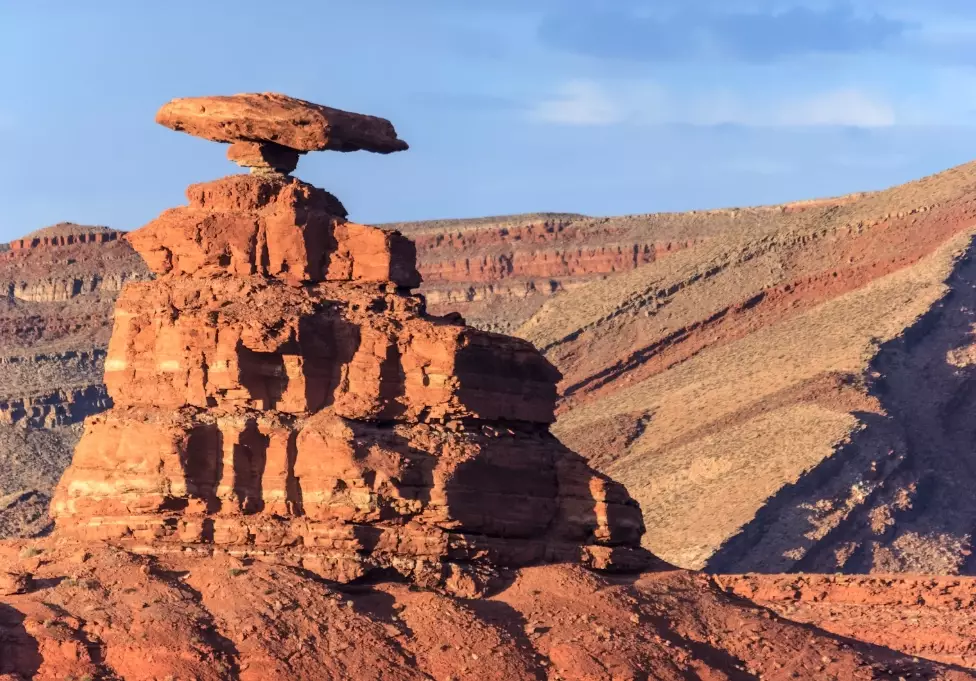
Quick Navigation for Your Trip Planning
What is the Mexican Hat Rock Formation?
Let's get specific. The namesake rock is a 60-foot tall sandstone butte. The "brim" is a flat, resistant layer of rock (likely a harder sandstone or conglomerate) that has eroded more slowly than the softer shale and sandstone beneath it, creating that iconic overhang. It’s a textbook example of differential erosion, not some ancient sculptor’s work.
It stands just off US Highway 163, about 20 miles north of the Arizona-Utah border. The coordinates are 37.1511° N, 109.8677° W. There are no gates, no parking lots with attendants, and definitely no entrance fee. It’s just you, the rock, and the immense silence of the desert.
A subtle detail most miss: the view changes dramatically depending on your angle. From the highway looking north, it looks like a perfect hat. Drive the short loop road behind it, and you see how it’s connected to the larger cliff face—it feels more integrated and massive.
How to Get to Mexican Hat, Utah: Directions & Logistics
This is where concrete info beats vague advice. Mexican Hat is remote. Your GPS might say you have service, but don’t count on it.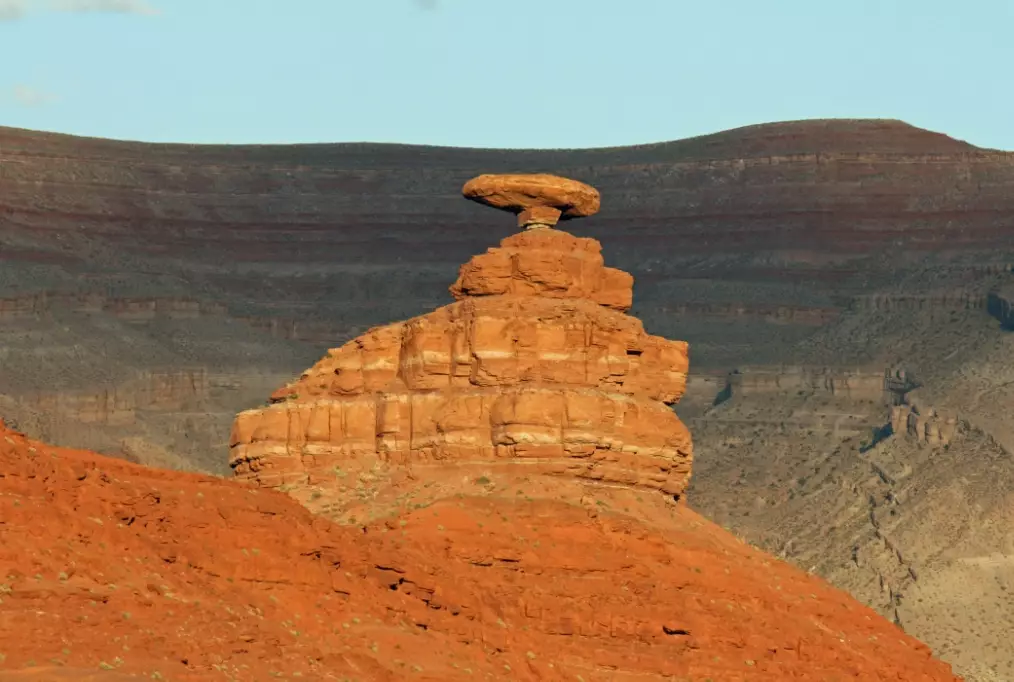
Mexican Hat, Utah: Key Visitor Facts
Location: Along US Highway 163, San Juan County, Southeast Utah.
Nearest Town with Services: Bluff, UT (20 min south). Monticello, UT (1 hr north) and Kayenta, AZ (45 min south) have more options.
Operating Hours: Always open. Public land (Bureau of Land Management).
Entrance Fee: None.
Best Time to Visit: Spring (April-May) and Fall (Sept-Oct). Summer is brutally hot. Winter can be cold with occasional snow/ice on roads.
Road Conditions: US-163 is paved and well-maintained. Access roads to viewpoints are graded dirt, usually passable for careful drivers in standard cars when dry.
From Monument Valley: Head north on US-163 for about 25 minutes (22 miles). You’ll see the rock on your left (west) side. Look for the pull-off.
From Moab: It’s a longer haul. Take US-191 south to Blanding (about 1.5 hrs), then US-191/US-163 south for another hour. Total drive is roughly 2.5 to 3 hours.
From Page, AZ / Lake Powell: Take US-98 east to Kayenta (1 hr), then US-163 north for 45 minutes.
Gas up in Bluff or Kayenta. The tiny settlement of Mexican Hat has a gas station, but hours can be unpredictable and prices higher. I learned this the hard way once, rolling in on fumes.
The Must-See Attractions Near Mexican Hat
This is the core of the visit. Mexican Hat is the headline, but these are the supporting acts that steal the show.
1. Goosenecks State Park (5 minutes away)
Five miles west of Mexican Hat, down a steep road, you’ll find one of the most dramatic examples of an entrenched meander on the planet. The San Juan River loops 1,000 feet below you in tight, horseshoe bends. The view from the rim is instantaneous and costs $5 per vehicle (self-pay station).
It’s a small park—just a rim viewpoint, some picnic tables, and pit toilets. No water. No crowds. The power is in the sheer scale. Stay for sunset; the shadows deepen in the canyon and the rock layers glow. According to the Utah State Parks website, the river travels over six miles to advance one mile straight line distance.
2. Valley of the Gods Scenic Drive (The Hidden Gem)
If you do one thing besides see the hat, make it this. Often called a "miniature Monument Valley," it’s a 17-mile unpaved loop road through a stunning field of isolated sandstone buttes, spires, and mesas. It’s on BLM land, free, and sees a fraction of the traffic.
The crucial advice everyone skips: Drive it clockwise from the southern entrance off US-163. This puts the most spectacular formations like Seven Sailors, Setting Hen, and Rooster Butte on your driver’s side for easy viewing and pulling over. A high-clearance vehicle is strongly recommended. After rain, it’s a slick, red clay mess—avoid it. In dry conditions, a careful driver in a SUV can manage, but take it slow. Allow 1.5 to 2 hours.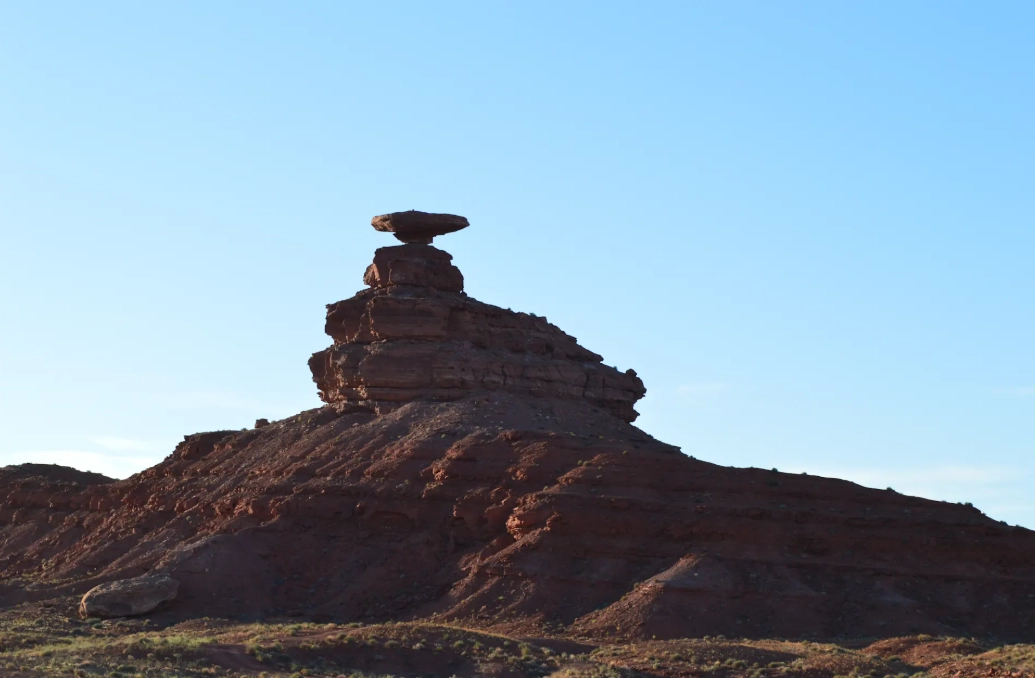
3. Monument Valley Navajo Tribal Park (30 minutes south)
You’ve seen it in movies. The iconic mittens and vast mesas of Monument Valley are the classic Southwest. While it’s a major tourist destination (with associated fees and crowds), it’s undeniably magnificent. The 17-mile self-drive loop inside the park is rough but doable in most SUVs. Alternatively, book a guided tour with a Navajo guide for deeper access and stories. It’s the famous cousin to the quieter valleys nearby.
Planning Your Visit: Itineraries & Practical Tips
How you structure your day makes all the difference.
The Perfect Mexican Hat Day Trip (From Bluff or Monument Valley):
- Morning: Drive to Mexican Hat, view the rock from highway and the back loop.
- Late Morning: Spend an hour at Goosenecks State Park.
- Afternoon: Drive the Valley of the Gods loop (pack a picnic lunch).
- Late Afternoon: Return to US-163, head south to catch the late light on Monument Valley’s mittens from the highway overlooks (free).
Where to Stay:
- In Mexican Hat: The San Juan Inn is an institution, right on the river. Basic rooms, incredible patio views. The Hat Rock Inn across the road is another no-frills motel option.
- In Bluff (20 min south): A better base. Try the Desert Rose Inn or the more upscale Bluff Dwellings Resort. Bluff has a couple of excellent restaurants like the Comb Ridge Eat & Drink.
- Camping: Dispersed camping is allowed on much of the surrounding BLM land (follow Leave No Trace principles). For facilities, there’s the Valley of the Gods B&B (a yurt!) or the Goosenecks State Park campground (primitive, first-come-first-served, epic views).
How to Photograph Mexican Hat & The Valley of the Gods
Midday light here is the enemy. It washes out all the beautiful reds and creates harsh shadows.
For Mexican Hat rock, the classic shot is from the highway pull-off looking north. Use a medium telephoto lens (around 70-200mm) to isolate it against the cliff. For the unique shot, drive the back road in the late afternoon. The sun will light the western face, and you can frame the "hat" with the valley behind it.
In Valley of the Gods, look for leading lines—the dirt road winding between buttes is a classic. Shoot during golden hour (the hour after sunrise or before sunset). The low-angle light rakes across the sandstone, revealing every ripple and texture. A polarizing filter is your best friend here to deepen the blue sky and cut haze.
Don’t forget the wide shot. Sometimes, stepping back with a 24mm lens to show the vast, empty landscape with a single butte tells a more powerful story than a close-up.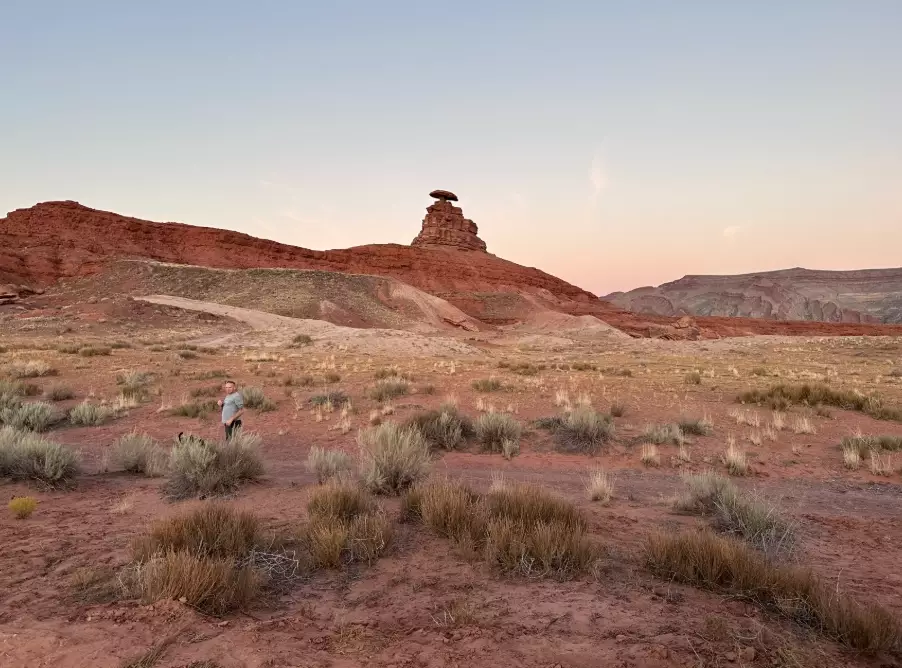
Your Mexican Hat, Utah Questions Answered
Is Mexican Hat, Utah worth a special trip, or is it just a quick photo stop?
It depends on your travel style. If you're purely ticking off landmarks, you can see the rock from the road in 10 minutes. But if you appreciate geology, vast silence, and exploring without crowds, it's a destination. The real value lies in combining it with Goosenecks State Park (5 minutes away) and the Valley of the Gods scenic drive (30 minutes away). As a solo piece, it's a stop; as part of a southern Utah circuit, it's a highlight for those who dislike mainstream parks.
What's the best way to photograph the Mexican Hat rock formation?
Most photos are taken from US-163, which gives a good frontal view. For a unique shot, take the short, rough dirt road that loops behind it. This western angle in late afternoon light shows the 'brim' more dramatically against the cliff face. Use a telephoto lens (70-200mm) to compress the scene. A common mistake is shooting at midday; the harsh light flattens the texture. Aim for sunrise or a few hours before sunset. A polarizing filter helps cut the desert haze.
Do I need a 4x4 vehicle to visit Mexican Hat and the surrounding area?
For the main viewpoint of Mexican Hat rock itself, no. A standard sedan can handle the short, graded dirt pull-off from US-163. However, to fully explore the Valley of the Gods loop (a 17-mile dirt road) or the deeper sections of Cedar Mesa, a high-clearance vehicle is strongly recommended, and 4WD is essential if there's been recent rain. The roads are not maintained to park service standards. I've seen sedans struggle and turn around. Renting a Jeep or SUV in nearby towns like Bluff or Monticello dramatically expands your access.
Where is the closest place to stay near Mexican Hat, Utah?
The tiny settlement of Mexican Hat itself has a few basic options: the historic San Juan Inn right on the river, or the nearby Hat Rock Inn. These are motel-style lodgings, not luxury resorts, but they have incredible views and character. For more services (gas, groceries, restaurants), the town of Bluff, Utah, about 20 minutes south, is a better base. It has several B&Bs, a well-stated grocery co-op, and good dining. Monticello (an hour north) and Kayenta, Arizona (45 minutes south) offer larger hotel chains.
 Mexican Hat, Utah, is a lesson in context. The rock is a quirky landmark, but the land around it is the real masterpiece. It’s a place that rewards slowing down, getting a little dust on your tires, and watching the light paint the canyon walls. Skip the rushed photo op. Plan for the exploration.
Reader Comments