Explore This Guide
- What Exactly Is White Pocket Arizona?
- Planning Your White Pocket Adventure: The Nitty-Gritty
- The Main Event: Getting to White Pocket (The Drive)
- What to Do at White Pocket Arizona
- Sleeping Near White Pocket: Camping and Lodging
- White Pocket Arizona: Frequently Asked Questions (The Real Ones)
- Final Thoughts and My Personal Take
Let's be real. You've seen the photos. Those swirling, brain-like rock formations in impossible shades of cream, red, and orange, looking more like a painting from another planet than a place on Earth. That's White Pocket. And if you're here, you're probably past the "wow" stage and deep into the "how on earth do I get there?" stage. I've been there, literally. The drive made me question all my life choices for a solid hour.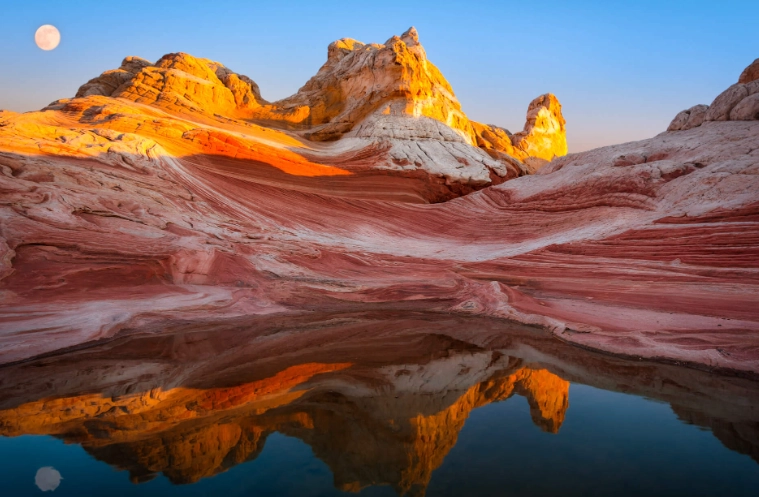
White Pocket Arizona isn't a national park. It's not even really a marked destination. It's a remote, fragile area of swirling Navajo Sandstone within the Vermilion Cliffs National Monument. Calling it a "hidden gem" feels like an understatement. It's more of a whispered secret among landscape photographers and hardcore desert rats. This guide isn't just another list of facts. It's the gritty, practical, and hopefully helpful brain-dump I wish I'd had before my own trip to White Pocket.
What Exactly Is White Pocket Arizona?
First, let's clear up what it's not. It's not the Wave (that's a separate, permit-impossible lottery nearby). It's not a single rock. White Pocket is a relatively small, exposed area of cross-bedded sandstone. The geology is the star here. Millions of years of wind and water erosion on the ancient dunes have created this chaotic, undulating landscape. The "white" part comes from the bleached, top layer of rock. The "pocket" refers to its basin-like formation.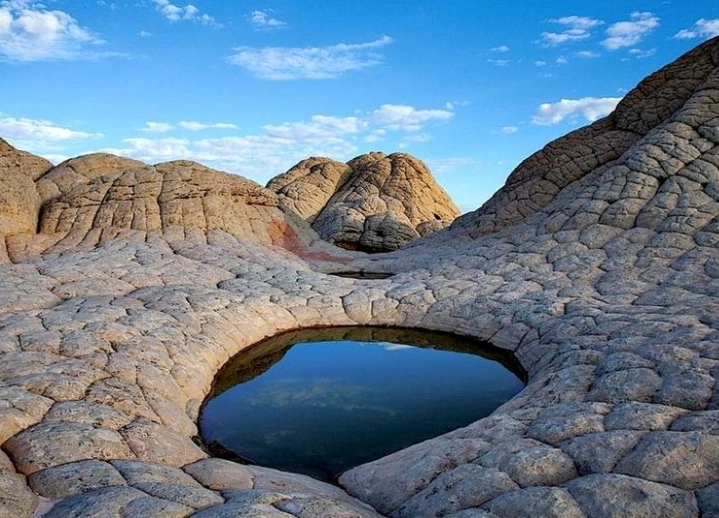
What makes White Pocket so special is the variety and concentration of these formations. You'll find:
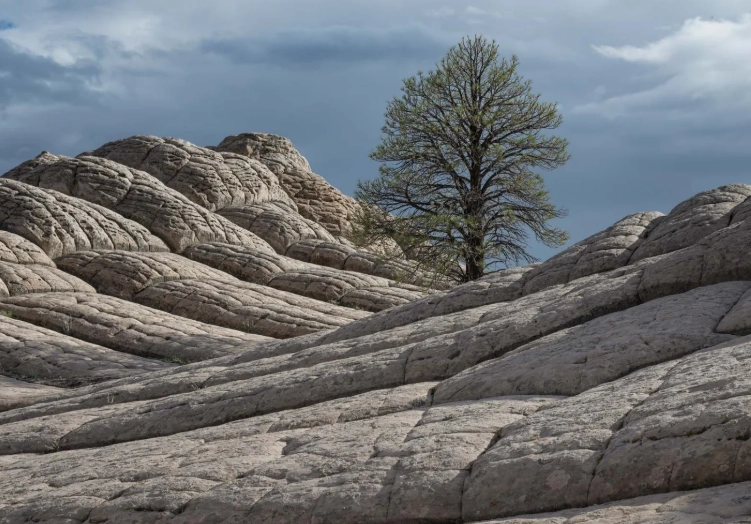
- The famous "brain rock" or cauliflower formations.
- Smooth, wave-like domes.
- Deep, narrow slots and trenches.
- Striking red and orange bands running through the white stone.
It's a compact, surreal playground for exploration and photography.
Planning Your White Pocket Adventure: The Nitty-Gritty
This is where most guides gloss over the hard parts. I won't.
Best Time to Visit White Pocket
Timing is everything, mostly because of the road and the heat.
| Season | Pros | Cons | Verdict |
|---|---|---|---|
| Spring (March-May) | Pleasant temps, wildflowers possible, good light. | Can be windy, roads may be muddy from snowmelt. | Top Choice |
| Fall (Sept-Oct) | Cooler weather, stable roads, great sun angles. | Days get shorter. Can still be warm early Sept. | Excellent |
| Winter (Nov-Feb) | No crowds, dramatic skies. Roads frozen can be easier. | Bitterly cold, very short days. Snow can make roads impassable. | For the Experienced Only |
| Summer (June-Aug) | Long days. | Extreme heat (100°F+), monsoon storm danger, deep sand on roads. | Not Recommended |
I went in late April. The temperatures were perfect for hiking, but that sun is no joke even then. There is zero shade at White Pocket. Zero.
The Dreaded Permits and Fees
Here's a bit of good news. Unlike its famous neighbor, White Pocket Arizona does not require a permit or fee for day use. Let me say that again because it's important: no lottery, no daily quota for day hiking. This is a major reason it's become a popular alternative.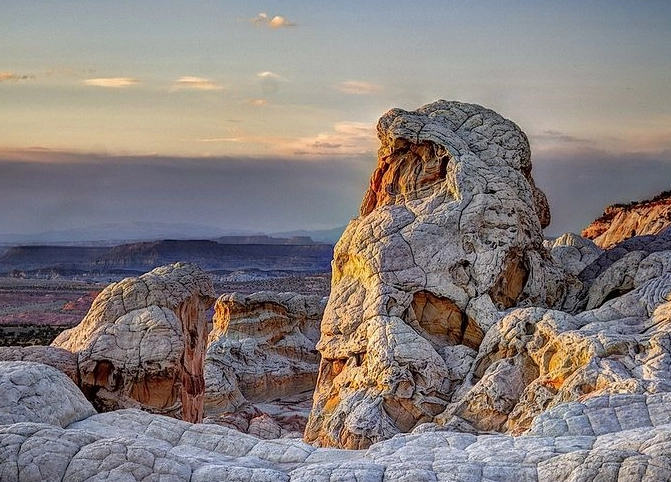
However, you are entering the Vermilion Cliffs National Monument, managed by the Bureau of Land Management (BLM). You must follow all BLM rules and regulations. This means pack it in, pack it out. Every scrap. No camping at the White Pocket formation itself (more on camping later). And for heaven's sake, don't carve your name into the rock. The fragility of this place cannot be overstated.
The Main Event: Getting to White Pocket (The Drive)
This is the make-or-break section. The journey to White Pocket is 90% of the challenge.
Route Options and Navigation
There are two main routes, both challenging. Do not rely on Google Maps or Apple Maps. They will get you lost. You need a dedicated GPS with offline maps like Gaia GPS or onX Offroad, loaded with the correct track.
From Highway 89A (The "Standard" Route):
1. Head east from Kanab, UT or west from Page, AZ on US-89A.
2. Turn onto House Rock Valley Road (BLM Road 1015). This is a well-graded dirt road... for a while.
3. Drive approximately 26 miles south. The turn-off for White Pocket is not well-marked. Look for a sign for "White Pocket" or a cattle guard with a wire fence. The coordinates are roughly 36° 57' 36" N, 111° 51' 32" W.
4. Turn east here onto a much rougher two-track. This is where the real fun begins. Drive about 6 miles to the parking area.
That last 6 miles can take over an hour. It's a maze of sand, rock, and confusing tracks. I spent 20 minutes just figuring out which of five faint tracks was the "main" one. Air down your tires (I dropped to 18 PSI) for better traction in the sand.
From the South (Wire Pass Trailhead): This is a longer, more remote route sometimes used by tour companies. It's not recommended for first-time solo drivers.
My personal, non-expert advice? If you're at all unsure about your vehicle or off-road driving skills, book a tour. Several reputable companies in Kanab run day trips to White Pocket. It's expensive, but it removes the huge stress of the drive and navigation. I've done it both ways, and with a tour, you just get to enjoy the scenery.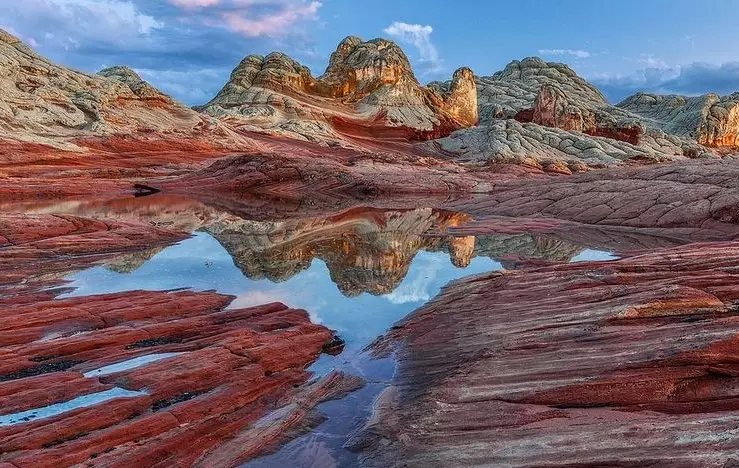
What to Do at White Pocket Arizona
You've survived the drive. Now what? The exploration is mostly unstructured.
Hiking and Exploring
There's no marked trail. From the parking area, you simply walk into the rock formation. The area isn't huge, so you can't get terribly lost, but it's easy to lose your bearing among the domes and pockets.
- Respect the Rock: The sandstone is soft and fragile. Stay on durable surfaces as much as possible. Avoid walking on the fragile crusty edges of the formations.
- Photography Spots: The most photographed area is the main "brain rock" basin just north of the parking lot. But wander further. Some of the most interesting slots and colors are found by exploring the eastern and southern edges.
- How long do you need? A minimum of 2-3 hours to get a good feel. Photographers will want 4+ hours to catch different light.
The hike isn't about distance or elevation. It's about careful movement and discovery. You'll be scrambling over rocks, dipping into little pockets, and constantly saying, "Whoa, look at this!"
Photography Tips for White Pocket
This is a photographer's paradise, but it's tricky.
Best Light: Sunrise is magical, bathing the white rock in warm, soft light. Sunset can be great too, but the main formation faces east, so it falls into shadow earlier. The hours just after sunrise and before sunset are golden (literally).
Gear:
- A wide-angle lens (16-35mm) is essential for capturing the vast, sweeping shapes.
- A telephoto lens (70-200mm) is great for compressing layers and isolating details.
- A polarizing filter can help manage reflections and deepen the blue sky against the white rock.
- A sturdy tripod. You'll be doing long exposures if you're there for astrophotography.
Composition: Look for leading lines in the rock, patterns, and contrasts between the white and red sandstone. Include a human figure for scale—it makes the landscape feel even more monumental.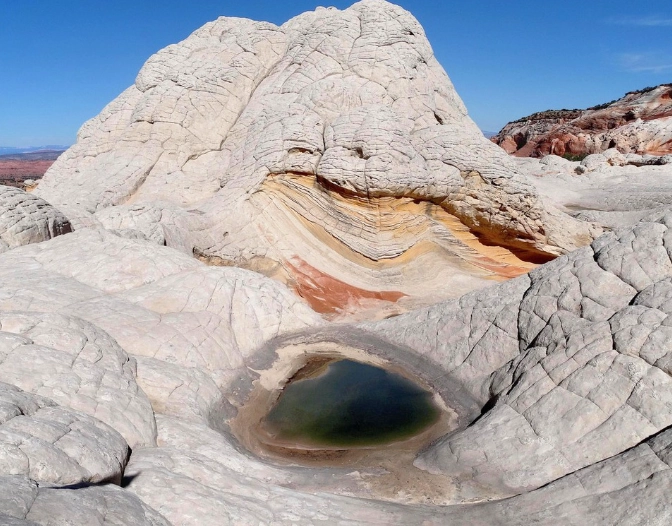
Sleeping Near White Pocket: Camping and Lodging
You cannot camp at the White Pocket formation itself. It's day-use only to protect it. But there are options nearby.
Dispersed Camping: Along House Rock Valley Road (the main access road), there are numerous established dispersed campsites. These are free, first-come-first-serve, and have no facilities. You must be self-contained. This is the most popular option for those wanting an early start. Find a spot that's already been used to minimize impact. Bring all your water—there is none out there.
Developed Campgrounds: The nearest official campgrounds are back in Kanab, Utah (about 1.5-2 hours away) or at the Stateline Campground near the Wave trailhead.
Lodging: Kanab, Utah is the best basecamp. It has hotels, motels, Airbnb, and all the services you need to fuel up and stock up. Page, Arizona is another option, slightly further east.
White Pocket Arizona: Frequently Asked Questions (The Real Ones)
These are the questions I had, and the ones I see pop up constantly in forums.
Final Thoughts and My Personal Take
White Pocket Arizona is not for everyone. The drive is a genuine ordeal. It's remote, exposed, and demands respect. I had moments of sheer anxiety on that bumpy two-track, wondering if my rental Jeep was going to make it.
But.
Walking into that landscape for the first time erases all of that. It's so bizarre, so beautiful, so completely unlike anything else. You feel like you've discovered something secret. There's a quiet out there that's hard to find anymore. You're not competing for a photo spot with 50 other people. You're just... there.
If you have the right vehicle, the skills, and the preparation, go. It's 100% worth it. If you're missing any of those pieces, seriously consider a tour. Either way, experiencing White Pocket is something you won't forget. Just please, please take care of it. This place feels ancient and delicate. Let's keep it that way for the next whisper-seekers who find their way here.
Safe travels.
Reader Comments