Let's be honest. When you think of Arizona camping, your mind probably jumps straight to the Grand Canyon. But let me tell you, you'd be missing out on one of the most rugged, diverse, and surprisingly accessible camping experiences in the Southwest. I'm talking about Tonto National Forest Arizona camping.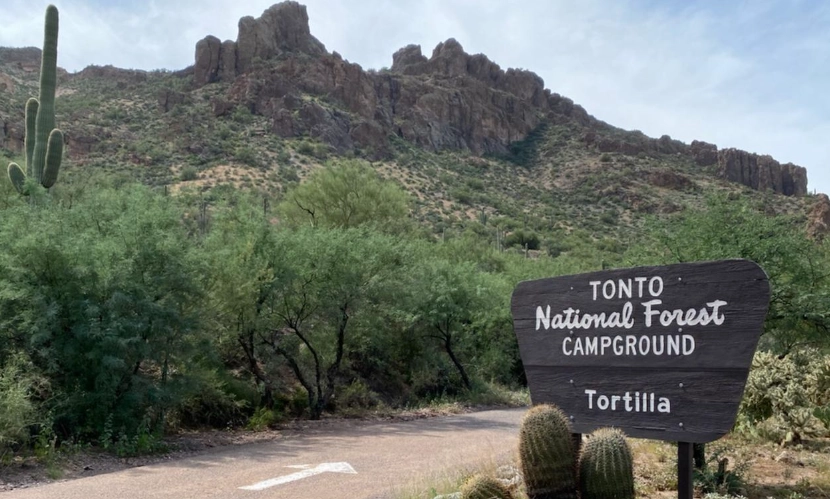
Your Camping Guide
- What Exactly is Tonto National Forest? (And Why Camp There?)
- Finding Your Perfect Tonto National Forest Camping Spot
- Packing for the Desert: A Non-Negotiable Checklist
- Things Nobody Tells You (But You Really Need to Know)
- Your Tonto National Forest Arizona Camping Questions, Answered
- Making It a Great Trip (And Leaving It Better Than You Found It)
What Exactly is Tonto National Forest? (And Why Camp There?)
First things first. Tonto isn't a single, uniform park. It's a sprawling mosaic of six distinct districts, each with its own personality. Managed by the USDA Forest Service, it's a working forest with a mix of designated recreation areas and vast stretches of backcountry where you're truly on your own.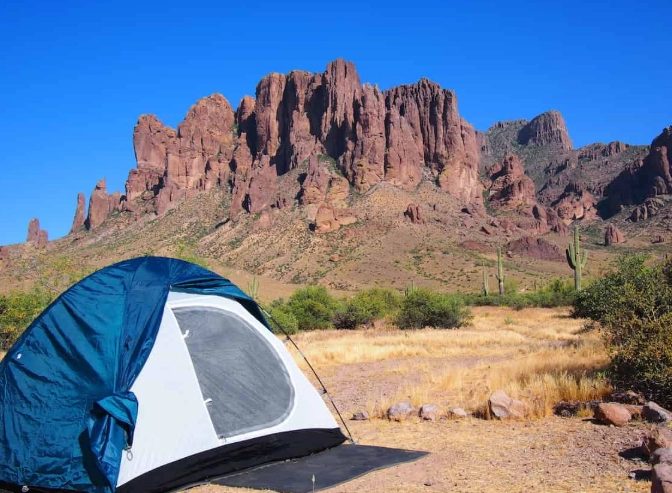
Why choose it? For starters, freedom. Compared to the regimented, booked-months-in-advance campgrounds of some national parks, Tonto offers a ton of first-come, first-served sites and huge swaths of land where dispersed camping is not just allowed, it's the norm. It's also a year-round destination. When Flagstaff is buried in snow, the lower desert sections of Tonto are enjoying mild, perfect days.
But the real draw is the landscape transition. You can camp in the morning surrounded by giant cacti, and after a couple hours' drive, be setting up your tent in a cool pine forest. That's a unique trick not many places can pull off.
Finding Your Perfect Tonto National Forest Camping Spot
This is the million-dollar question. The forest is so big you could spend a lifetime exploring it. To make sense of it, I break it down by the type of experience you're after.
Developed Campgrounds (For When You Want a Few Amenities)
These are your classic campgrounds, usually with amenities like vault toilets, picnic tables, fire rings, and sometimes even drinking water. They're great for families, folks new to desert camping, or anyone who doesn't want to go fully off-grid. They can get busy, especially near the lakes on holiday weekends.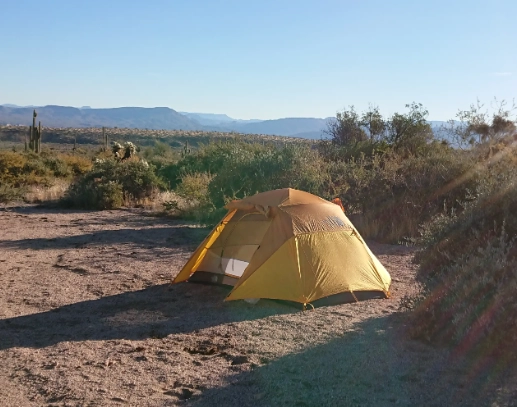
Here’s a rundown of some of the most popular and accessible ones, perfect for that first Tonto National Forest Arizona camping trip.
| Campground Name | District / Near | Elevation & Vibe | Key Features & Notes |
|---|---|---|---|
| Houston Mesa | Mogollon Rim (near Payson) | ~5000 ft. Pine forest. | Large, popular, close to town. Good mix of sun/shade. Often has host. |
| Ponderosa | Mogollon Rim (Payson) | ~5000 ft. Dense Ponderosa pines. | Feels more secluded than Houston Mesa. Great for hammocks. |
| Winding River (at Christopher Creek) | Mogollon Rim | ~4800 ft. Creek-side. | Smaller, sites right along the creek. The sound of water all night. Books fast. |
| Burnt Corral | Tonto Basin (Apache Lake) | ~1900 ft. Desert lake. | Stunning cliffs over Apache Lake. Boat ramp access. Can be very hot in summer. |
| Cholla | Globe (The Creeks) | ~3700 ft. Canyon/stream. | Lush oasis in the desert. Sites along a year-round stream. A hidden gem. |
| Jones Water | Cave Creek (NE of Phoenix) | ~3000 ft. Desert wash. | Easiest access from Phoenix. Classic Sonoran Desert scenery. Gets crowded. |
The Real Magic: Dispersed Camping in Tonto National Forest
This is where Tonto shines. Dispersed camping means camping outside of a designated campground, for free, usually along established forest roads. It's the ultimate way to find solitude and your own piece of desert or forest.
But—and this is a big but—it comes with zero amenities. No toilet, no table, no trash service. You bring everything in, you pack everything out. It requires more preparation and a strong commitment to Leave No Trace principles.
Some legendary areas for dispersed Tonto National Forest camping include the network of roads along the Mogollon Rim (FR 300, the Rim Road, offers epic views), the area around Four Peaks Wilderness, and the backroads leading into the Superstition Wilderness. The first time you find your own secluded spot with a view that's all yours, you'll get it.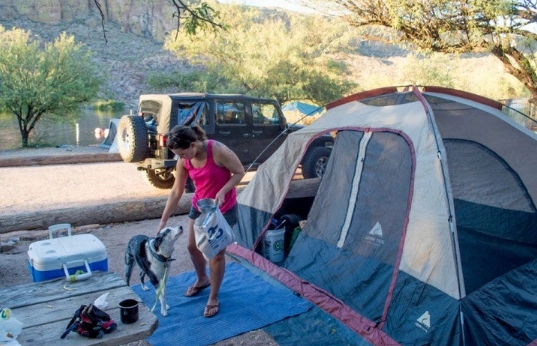
It's not all perfect. I once spent an hour trying to find a level spot on a crowded weekend along a popular road, only to end up somewhere less than ideal. Popular dispersed areas can get picked over.
Packing for the Desert: A Non-Negotiable Checklist
Forgetting something on a beach trip is an inconvenience. Forgetting something on a desert camping trip can be a serious problem. This list is born from experience, not a generic template.
Water, Water, and More Water
This is number one. The desert is dehydrating even when you're not hot. For drinking, cooking, and cleaning, plan for at least one gallon per person, per day. For summer trips, make that two gallons. I bring a combination of large 5-gallon jugs for camp and reusable bottles for hiking.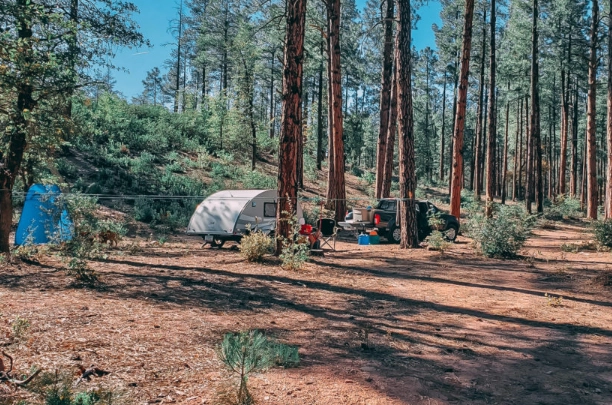
Shelter & Sleep Systems That Can Handle Anything
Desert nights can be surprisingly cold, even after a hot day. Mountain sites are cold most nights. Forget your summer-weight bag.
- Tent: A sturdy, well-ventilated tent. Rain isn't the biggest threat, but wind and dust are. A full-coverage rainfly is still good for dew.
- Sleeping Bag: A bag rated at least 10-20°F colder than the expected low. Check the forecast for your specific district.
- Sleeping Pad: Non-negotiable for insulation from the cold ground. An inflatable pad with a good R-value is worth every penny.
The Sun & Critter Defense Kit
- Sun Protection: Wide-brimmed hat, sunglasses, SPF 50+ sunscreen, and long-sleeve sun shirts. The sun is relentless.
- First-Aid Kit: Must include tweezers (for cactus spines) and something for scrapes and cuts. The desert floor is unforgiving.
- Lighting: Headlamp with extra batteries. It gets DARK.
- Navigation: A physical map and compass, or a GPS device with pre-downloaded maps. Cell service is a rare luxury.
Things Nobody Tells You (But You Really Need to Know)
Monsoon season (roughly July-September) is a double-edged sword. It brings life to the desert and cooler air, but also violent, sudden thunderstorms. Flash flooding is a deadly serious risk in canyons and washes. Never camp in a dry wash. If you see building clouds, have an escape plan to higher ground.
Critters. You're in their home. Scorpions, rattlesnakes, and black-tailed rattlers are present. Shake out your shoes in the morning. Use a flashlight at night. Store all food and trash in a sealed container or your vehicle—not just for bears (yes, there are bears in the higher elevations), but for ringtails, skunks, and mice who will gladly chew through your tent for a snack.
Road conditions. That enticing forest road on the map might be fine for a sedan, or it might require high-clearance and 4WD. Call the ranger district office for the area you're targeting and ask. Getting stuck miles from pavement is not a fun adventure.
Your Tonto National Forest Arizona Camping Questions, Answered
I get asked these all the time. Let's clear them up.
What's the best time of year for Tonto National Forest camping?
It completely depends on your target elevation. For the low desert areas (like near the lakes or Cave Creek), fall, winter, and early spring are ideal. October through April is fantastic. Summer in the low desert is brutal and potentially dangerous for inexperienced campers. For the higher elevation spots on the Mogollon Rim (like near Payson), late spring through early fall is perfect. These areas can be snowed in from November to April.
Do I need a permit or have to pay?
For most general camping, no permit is needed. Developed campgrounds usually have a nightly fee (typically $10-$25). Dispersed camping is free. However, if you plan to camp inside a designated Wilderness area (like Superstition or Four Peaks) as part of a backpacking trip, you may need a free, self-issue permit available at trailheads. Always verify with the specific ranger district.
Can I have a campfire?
See the warning box above! This is the most fluid rule. You must check the official forest alerts page linked earlier. Never assume fires are allowed. When they are, use existing fire rings, keep fires small, and drown them with water until they are cool to the touch. A single spark can start a catastrophe.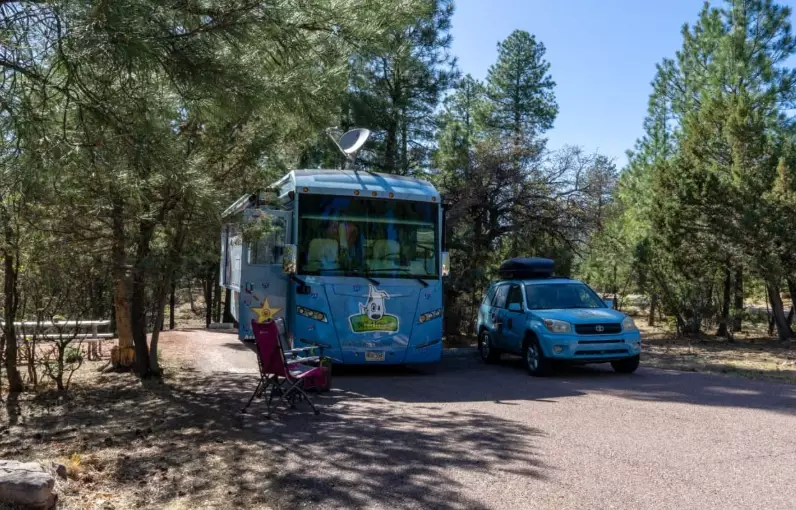
Is there cell phone service?
Assume there is none. In some high-elevation areas near towns, you might get a spotty signal. But for planning purposes, operate under the assumption you will be off-grid. Tell someone your detailed plans and expected return time.
What about RVs and trailers?
Many developed campgrounds can accommodate mid-sized RVs, but very few have hookups. Dump stations are scarce. For dispersed camping, you need to be confident in your vehicle's ability to navigate unpaved, potentially rough roads. A big Class A motorhome will be limited to main highways and a handful of campgrounds.
Where can I get supplies last-minute?
The towns on the forest perimeter are your lifelines: Payson (for the Rim), Globe (for the south), Roosevelt (for the lake areas), and Cave Creek/Carefree (for the north). They have grocery stores, outdoor shops (for forgotten fuel canisters), and hardware stores. Once you're past them, options vanish.
Making It a Great Trip (And Leaving It Better Than You Found It)
A successful Tonto National Forest Arizona camping trip is about more than just a pretty spot. It's about being prepared, flexible, and respectful.
Have a Plan B. Your first-choice campground might be full. Your chosen dispersed road might be gated or impassable. Scout a backup area on the map.
Embrace the quiet. The silence of the desert, broken only by the wind or a distant coyote, is part of the medicine. Let go of the need to be constantly doing something.
Finally, leave no trace. This isn't a slogan; it's a necessity. Pack out ALL your trash—every wrapper, every bit of food waste, every piece of toilet paper (yes, you need to pack that out in many arid environments, or use a WAG bag). Burying it doesn't work in the desert. Dismantle any new fire rings you might have built (but better to never build one). The goal is for the next person, and the wildlife, to have no idea you were ever there.
Tonto National Forest is a treasure. It's a place where you can still find real solitude and raw beauty not far from the city lights. With the right preparation and mindset, your camping trip here won't just be a vacation; it'll be a benchmark for what an outdoor adventure should feel like. Now go check those fire restrictions, fill up your water jugs, and get out there.
Reader Comments