Quick Navigation
You typed that question into Google, didn't you? "What is the richest Indian reservation?" It seems straightforward. You're probably expecting a single name, a clear winner, maybe a place you've heard of. The internet is full of quick, simple answers that point to one tribe. But here's the thing – the real story is way more interesting, and honestly, a bit more complicated. It's not just about who has the biggest casino. It's about history, sovereignty, smart business, and how you even define "rich." Sticking to a one-line answer does a disservice to the incredible and diverse economic realities across Indian Country today.
If we're talking purely about per capita wealth – that is, the amount of money per person – the answer that consistently comes up, and for good reason, is the Shakopee Mdewakanton Sioux Community (SMSC) in Prior Lake, Minnesota. This is the tribe you'll see in headlines. But slapping that label on and calling it a day misses the whole point. Why are they in this position? What does that wealth actually look like for their members? And are there other reservations building massive, impressive economies in different ways? Absolutely.
Let's be clear upfront: This isn't a ranking meant to pit tribes against each other. Every tribe's journey and circumstances are unique. This is about understanding success, the models that work, and the multifaceted definition of prosperity in Native nations.
Why the Shakopee Mdewakanton Sioux Community Stands Out
Okay, let's dive into the SMSC. They're often the answer to "What is the richest Indian reservation?" for a key metric: per capita payments to adult members from tribal enterprises are among the highest in the nation, reported to be around $1 million per year. Let that sink in. That's not just wealth; that's generational-life-changing wealth. But it didn't fall from the sky.
Their story isn't just about lucking into a casino license. It's about strategic vision. The Mystic Lake Casino Hotel, opened in 1992, was their engine. But here's the critical part – they didn't just sit on the casino money. They reinvested. Aggressively. They built an entire diversified business portfolio that would make any Fortune 500 CEO nod in respect.
We're talking about a massive shopping center (Dakota Mall), an organic waste composting facility, a premium golf course, a chain of gas stations, and even a stake in a Major League Soccer team (Minnesota United FC). They own one of the largest commercial banks in Minnesota, First National Bank of Prior Lake. This isn't a reservation economy; it's a regional economic powerhouse that happens to be tribally owned. They also have a legendary reputation for philanthropy, loaning hundreds of millions to other tribes and donating to countless causes, which builds immense political and social capital. You can see their business philosophy laid out on their official website.
But here's a personal thought: that level of per capita distribution brings its own complex challenges. How do you maintain a work ethic? How do you preserve cultural identity when financial necessity is removed? It's a "good problem" to have, sure, but it's still a real dynamic that the community navigates. Their success is undeniable, but it's a very specific type of success.
How Do You Even Measure "Rich" for a Reservation?
This is where the simple question "What is the richest Indian reservation?" gets fuzzy. Are we talking:
- Per Capita Income/Payments? (The SMSC model).
- Total Tribal Enterprise Revenue? (A giant tribe with many members might have a huge total business income but spread it thinner).
- Asset Value & Diversification? (Land, businesses, investments, cash reserves).
- Community Infrastructure & Services? (Quality of housing, schools, clinics, cultural facilities).
- Economic Sovereignty & Self-Sufficiency? (The ability to fund your own government without federal grants).
See? The "richest" could mean different things. A smaller tribe with brilliant investments might have incredibly wealthy members. A larger tribe might run a billion-dollar corporate empire that funds incredible services for all, even if individual members don't get massive checks. Both are forms of being "rich." The Bureau of Indian Affairs provides general data, but tribal financial details are often closely held, making direct comparisons tough.
Is a tribe that builds a state-of-the-art hospital for its people richer than one that cuts big checks but has poor infrastructure? There's no easy answer.
Other Powerhouse Tribal Economies You Should Know About
Focusing only on per capita payments paints an incomplete picture. Several other tribes have built astonishingly robust and diverse economies that make them leaders in the conversation about the richest Indian reservations. They answer the question "What is the richest Indian reservation?" in a broader, more holistic sense.
The Navajo Nation: The Sovereign Giant
With over 400,000 enrolled members and land spanning three states, the Navajo Nation is a sovereign nation in every sense. Their annual budget is in the hundreds of millions. While they face significant poverty challenges (which shows the complexity of averages), their economic scale is immense. They have energy resources (coal, gas, solar), agricultural enterprises, and a growing number of businesses. Their wealth is in their land, people, and cultural depth. Governing an economy that size is a monumental task, and their success is measured in nation-building, not just individual bank accounts. The Navajo Nation government portal showcases the scope of their operations.
The Chickasaw Nation: The Diversification Masters
Often mentioned in the same breath as the SMSC for savvy business, the Chickasaw Nation in Oklahoma is a titan. Under Governor Bill Anoatubby's decades-long leadership, they've built an empire. Yes, casinos like the WinStar World Casino (one of the world's largest) are the foundation. But look further: they own banks (Bank2), a massive energy company (Chickasaw Nation Industries), a nationwide media network (Chickasaw.tv), truck manufacturing, and even the Bedré chocolate factory. They pour revenue into free healthcare, college scholarships, and elder programs for their citizens. Their model is less about huge per capita payouts and more about creating a comprehensive welfare state funded by tribal business. It's incredibly effective.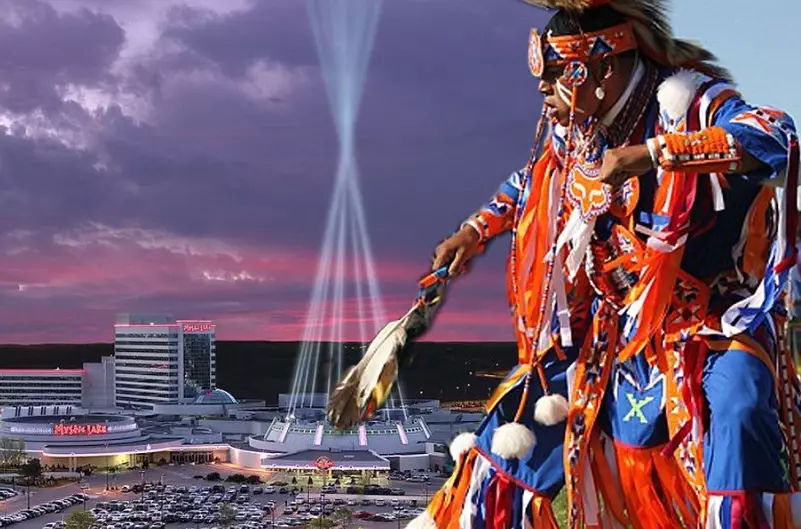
The Eastern Band of Cherokee Indians: Community-Focused Wealth
Harrah's Cherokee Casino Resort in North Carolina transformed this community. Instead of massive per capita payments, they chose to invest heavily in community development. Every member receives solid annual dividends (in the tens of thousands), but the focus has been on building. They've constructed new schools, a hospital, housing subdivisions, and sewer systems. They paid for every member's healthcare premium. They even bought back ancestral land. Their wealth is visibly embedded in their community's infrastructure and the improved quality of life for all 16,000+ members. It's a different, equally valid answer to what makes a reservation "rich."
| Tribe / Nation | Key Economic Engine(s) | Wealth Model Focus | Notable Distinction |
|---|---|---|---|
| Shakopee Mdewakanton Sioux | Mystic Lake Casino, Banking, Real Estate, Diverse Portfolio | High Individual Per Capita Payments | Extensive philanthropy & loans to other tribes |
| Chickasaw Nation | WinStar Casino, Banking, Defense Contracting, Media, Energy | Diversified Business Empire Funding Citizen Services | Extremely broad non-gaming business portfolio |
| Eastern Band of Cherokee | Harrah's Cherokee Casino Resort | Moderate Per Capita + Massive Community Infrastructure | Land buy-back and focus on public works |
| Navajo Nation | Natural Resources, Agriculture, Tourism | Sovereign Scale & Nation-Building | Largest land base and population; manages vast territory |
The Real Foundation: It's Not *Just* Casinos
Casinos were the game-changer, thanks to the 1988 Indian Gaming Regulatory Act (IGRA). They provided the seed capital. But the tribes that answered "What is the richest Indian reservation?" for themselves didn't stop there. The smart ones used gaming revenue as a springboard. They invested in:
- Financial Services: Owning banks gives control over capital and lending.
- Energy & Natural Resources: Solar farms, wind turbines, fossil fuel management.
- Government Contracting: Providing services to the Department of Defense, NASA, etc.
- Agriculture & Food: From ranching to premium food brands.
- Tourism & Hospitality: Resorts, golf courses, museums beyond the casino floor.
- Technology & Media: Telecoms, software companies, film production.
This diversification is the true secret. It shields them from market downturns in any single sector. A Washington Post analysis a few years back highlighted how tribes were becoming major economic players far beyond the casino walls.
A reality check: For every SMSC or Chickasaw, there are dozens of remote, landlocked tribes without a viable market for a casino, still struggling with underfunded infrastructure. Tribal wealth is incredibly uneven. The success stories are amazing, but they're not the universal reality.
Common Questions People Really Want Answered
Wrapping This All Up
So, what is the richest Indian reservation? If you need a short, fact-based answer for a trivia night, it's the Shakopee Mdewakanton Sioux Community based on individual member wealth. But I hope you see now that's just the tip of a very deep iceberg.
The richer conversation is about how these nations have used their hard-won sovereignty to build not just individual wealth, but community resilience, cultural strength, and economic self-determination. They've moved from being subjects of federal policy to being drivers of their own destiny. The models are different – the SMSC's high-per-capita approach, the Chickasaw's sprawling conglomerate, the Cherokee's infrastructure focus, the Navajo's sovereign scale.
Each is a valid answer to the deeper meaning of "rich." They remind us that wealth isn't just a number in a bank account; it's the ability to take care of your people, preserve your culture, and control your future. That's the most compelling answer to "What is the richest Indian reservation?" you'll find.
Next time someone asks, maybe you can give them the simple answer, and then tell them the real story.
Reader Comments