Quick Guide
Let's be honest. When you're planning a trip to Canyonlands National Park, the names start to blur together after a while. Mesa Arch, Upheaval Dome, Green River Overlook... they all sound amazing. But there's one name that, in my experience, lives up to the hype more than any other: Grand View Point Overlook. It's not just a clever name. It's a promise. And for once, a promise that's actually kept.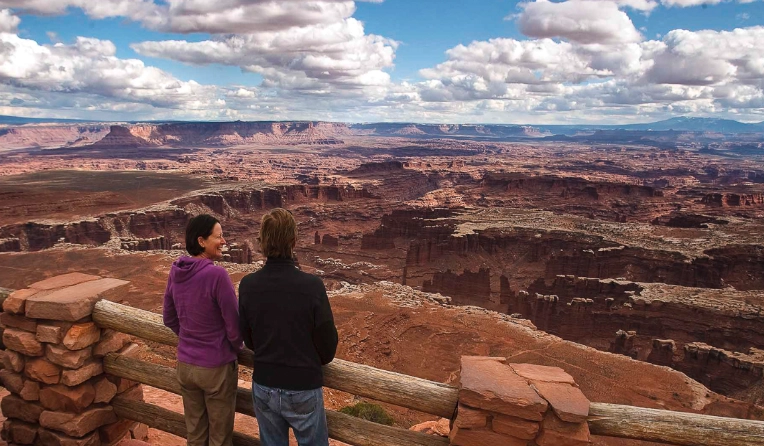
I remember my first time. I'd seen the pictures, sure. Everyone has. But rolling up to the parking lot after that long drive down the Island in the Sky scenic drive, I wasn't prepared. You step out of the car, walk a few feet, and then—boom. The world just drops away. It's not a view you look at. It's a view that swallows you whole. The sheer scale is the first thing that hits you. Then the silence. Then the colors. It's one of those places that makes you feel very small in the best possible way.
This guide isn't just a rehash of park brochures. It's the stuff I wish I'd known before I went. The little secrets, the best times to avoid the tour buses, where to stand for that perfect shot without fifty people in your frame, and whether that hike along the rim is really worth it (spoiler: it is, but maybe not for everyone). We're going to dig into everything that makes Grand View Point Overlook the crown jewel of the Island in the Sky district.
Wait, Which "Grand View Point" Are We Talking About?
This is key. Utah has a few "Grand View" points. When people search for Grand View Point Overlook, 99% of the time they mean the one in Canyonlands National Park, specifically at the very southern tip of the Island in the Sky mesa. There's also a Grandview Point in the nearby Dead Horse Point State Park, which is stunning but a different place entirely. And just to confuse things more, there's a Grand View Point in the Needles district too! For the rest of this guide, we're talking exclusively about the iconic Grand View Point Overlook in Island in the Sky. Trust me, you don't want to plug the wrong coordinates into your GPS and end up an hour away.
Getting There and the Lay of the Land
Grand View Point sits at the end of the road. Literally. The Island in the Sky scenic drive is a straight shot from the visitor center, about 12 miles of increasingly jaw-dropping scenery. You'll pass the turn-offs for other great stops like Buck Canyon and Orange Cliffs, but save your gasps. The main event is at the end.
The parking lot is decent-sized, but it fills up. I'm talking 10:30 AM on a weekday in May, and it was a scramble. If you want solitude, you need to be an early bird or a sunset chaser. There are restrooms here, which is a major plus after that drive. No water though. Fill your bottles at the visitor center.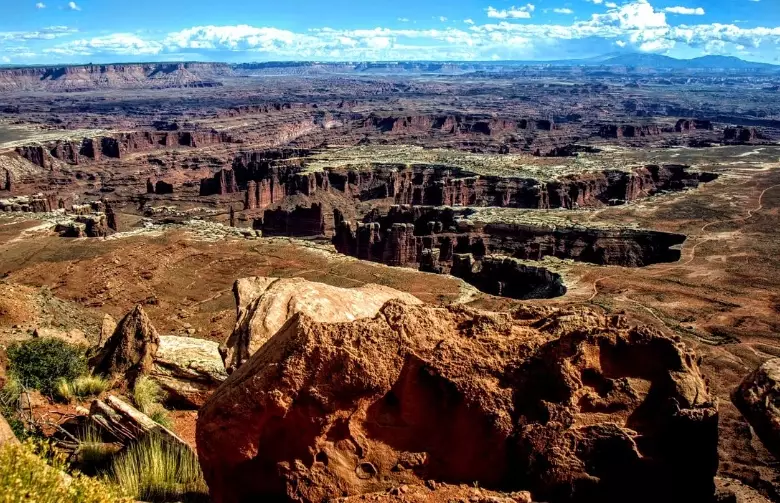
Now, here's something most first-timers miss. Grand View Point Overlook isn't just one railed platform. It's a series of viewpoints that get progressively more dramatic.
- The First Platform (The Welcome Mat): Right by the parking lot. Wheelchair accessible via a paved path. This is where everyone gets their first look and takes their first hundred photos. The view is incredible, but it's just the appetizer.
- The Main Platform (The Classic Shot): A short walk south along a paved path. This is the view you see on postcards. You get the full, sweeping panorama of the White Rim, the Colorado and Green River canyons converging in the distance, and the endless layers of the Maze and Needles districts. This is where most people stop.
- The Rim Trail Viewpoints (The Secret Sauce): This is where you leave the crowds behind. A dirt trail continues south along the very edge of the mesa. Every few yards offers a new, unobstructed, and frankly, more thrilling perspective. This is the real Grand View Point Overlook experience.
Pro Tip: Don't just snap your photo and leave. Give yourself at least 30 minutes just to stand there. Let your eyes adjust to the distance. Pick out the White Rim Road snaking along the plateau below. Try to spot the confluence of the rivers (it's tricky!). The longer you look, the more you see.
The Grand View Point Trail: To Hike or Not to Hike?
So, you've seen the main platform. Should you hike the trail? The official Grand View Point Overlook trail is a 1.8 mile (2.9 km) out-and-back that follows the rim from the parking lot to the very tip of the promontory. The National Park Service labels it as easy. I'd call that... optimistic.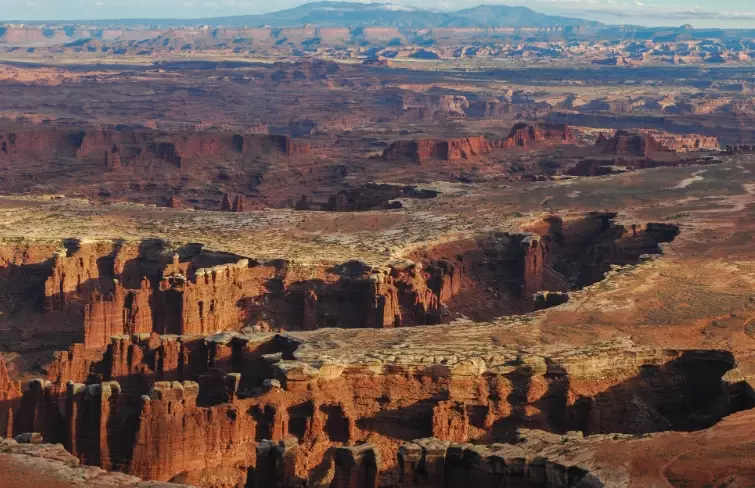
Let's break it down.
| Trail Section | What to Expect | Difficulty (My Take) | Best For |
|---|---|---|---|
| Paved Path to Main Platform | Fully paved, gentle slope, guardrails. Crowded. | Easy. Suitable for all ages & mobility levels. | Families with young kids, quick visits, accessibility. |
| Rim Trail (First 0.5 mile) | Packed dirt & slickrock. Narrow in places with significant drop-offs. Fewer people. | Moderate. Requires stable footing. Not for those with a severe fear of heights. | Photographers, those seeking quieter views, able-bodied adventurers. |
| Final Promontory | Exposed slickrock scrambling. No rails. 360-degree views. Windy. | Strenuous for some. Requires good balance and comfort with exposure. | Experienced hikers, thrill-seekers, anyone wanting the ultimate vantage point. |
I hiked the whole thing last fall. The first part of the rim trail is where you really start to feel the immensity. You're walking on the very edge of a 1,000-foot cliff. The trail isn't technically hard, but you need to pay attention. One misstep wouldn't be good. The views change with every turn—new spires, different angles on the canyon, shadows playing across the rock.
The final section? That's a different beast. You're basically scrambling up a rounded dome of sandstone with nothing but air on all sides. The wind whips up there. I saw a few people turn back, and I don't blame them. But if you're steady on your feet, the payoff is unreal. You feel like you're on the prow of a stone ship sailing over an ocean of canyons. It's the definitive Grand View Point Overlook.
Serious Safety Talk
People get hurt here every year. It's not a theme park. The rocks are slippery when wet or sandy. The edges are crumbly. Do not climb on rocks near the edge. That Instagram shot is not worth your life. Stay on designated trails. The wind can be fierce and unexpected, so hold onto your hat (and your kids). And for heaven's sake, wear proper shoes. I saw someone attempting the rim trail in flip-flops. Just don't.
When to Visit: Beating the Crowds and Catching the Magic
Timing is everything. The difference between a peaceful, spiritual experience and a crowded, noisy one can be an hour.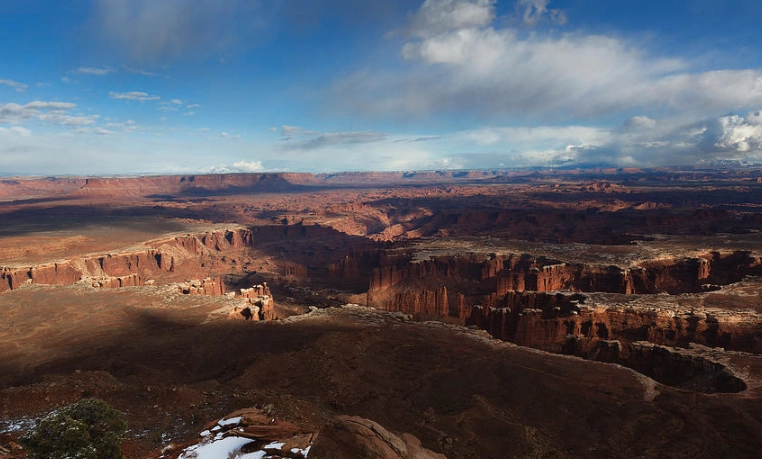
Sunrise: The holy grail. You'll share the view with a handful of dedicated photographers and maybe some bleary-eyed hikers. The dawn light hitting the cliffs of the White Rim is a shade of orange you won't believe. It's cold, it's early, but it's the best time for solitude and light. The Grand View Point Overlook faces mostly east-southeast, so sunrise is spectacular.
Morning (9 AM - 11 AM): The crowds arrive. Tour buses from Moab start rolling in. The light is still good, but the parking lot becomes a challenge.
Midday: Harsh light. The canyon loses its shadows and depth, making photos look flat. It's also the hottest and most crowded time. This is when I'd recommend exploring other parts of the park and coming back later.
Late Afternoon to Sunset: My personal favorite. The crowds thin out as people head back for dinner. The warm, low light brings the canyon back to life, creating long shadows and rich textures. Sunset itself can be hit or miss—sometimes it's glorious, sometimes it fades quietly—but the hour leading up to it is consistently magical at Grand View Point Overlook.
Seasonal Notes: Spring and fall are perfect. Summer is scorching hot with frequent afternoon thunderstorms (lightning on an exposed mesa is no joke). Winter is cold and can be icy, but the snow-dusted canyon is breathtaking, and you'll have it mostly to yourself. Always check road conditions with the National Park Service's Canyonlands conditions page before you go, especially in winter.
Photography Tips From a Non-Pro
You don't need a fancy camera. Your phone will do fine. The key is composition. At the main overlook, everyone shoots the same wide shot. Get creative. Use the leading lines of the canyon walls. Frame a shot through one of the gnarled juniper trees clinging to the rim. For sunrise/sunset, a tripod is a game-changer for sharp photos in low light. A polarizing filter can help cut the haze and make the sky pop, but it's not essential. Most importantly, put the camera down for a minute. Just look.
What Makes This View So "Grand" Anyway?
It's not just big. Lots of canyons are big. The magic of Grand View Point Overlook is in the layers. You're seeing 300 million years of geology stacked like a cake. From the rim down:
- The White Rim: That bright sandstone bench about 1,000 feet below you. It looks like a road (and it is—the famous White Rim Road for 4x4s and bikes).
- The Red Layers: Below the White Rim, the deeper canyons are cut into the reddish-brown Cedar Mesa and Elephant Canyon formations.
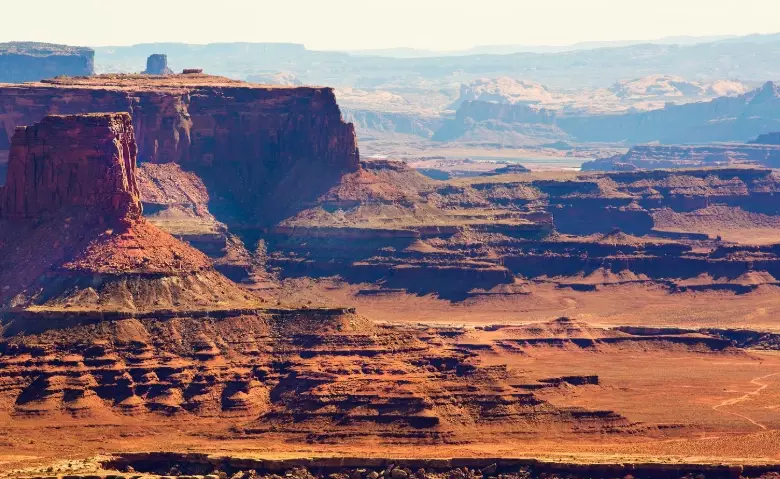
- The Distant Horizons: Way off in the haze, you're looking at the fins of the Needles district (southeast) and the chaotic jumble of the Maze (southwest). On a super clear day, you might even see the Henry Mountains, 60 miles away.
You're also seeing the work of two mighty rivers. The Green River is off to your left (west), and the Colorado is to your right (east). They meet just beyond your sight, at the Confluence, which is the heart of Canyonlands. Standing at Grand View Point Overlook, you're seeing the entire story of the park laid out in one mind-boggling diagram.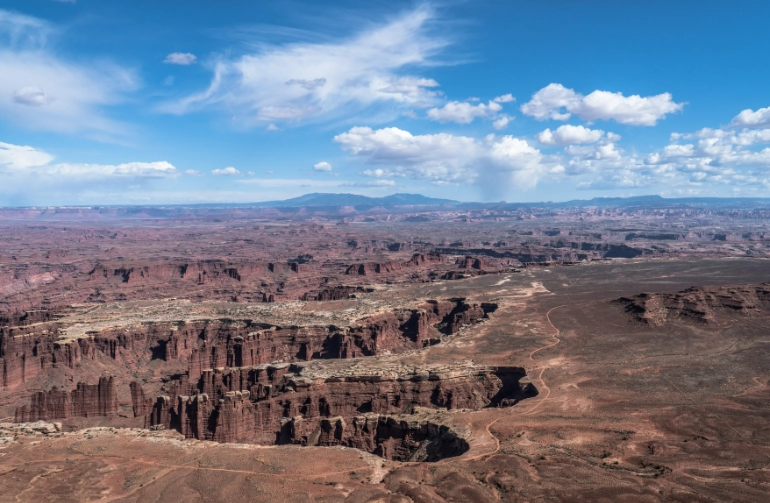
It's humbling. It really is.
Frequently Asked Questions (The Real Ones)
Based on what I've overheard and been asked myself.
Making the Most of Your Visit: The Grand View Point Strategy
Here's how I'd plan a perfect half-day around Grand View Point Overlook:
Option A (The Early Bird): Enter the park at opening. Drive straight to Grand View Point for sunrise. Have the place to yourself for a golden hour. Hike the rim trail while it's cool and quiet. Be heading back to the parking lot as the first buses arrive. Then go explore Mesa Arch or Upheaval Dome.
Option B (The Sunset Chaser): Spend your morning at other Island in the Sky sights like Whale Rock or the Shafer Canyon Overlook. Have a late lunch. Head to Grand View Point around 3 or 4 PM. The crowds will be leaving. Find a spot along the rim, maybe not even at the main platform, but a little ways down the trail. Settle in. Watch the light show change for two hours until sunset. Hike back in the twilight (bring a headlamp!).
Whichever you choose, don't rush it. The power of Grand View Point Overlook isn't in a checklist. It's in the slow absorption of a landscape so vast it recalibrates your sense of scale. It's the chill that runs down your spine not from the wind, but from the sheer age of the rock beneath your feet. It's the reminder that some things are still, gloriously, grand.
Just go. And look.
Reader Comments