Quick Navigation
- Let's Get Specific: Breaking Down the Distances and Times
- What Really Determines Your Hike Time? It's Not Just Miles.
- Who Is This Hike Actually For? (And Who Should Skip It?)
- Planning Your Hike: The Essential Checklist
- Frequently Asked Questions (The Stuff You're Really Wondering)
- Final Thoughts: Making Your Decision
So you're planning a trip to the Grand Canyon and you've heard about Grandview Point. Maybe a friend mentioned it, or you saw a stunning photo online. The first question that pops into your head is probably the one I had: How long is the Grandview Point trail? You want to know if you can squeeze it in before lunch, if the kids can handle it, or if you need to pack a full day's worth of water.
Here's the quick, textbook answer: The trail to the main overlook at Grandview Point is a short, paved path of about 0.2 miles (0.3 km) round trip. It's more of a stroll from the parking lot to the railing.
But honestly, if you stop there, you're missing the whole story. And you might end up seriously underprepared.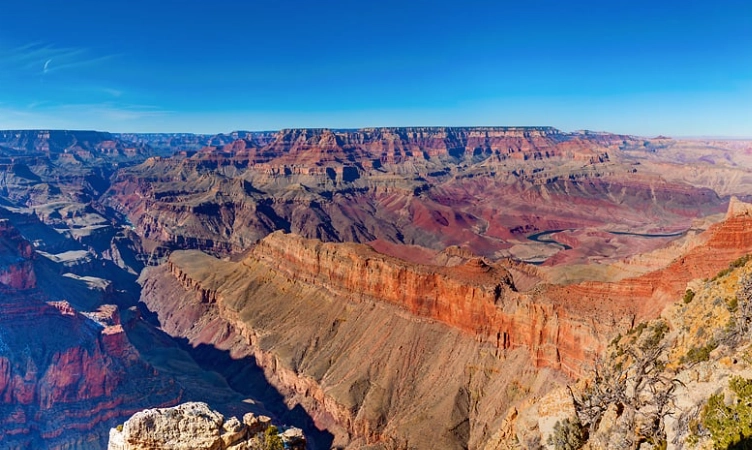
When most people search "How long is the Grandview Point trail?", they're not just asking for a number. They're really asking: "How much time should I budget?" "How hard is it?" "What am I actually getting into?" Because Grandview Point is a gateway, not just a destination. The short, easy path to the fenced overlook is just the appetizer. The real adventure—the famous Grandview Trail—plunges down the canyon wall from that very point. That's where the confusion, and the potential for misadventure, begins.
Core Answer: The accessible viewpoint trail is ~0.2 miles round trip. The historic Grandview Trail that descends into the canyon is a different beast entirely, with hikes ranging from a 2-mile round trip to a multi-day epic. This guide will untangle all of it.
Let's Get Specific: Breaking Down the Distances and Times
To really understand how long the Grandview Point trail is, you need to know which trail you're talking about. I learned this the hard way on my first visit, wearing sneakers and carrying a single small water bottle, thinking I was just going to "a viewpoint."
The Grandview Point Overlook Trail (The Easy One)
This is the one almost every visitor does. It's fully paved, mostly flat, and universally accessible (with assistance for wheelchairs on the slight incline). You park, walk a few hundred feet, and boom—you're staring into one of the most dramatic vistas on the South Rim.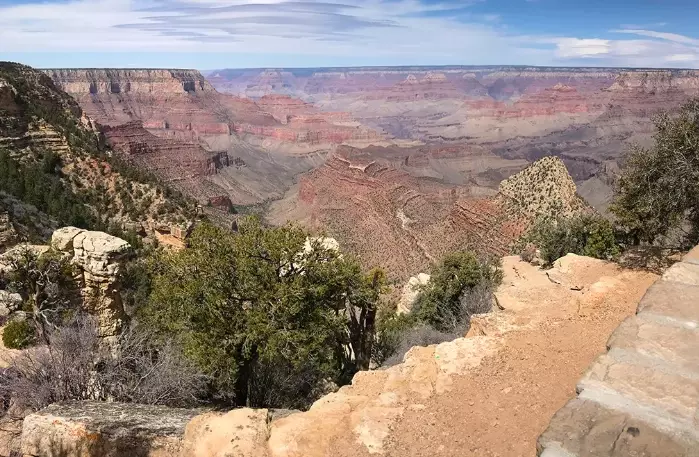
- Round Trip Distance: Approximately 0.2 miles (0.3 km).
- Time Needed: 15-30 minutes. This includes time to gawk, take photos, and read the interpretive signs. It's a pure sightseeing stop.
- What You Get: An absolutely stunning, panoramic view of the canyon. You can see Horseshoe Mesa, the Colorado River (a tiny ribbon far below), and layers of rock stretching forever. It's perfect for sunrise, sunset, or a quick leg-stretch between other stops.
If your question, "How long is the Grandview Point trail?", was about this easy walk, then your planning is simple. Almost anyone can do it.
The Historic Grandview Trail (The Real Hike)
This is where the magic—and the muscle—begins. The Grandview Trail starts at the same point but heads down, not along the rim. Built in the late 1800s for copper mining, it's steep, rocky, and unmaintained in the classic Grand Canyon style. It's not a joke.
When experienced hikers ask about the Grandview Point trail length, they're almost always referring to this one. Its length depends entirely on how far you go. Here’s a realistic breakdown:
| Destination (Round Trip) | Approx. Distance | Estimated Hiking Time* | Difficulty & Notes |
|---|---|---|---|
| Coconino Saddle | 2.2 miles (3.5 km) | 2-4 hours | Strenuous. The most common turn-around point for a day hike. A steep 1,100 ft descent gets you to a saddle with great views. The climb back up is a real workout. |
| Horseshoe Mesa | 6.2 miles (10 km) | 6-9 hours | Very Strenuous. A full-day commitment. You descend 2,500 ft to a historic mesa. Requires serious preparation, lots of water (no source on trail), and an early start. |
| Page Spring (via Horseshoe Mesa) | ~12 miles (19 km) | Overnight (2+ days) | Expert Level. A multi-day backpacking trip. Requires a backcountry permit from the National Park Service. This is not a casual hike. |
*Times are for reasonably fit hikers and include short breaks. Add significant time for heat, crowds, or less experience.
See the difference? Asking how long the Grandview Point trail is is like asking how long a piece of string is. You have to define your goal.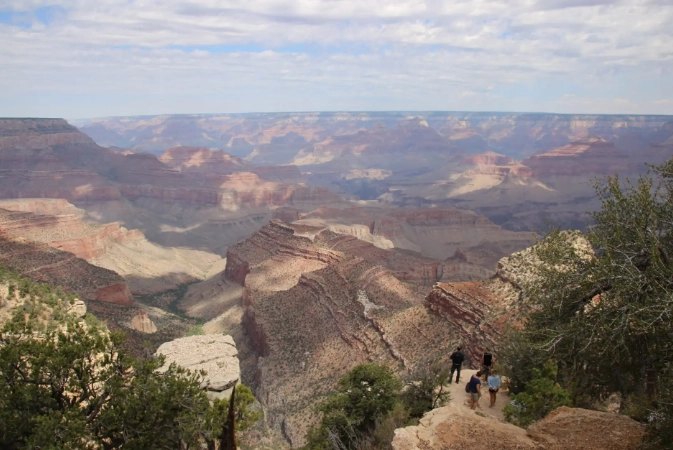
My first attempt was to Coconino Saddle. I figured, "It's only about a mile down." I was not prepared for how steep and loose the trail was. The "mile" down felt like three, and the hike back up under the midday sun was a brutal slog. I ran out of water on the last switchback. It was a humbling lesson in canyon hiking—it's not about the distance, it's about the vertical climb on the way out.
What Really Determines Your Hike Time? It's Not Just Miles.
If you're trying to plan your day, knowing the mileage is only 20% of the puzzle. Here’s what actually dictates how long you'll be out there on the Grandview Trail:
- The Ascent: Going down is optional. Coming back up is mandatory. For every 1,000 feet you descend, budget at least an extra hour for the climb back up. The trail gains over 1,000 feet per mile in some sections—that's a stairmaster on uneven rock.
- Trail Condition: This isn't a smooth path. It's rocky, dusty, and in places, you're walking on loose scree (small rocks). You have to watch your footing constantly, which slows you down a lot compared to a flat trail.
- Heat and Sun Exposure: There is zero shade on the Grandview Trail. I mean it. None. If you start at 10 AM in summer, the sun will bake you. Your pace will slow to a crawl. Hiking in the heat is dangerous and exponentially more tiring.
- Crowds (at the top): The initial section of the trail, just below the rim, can get narrow and congested with people going up and down. You might have to wait to pass safely.
- Your Fitness and Acclimatization: The South Rim is at 7,000 feet. If you're coming from sea level, you'll get winded faster. Be honest with yourself.
Pro Tip: A great rule of thumb for Grand Canyon inner trails is the "One-Third Rule." Your hike will take roughly one-third of the time to go down, and two-thirds of the time to come back up. So a 3-hour round trip hike means about 1 hour down and 2 hours up. Plan your water and energy accordingly.
Who Is This Hike Actually For? (And Who Should Skip It?)
Let's be real. Not every trail is for every person. Based on my experiences and watching countless others, here's my take.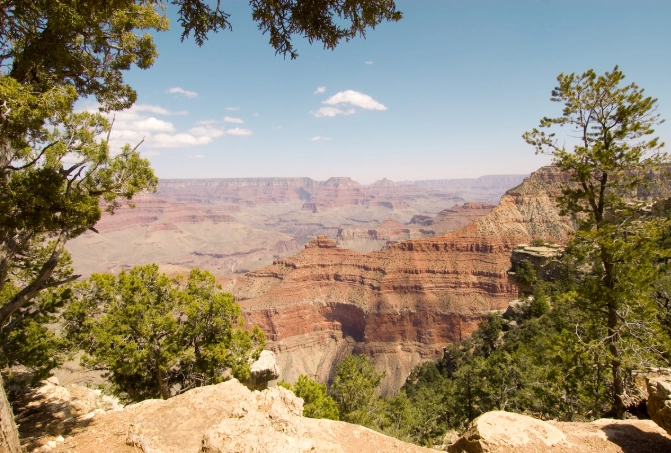
The Grandview Point Overlook Trail is for:
- Everyone. Seriously. Families with young kids, seniors, people with limited mobility.
- Visitors on a tight schedule who want maximum view for minimum effort.
- Photographers looking for an easily accessible, classic Grand Canyon shot.
- People wanting a safe, railed viewpoint to experience the scale of the canyon.
The Grandview Trail (down into the canyon) is for:
- Fit, prepared day hikers with proper footwear (sturdy hiking boots with ankle support, not sneakers), at least 3-4 liters of water per person, salty snacks, and sun protection (hat, sunscreen, long sleeves).
- Hikers with some experience on rocky, steep terrain. If you've only done flat city trails, this will be a shock.
- Those who start early (before 8 AM) to avoid the worst heat.
- People who understand that turning around is not failure—it's smart.
You should probably skip the Grandview Trail if:
- You have a fear of heights or unsteady footing. The exposure is real in sections.
- You're trying to hike in the middle of a summer day. It's borderline reckless.
- You think a 500ml plastic water bottle is sufficient for a 3-hour hike. (It's not.)
- You're looking for a gentle, relaxing stroll. This trail demands your attention and energy.
Critical Safety Note: The National Park Service consistently lists the Grandview Trail as one of the most dangerous in the park due to its steep, unmaintained nature and the tendency of people to underestimate it. Every year, rangers perform rescues here. Your safety is your responsibility. Check the official NPS Hiking Tips page before you go.
Planning Your Hike: The Essential Checklist
Okay, so you've decided to tackle the trail beyond the overlook. Here’s exactly what you need to do and bring. This isn't a suggestion list; it's a necessity list.
Before You Go:
- Check the Weather: Not just for rain, but for temperature. A 75°F (24°C) day at the rim can be 95°F (35°C) on the trail below. The NPS Weather Page is your best friend.
- Tell Someone: Let a friend or your hotel know which trail you're taking (Grandview Trail to Coconino Saddle, for example) and when you expect to be back.
- Fuel Up: Eat a solid breakfast. You need calories for the climb.
What to Pack in Your Daypack:
- Water: At least 3 liters per person for a hike to Coconino Saddle. More if you go farther or it's hot. I carry a hydration bladder plus a spare bottle.
- Electrolytes: Powdered mixes or salty snacks like nuts, jerky, or pretzels. Sweating out salt without replacing it leads to cramps and fatigue.
- High-Energy Food: Granola bars, trail mix, peanut butter sandwiches.
- Sun Protection: Wide-brimmed hat, sunglasses, sunscreen (reapply!), and consider a sun shirt.
- Navigation: A map (the trail is well-defined but it's good to have) and a fully charged phone. Don't rely on cell service.
- First-Aid Kit: Basics like band-aids, moleskin for blisters, and pain relievers.
- Extra Layer: A light jacket or fleece. The rim can be windy and cool even if the trail is hot.
It seems like a lot, but you'll thank yourself on the climb out. I've shared my water with underprepared hikers more than once, and it's a stressful situation for everyone.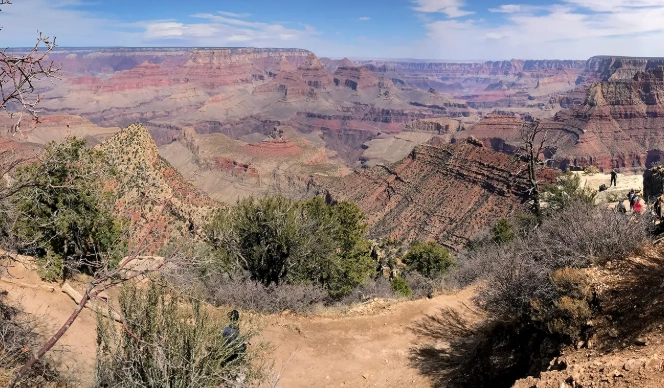
Frequently Asked Questions (The Stuff You're Really Wondering)
Final Thoughts: Making Your Decision
So, after all this, how long is the Grandview Point trail? You now know it has two answers.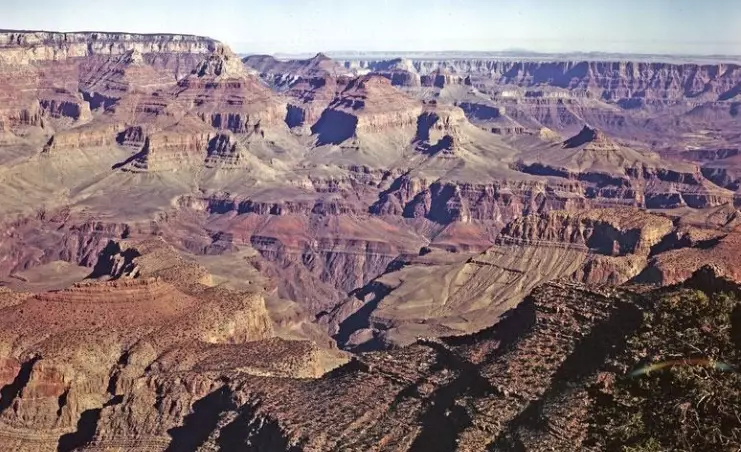
For the iconic, easy view: Budget 30 minutes. It's a non-negotiable stop on any South Rim tour.
For the epic hike: You need to decide how far you want to go. For a first-time, challenging taste, aim for Coconino Saddle. Give yourself a solid 4-hour window, start by 8 AM, and pack like your comfort depends on it (because it does).
The Grandview Trail is not a walk in the park. It's a physical challenge that rewards you with incredible views, a sense of history, and a real connection to the canyon's rugged nature. It's one of my favorite trails on the South Rim precisely because it hasn't been smoothed over for tourists. It demands respect.
But that's the Grand Canyon. It's not meant to be easy. It's meant to be awe-inspiring, and sometimes a little bit intimidating. Whether you choose the gentle stroll or the steep descent, Grandview Point will give you a memory that lasts long after your legs stop aching.
Just remember your water.
Reader Comments