Ask someone where Las Vegas is, and you'll likely get a one-word answer: Nevada. But that's like saying a book is in a library. It's technically correct, but it doesn't help you find the specific shelf, understand the surrounding sections, or plan your route to get there. If you're planning a trip, booking flights, or designing a Southwest road trip, you need the full picture. So, let's get specific.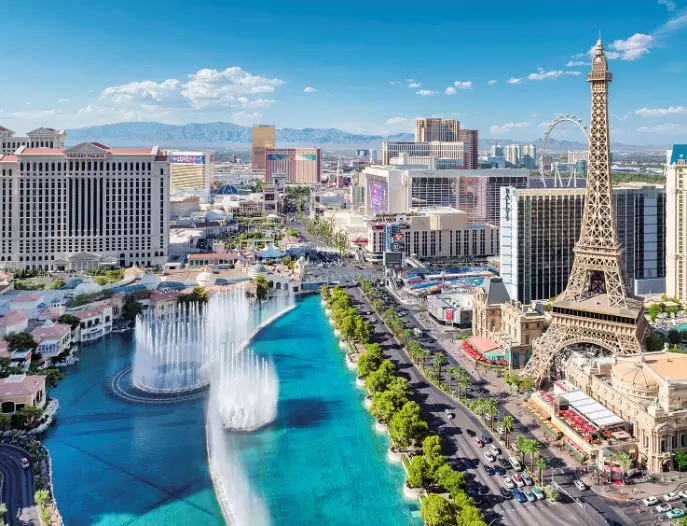
Las Vegas sits in the southern tip of the state of Nevada, nestled within the arid expanse of the Mojave Desert. Its precise coordinates are approximately 36.1699° N latitude and 115.1398° W longitude. The city is located in Clark County, about 50 miles east of the California border, and a surprisingly short drive from some of America's most iconic natural landscapes.
I've lost count of how many times I've heard visitors express genuine shock when they look out their hotel window and see mountains. They expect a flat, featureless desert, but the Las Vegas Valley is ringed by dramatic, barren mountain ranges. That unexpected geography is key to understanding the city's location and climate.
Your Quick Guide to Finding Vegas on the Map
The Exact Coordinates and Geographic Context of Las Vegas
Let's zoom in. The Las Vegas Strip—that famous 4.2-mile stretch of mega-resorts—isn't even within the official Las Vegas city limits. It's located in the unincorporated towns of Paradise and Winchester. This is a quirky detail most guides miss, but it matters for things like local jurisdiction.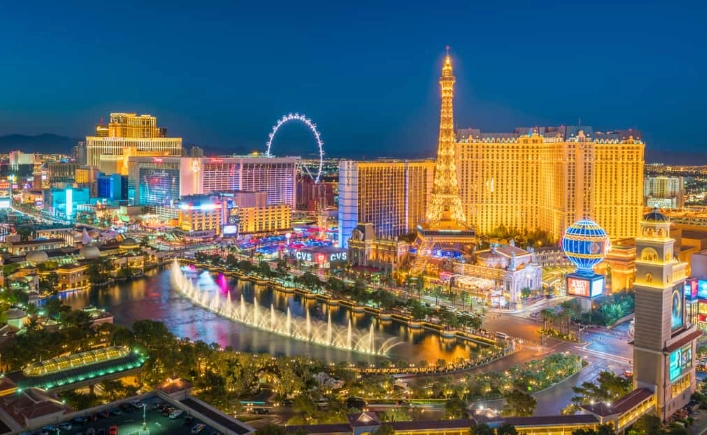
The city lies in a broad, flat valley basin, with elevations ranging from about 1,800 to 2,000 feet above sea level. To the west, you have the Spring Mountains, home to Mount Charleston which peaks over 11,900 feet. To the east are ranges like the Frenchman Mountain. This basin-and-range topography traps heat and contributes to the intense summer temperatures, but also creates stunning sunrise and sunset views against the mountain silhouettes.
A Local's Perspective: Everyone calls it a "desert oasis," but after living here, I think that's misleading. An oasis implies a natural water source. Modern Las Vegas was made possible by engineering—specifically, the Hoover Dam capturing Colorado River water. The original springs that gave the city its name ("Las Vegas" means "The Meadows" in Spanish) are long gone. Remembering this artificiality helps explain the city's unique, almost surreal relationship with its environment.
What is Las Vegas Near? Distances to Major Attractions
This is where knowing Las Vegas's location becomes truly valuable for trip planning. Its proximity to other destinations makes it a perfect hub for a multi-stop adventure. Don't make the mistake of thinking your entire vacation needs to be spent on the Strip.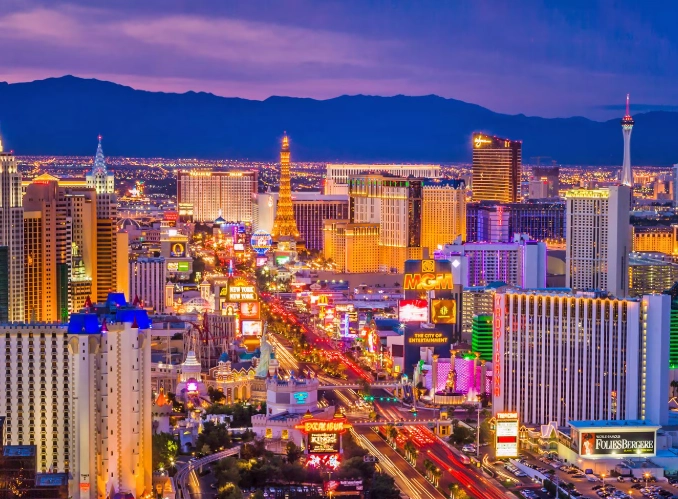
| Destination | Direction from Las Vegas | Approximate Driving Distance & Time | Why It's a Great Trip |
|---|---|---|---|
| Hoover Dam | Southeast | 35 miles / 45 minutes | An engineering marvel. Easy half-day trip. Walk across the top or take the powerplant tour. |
| Red Rock Canyon National Conservation Area | West | 17 miles / 30 minutes | Stunning red sandstone cliffs and hiking trails. A 13-mile scenic loop is perfect for a morning escape. |
| Grand Canyon (West Rim) | East | 125 miles / 2 hours 15 minutes | Home to the Skywalk. The closest major section of the Grand Canyon for a day trip (though it's a long day). |
| Grand Canyon (South Rim) | East | 275 miles / 4.5 hours | The classic, iconic view. Better as an overnight trip, but absolutely doable from Vegas. |
| Death Valley National Park | West | 130 miles / 2 hours | The hottest, driest, lowest national park. A surreal landscape that feels like another planet. |
| Valley of Fire State Park | Northeast | 55 miles / 1 hour | Brilliant red Aztec sandstone formations. Less crowded than national parks, incredibly photogenic. |
| Los Angeles, California | Southwest | 270 miles / 4 hours | A straight shot down I-15. A very popular combo for a "Cities and Lights" road trip. |
My personal favorite for a quick reset is Red Rock Canyon. You can be hiking among thousand-foot cliffs within 40 minutes of leaving your hotel lobby. The contrast is jarring in the best way possible.
How to Get to Las Vegas from Major US Cities?
Las Vegas is one of the best-connected cities in the Southwest, thanks to its role as a major tourism and convention hub.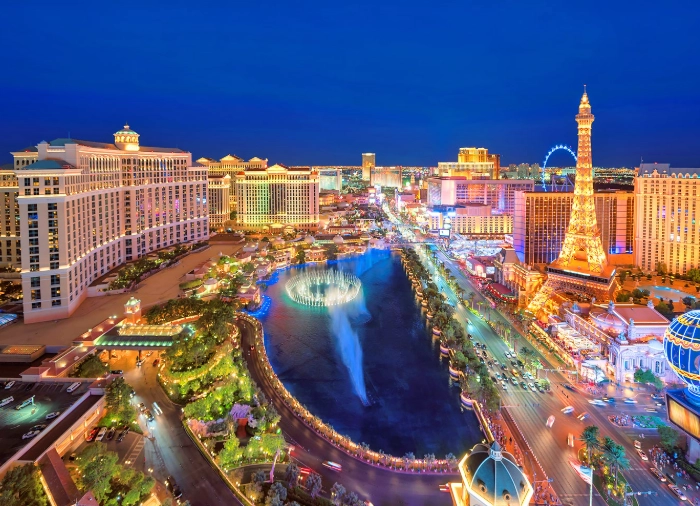
By Air: Harry Reid International Airport (LAS)
This is your most likely point of entry. LAS is a massive airport located just 5 miles south of the Mandalay Bay resort (the south end of the Strip). That's incredibly close. A taxi or rideshare to a central Strip hotel typically takes 15-20 minutes and costs $20-$35. The airport is laid out in a way that, once you're out of baggage claim, you're minutes from the famous Las Vegas skyline.
By Car: The Major Highways
Vegas is a crossroads. Interstate 15 (I-15) is the main north-south artery, connecting you to Los Angeles and San Diego to the southwest, and Salt Lake City to the northeast. US Highway 95 (US-95) runs northwest to Reno and south towards the Arizona border. If you're driving from Phoenix, you'll likely take US-93 north, which also passes right by the Hoover Dam.
A common road trip mistake? Underestimating the sheer emptiness of the desert. On routes like I-15 between Vegas and LA, services can be spaced 50+ miles apart. Fill your tank in Baker, California, not when the warning light comes on.
By Bus
Services like FlixBus and Greyhound connect Las Vegas to cities across the region. The main bus terminal is downtown, not on the Strip, so you'll need a short transfer to your hotel.
What the Desert Location Means for Your Visit
Geography isn't just about maps; it dictates your daily experience. Here’s the practical impact of being in the Mojave Desert.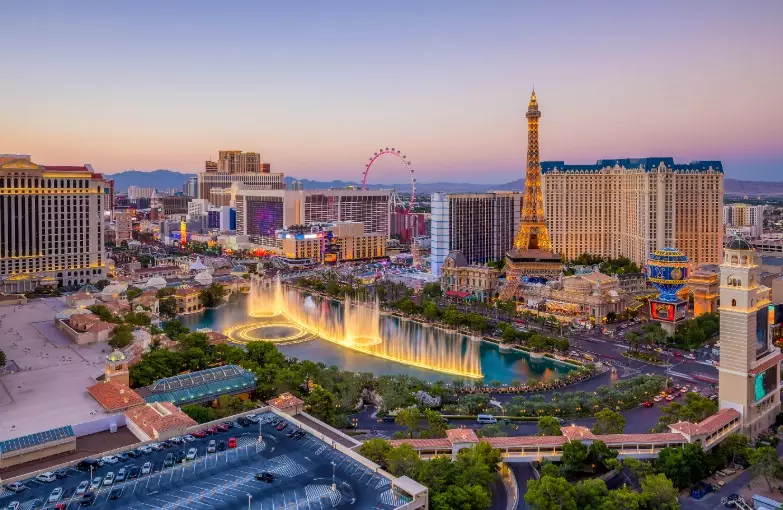
Climate: Expect extreme dryness and big temperature swings. Annual rainfall is barely 4 inches. Summers (June-August) are brutally hot, with average highs of 102°F (39°C) and frequent spikes above 110°F (43°C). Winters are mild and sunny, with daytime highs in the 50s°F (10-15°C). Spring and fall are ideal. The low humidity is a blessing and a curse—you don't sweat as much, but you'll dehydrate faster than you realize. Drink water constantly, not just when you're thirsty.
Terrain & What to Pack: It's dusty. Leave your delicate fabrics and light-colored shoes at home. The sun is intense year-round. A wide-brimmed hat, high-SPF sunscreen, and sunglasses are non-negotiable, even in winter. Sturdy, comfortable shoes are essential if you plan to walk the Strip (which is much longer than it looks) or venture to any nearby parks.
The "Dry Heat" Myth: Locals love to say "but it's a dry heat." While 110°F in Vegas is more tolerable than 95°F with high humidity in Miami, 110°F is still dangerously hot. The sun radiates off the concrete and asphalt, creating an urban heat island effect on the Strip. It's not a gentle warmth; it's an assault. Plan outdoor activities for early morning or evening in the summer.
Your Las Vegas Location Questions, Answered
Is Las Vegas close to the ocean for a beach day?
Not at all. The nearest major coastline is the Pacific Ocean near Los Angeles, about a 4-hour drive. The idea of a quick beach trip from Vegas is a fantasy. Your water-based options are limited to hotel pools (which are fantastic) or Lake Mead, the vast reservoir created by the Hoover Dam, about 30 minutes away for boating and swimming.
What's the biggest mistake tourists make regarding Las Vegas's location?
Assuming everything is within walking distance. The Las Vegas metropolitan area is huge and sprawling. A hotel at one end of the Strip to the other is a 4+ mile walk, often in extreme heat. Even downtown (Fremont Street) is 3-4 miles north of the Strip's north end. Relying solely on walking will exhaust you. Use the monorail, rideshares, or taxis strategically.
I'm looking at a map and see "Jean, Nevada" or "Primm, Nevada" near the California border. Should I stay there to save money?
I strongly advise against it for a first-time visitor. While hotels in Primm (about 40 miles south) are cheaper, you are isolating yourself. You'll spend over an hour and significant money on gas or a shuttle every time you want to experience the Strip, see a show, or try a famous restaurant. The convenience and time saved by staying on or near the Strip almost always outweigh the cost savings of a distant hotel.
How does the time zone affect my travel plans?
Las Vegas is in the Pacific Time Zone (PT). However, Arizona, which is directly east, is mostly on Mountain Standard Time (MST) and does not observe Daylight Saving Time. For half the year (March-November, during DST), Nevada and Arizona are in the same time zone. For the other half (November-March), Arizona is one hour ahead of Las Vegas. This is crucial if you're driving to the Grand Canyon or Hoover Dam (which straddles the time zone line) for a tour—always double-check which time zone your booking confirmation uses.
Is Las Vegas a good base camp for visiting multiple national parks?
It's an excellent base, but with a major caveat. You can reach the doorstep of several amazing parks in 2-4 hours. The catch is that to truly experience them—like hiking into the Grand Canyon or exploring Death Valley's remote corners—you really need to stay overnight near or in the park. Trying to do the South Rim as a day trip from Vegas means 9+ hours of driving alone, leaving little time to explore. My advice: use Vegas as your start/end point, and book a night or two in places like Tusayan (near Grand Canyon) or St. George, Utah, to break up the driving and deepen your experience.
So, where in America is Las Vegas? It's in southern Nevada, yes. But more importantly, it's at the vibrant, neon-lit crossroads of the Mojave Desert, a short drive from profound natural silence and a long flight from anywhere ordinary. Its location is its greatest trick—making a city of millions feel like an island, while hiding a continent's worth of adventure just beyond the next mountain range.
Reader Comments