Quick Guide
- Grandview Point & The Grandview Trail: What You're Actually Getting Into
- A Mile-by-Mile Breakdown of the Grandview Trail Hike
- Is The Grandview Point Hike Too Difficult For You?
- The Non-Negotiable Gear List for Grandview
- When To Go: Beating the Heat and the Crowds
- Your Step-by-Step Plan for Hike Day
- Answers to Your Burning Questions (The FAQ)
- Final Thoughts: Respect The Canyon
Let's be real. You've seen the pictures. That breathtaking, heart-stopping view from Grandview Point on the South Rim. And then you spotted it – that thin, zigzagging line cutting down the canyon wall. The Grandview Trail. And a thought crept in: "Could I hike that?"
Maybe you're an experienced hiker looking for a real challenge away from the Bright Angel crowds. Maybe you're just incredibly curious about what lies beyond the guardrails. Whatever brought you here, searching for info on the Grandview Point Grand Canyon hike, you've likely found a lot of generic overviews and not enough gritty detail.
This guide is different. We're going to walk through this trail together, step by step. I'll tell you exactly what to expect, where it gets tough, what gear will save your day (and your knees), and I won't sugarcoat it. This isn't a stroll. The Grandview Trail to Horseshoe Mesa is one of the Canyon's classic, demanding, and utterly rewarding inner canyon routes.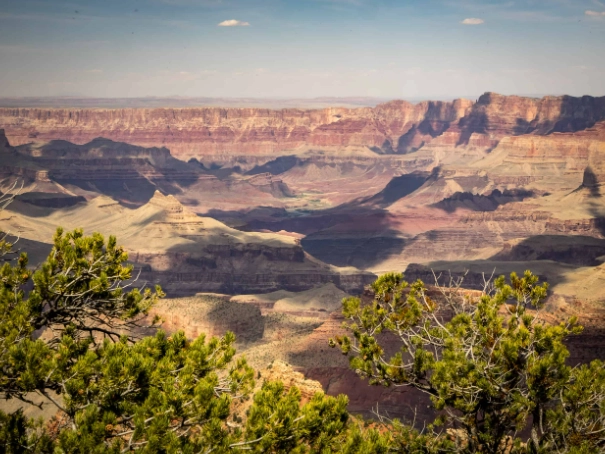
I remember my first time staring down from Grandview Point, my daypack feeling suddenly insufficient. I made some mistakes, learned some hard lessons, and came back smarter. This guide is the result – the info I wish I'd had.
Grandview Point & The Grandview Trail: What You're Actually Getting Into
First, a bit of straight talk. The Grandview Point Grand Canyon hike is not a beginner trail. It's not even an "intermediate if you're fit" trail in the way the South Kaibab is. It's historic, steep, rough in places, and requires serious respect.
Built in the late 1890s for the Last Chance Copper Mine, this trail is a piece of history. That also means it's engineered differently from the park-maintained corridor trails. The steps are taller, the turns are tighter, and the exposure feels more immediate in sections.
So, what's the big draw? Why choose this over the more famous paths?
- Solitude: You'll see a fraction of the hikers you find on Bright Angel.
- Raw Challenge: It feels more like "real" canyon hiking – rugged and demanding.
- History: You're walking a path built by miners, with remnants of their work still visible.
- Views: Grandview Point lives up to its name, and the trail perspectives are uniquely stunning.
But let's get specific. What are you really signing up for?
By The Numbers: Grandview Trail Stats
| Metric | Detail | Why It Matters |
|---|---|---|
| Trailhead Elevation | 7,400 feet (2,255 meters) | You start high. Thin air can affect breathing, especially if you're coming from sea level. |
| Horseshoe Mesa Elevation | 4,900 feet (1,494 meters) | That's a 2,500-foot descent to get there. Remember, you have to climb back up. |
| Round-Trip Distance | ~6 miles (9.7 km) to Mesa & back | Don't let the short distance fool you. The difficulty is in the elevation change and terrain. |
| Average Hike Time (Round Trip) | 4-7 hours | This varies wildly. Fit hikers moving fast might do it in 4. Most should plan for 5-6, including breaks. |
| Trail Condition | Unmaintained, primitive | Rocks can be loose. Steps are uneven. It requires constant attention to footing. |
| Best Season | Spring (Apr-May) & Fall (Sept-Oct) | Summer is dangerously hot. Winter brings ice and snow to the upper sections. |
Looking at that table, the main takeaway is the vertical. A 2,500-foot climb out is serious business, especially at the end of your hike when you're tired. The Grandview Point Grand Canyon hike is a relentless test of endurance.
A Mile-by-Mile Breakdown of the Grandview Trail Hike
This is where most guides get vague. "It's steep," they say. Okay, but *where* is it steep? Where can you catch your breath? Let's break it down like we're walking it together.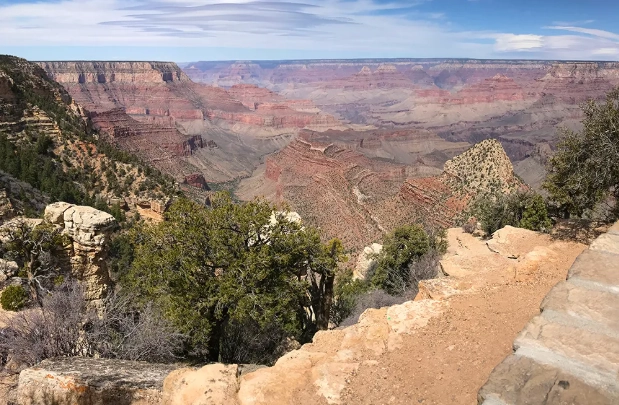
Mile 0-0.5: The Infamous "Top Step" Section
You leave the crowded viewpoint, pass the sign, and within 50 feet, the trail dives. This first half-mile is the steepest, most sustained descent on the entire Grandview Trail. You're on a series of tight, rocky switchbacks carved directly into the Coconino Sandstone cliff.
The steps are high – sometimes knee-high. You'll be using your hands for balance. The exposure is real; there are sheer drop-offs. This section is why they say you need to be sure-footed. If this part makes you intensely nervous, turning back is a wise, not weak, choice. The rest of the trail is similar in character, if slightly less intense.
Mile 0.5-1.5: Through the Layers
The angle eases slightly (I said slightly) as you traverse the Hermit Shale. The trail becomes more of a rugged path than a staircase. You'll pass through a few amazing narrow sections where the rock walls close in. Look for the historic cribbing – wooden supports and retaining walls from the mining days. Some are still holding the trail in place over a century later.
This is a good section to find a rhythm. The views start to open up behind you, back towards Grandview Point, which now looks impossibly high.
Mile 1.5-2.5: The Final Push to Horseshoe Mesa
The trail contours around the head of a side canyon before making the final descent onto the mesa itself. You'll cross the Redwall Limestone, another steep, rocky section. Just before the mesa, there's a distinct junction. The main Grandview Trail continues down to the Colorado River (a multi-day backpacking endeavor), but for our day hike, you bear left onto Horseshoe Mesa.
Suddenly, the world flattens out. You've made it. The tension in your quads releases. You're standing on a vast, triangular mesa with 360-degree views that are nothing short of spectacular.
Is The Grandview Point Hike Too Difficult For You?
This is the million-dollar question, right? Let's be honest with ourselves.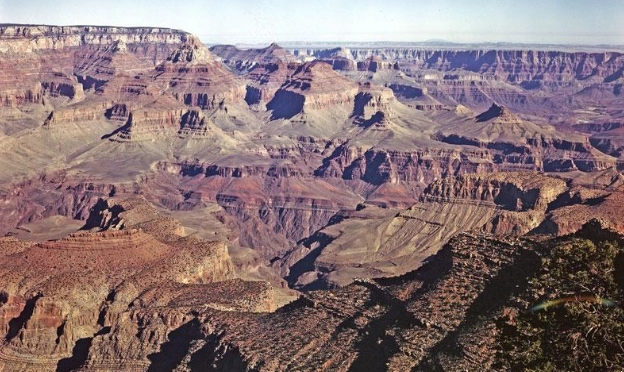
You should reconsider the Grandview Point Grand Canyon hike if:
- You have significant fear of heights or exposure.
- You have chronic knee, ankle, or hip problems. The descent is punishing.
- You've never done a hike with over 1,500 feet of elevation gain.
- Your idea of hiking is a smooth, wide path.
- You tend to underestimate your water needs.
You're likely ready if:
- You're an experienced hiker in good cardiovascular shape.
- You have strong legs and good balance.
- You understand and respect the "down is optional, up is mandatory" rule of the canyon.
- You're prepared to carry 3-4 liters of water (or more in summer) and know how to pace yourself.
Here's a personal litmus test: If you've hiked the South Kaibab Trail to Cedar Ridge and back (about 3 miles round trip, 1,140-foot descent/ascent) and found it manageable but challenging, then the Grandview Trail to Horseshoe Mesa is the next logical step up in difficulty. If Cedar Ridge wiped you out, Grandview will be too much.
The Non-Negotiable Gear List for Grandview
Forgetting something on the Bright Angel might be an inconvenience. Forgetting something on the Grandview Trail can be a serious problem.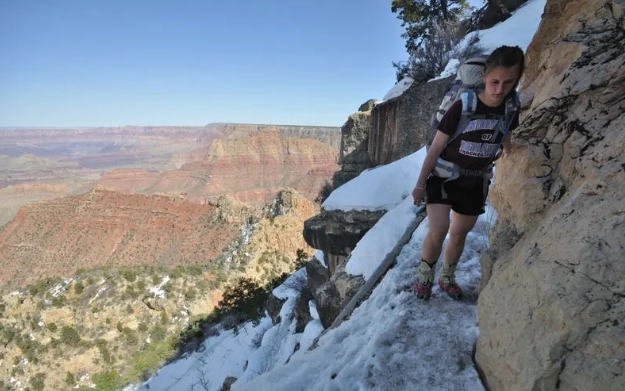
The Absolute Essentials (Don't leave the parking lot without these):
- Water: 3 liters per person is the absolute minimum for a spring/fall day hike. I carry 4. In hotter shoulder seasons, you need more. Use a hydration bladder plus a bottle. Bladders are great for sipping, but a bottle lets you see exactly how much you have left.
- Sturdy Footwear: Hiking boots with aggressive tread and good ankle support. Trail runners can work for some, but the rocky, uneven surface makes ankle rolls a real risk. This is not a sneaker hike.
- Electrolytes: You're sweating out salt. Dumping plain water into your system without replenishing electrolytes can lead to hyponatremia, which is dangerous. Use electrolyte tablets (like Nuun or Liquid IV) or a sports drink mix.
- Calorie-Dense Food: More than a granola bar. Sandwiches, nuts, cheese, jerky, energy bars. You'll burn thousands of calories.
- Sun Protection: A wide-brimmed hat, sunglasses, and SPF 50+ sunscreen. The sun reflects off the rocks and there is almost zero shade.
- Map & Navigation: The trail is obvious, but always carry a map. The National Park Service provides a good one on their website. I print it. Your phone can fail.
Highly Recommended (You'll be glad you have them):
- Trekking Poles: I was skeptical until I used them on the climb out. They transfer 20-30% of the load from your knees to your arms. A total game-changer for the ascent.
- First Aid Kit: Focus on blister care (moleskin, leukotape), antiseptic wipes, and bandages. Cuts and scrapes are common.
- Headlamp: Even if you plan to finish hours before dark. If you twist an ankle and your pace slows, a simple delay can mean finishing in the dark.
- Light Layers: The temperature can swing 30+ degrees from the rim to the mesa. A light fleece and a windbreaker/rain shell are smart.
When To Go: Beating the Heat and the Crowds
Timing is safety on this hike.
Prime Time (Highly Recommended): April through early June, and September through October. Daytime highs on the mesa are usually in the 60s-70s°F (15-25°C). The rim can still be cool, even chilly in the morning. This is the sweet spot.
Risky Shoulder Seasons: Late June through August is frankly dangerous for a day hike to Horseshoe Mesa. Temperatures on the mesa can exceed 100°F (38°C). The inner canyon acts like an oven. The National Park Service strongly advises against inner canyon day hikes in summer. If you must go in summer, you'd have to start before sunrise and aim to be off the trail by 10 AM, which is a brutal pace.
Winter (November-March): Possible, but the upper trail can be icy or snow-packed. Microspikes or traction devices are often necessary. The days are very short. Only for experienced winter hikers.
Your Step-by-Step Plan for Hike Day
Let's walk through the perfect day for a Grandview Point Grand Canyon hike.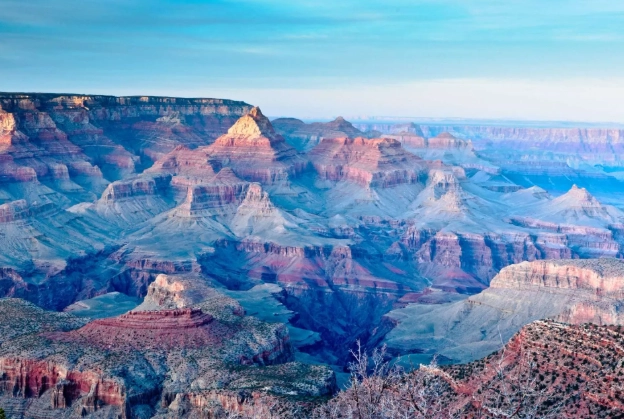
Pre-Dawn (If you're smart): Wake up. Eat a solid breakfast (oatmeal, eggs, something with carbs and protein). Fill all your water containers. Double-check your pack. Drive to Grandview Point. Parking is limited, so an early start (by 7 AM) guarantees a spot and gives you the coolest hours for the descent.
At The Trailhead: Use the pit toilets at the parking lot (last proper facility). Take a final look at the view from Grandview Point. Commit the sight of the trailhead to memory. Sign the trail register if there is one. Tell someone your plan.
The Descent (Miles 0-3): Go slow. I mean it. Your instinct will be to charge down, excited. Fight it. Place each foot carefully. Use your poles. Drink water regularly, don't wait until you're thirsty. Take pictures on the way down—you'll be too tired to want to stop on the way up. Plan to reach Horseshoe Mesa in 1.5 to 2.5 hours.
On Horseshoe Mesa: Find a spot, rest, eat lunch for a good 45-60 minutes. You need the fuel. Explore a little, but don't wander too far from the main trail. This is not the place to get lost. Soak in the view. Remember, you're only halfway—the hard half is coming.
The Ascent (Miles 3-6): This is the test. Start slow and find a sustainable pace. A good rhythm is: step, breathe, pole, repeat. Take short breaks (30-60 seconds) to let your heart rate come down, rather than long, infrequent stops that let your muscles stiffen. Consume your remaining food and water strategically on the way up. The last half-mile back to Grandview Point will feel endless. Just keep moving.
Back at the Car: Celebrate. Drink the extra water and snack you (hopefully) left in the car. Your legs will feel like jelly. Drive carefully—fatigue is real.
Answers to Your Burning Questions (The FAQ)
Is there a bathroom on the trail?
No. The only facilities are the pit toilets at the Grandview Point parking area. You must practice Leave No Trace principles for human waste. This means packing out toilet paper and solid waste in wag bags (available at park stores) or digging a cathole 6-8 inches deep at least 200 feet from the trail, any water, and your lunch spot. Most day hikers time their visit to use the facilities at the trailhead.
Can I camp on Horseshoe Mesa?
Yes, but it requires a backcountry permit from the National Park Service. These are highly competitive and obtained through a lottery system months in advance. Camping turns the Grandview Point Grand Canyon hike into a different, more relaxed two-day experience, but the permit hassle is significant. All the details are on the official NPS Backcountry Permit page.
Are there dangerous animals?
The main concerns are the small ones. Rattlesnakes are present but generally avoid the trail. Just watch where you put your hands and feet when taking breaks off the path. Scorpions and biting insects are more of a nuisance at campsites. Mountain lions are extremely rare and avoid people. The most dangerous animal on the trail is an unprepared human.
How does Grandview compare to South Kaibab or Bright Angel?
Bright Angel is the wide, maintained, crowded "highway" with water and resthouses. South Kaibab is steeper, more scenic, and has no water, but is well-maintained and busy. The Grandview Trail is narrower, rougher, steeper in sections, has no water, gets far fewer people, and feels more adventurous and raw. It's a step up in commitment from both.
What about the mining history?
It's fascinating! Horseshoe Mesa had the Last Chance Copper Mine. You can see old cables, wooden cribbing, and even the mine entrances (which are extremely dangerous and should never be entered). The trail itself is an artifact. For detailed history, the NPS has a great page on Grandview Trail history.
Final Thoughts: Respect The Canyon
The Grandview Point Grand Canyon hike is a privilege. It's a chance to touch the Canyon's history and test your own limits in an environment that doesn't care about your plans.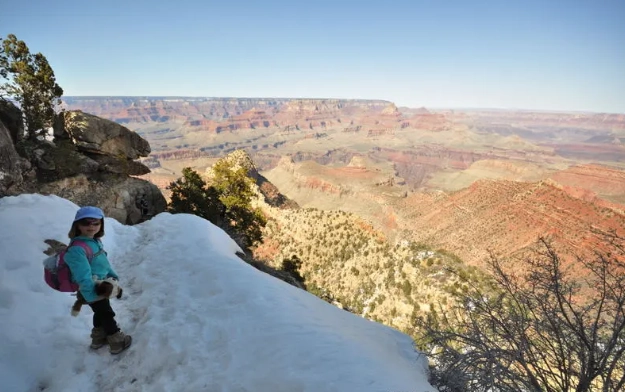
It humbled me on my first attempt. I was overconfident, carried too little water, and paid for it with a miserable, headache-filled climb out. I came back later, prepared, and had one of the most satisfying hiking days of my life. The feeling of standing alone on Horseshoe Mesa, looking up at the rim you started from, is unforgettable.
Do your homework. Pack meticulously. Start early. Listen to your body. And if the Canyon gives you a sign—whether it's a storm brewing, a feeling of unease on those first steep steps, or simply not feeling right—have the wisdom to turn around. The trail will be there another day.
The Grandview Trail isn't for everyone, and that's okay. But if you're ready for it, it offers a pure, challenging, and deeply rewarding Grand Canyon experience that few visitors ever get to know.
Now go check your boots and start filling those water bottles.
Reader Comments