Let's cut to the chase. Mono Lake isn't your typical lakeside picnic spot. You won't find jet skis or grassy shores here. What you will find is one of the most bizarre, beautiful, and ecologically vital landscapes in North America. It's a place where ghostly limestone towers rise from briny water, where millions of birds stage an epic feast, and where the story of human intervention and environmental recovery plays out across a vast, silent basin. If you're planning a trip to the Eastern Sierra—to hike in the nearby Mammoth Lakes area or drive the iconic Tioga Pass into Yosemite—skipping Mono Lake is a mistake I've seen too many people make. This guide is here to make sure you don't.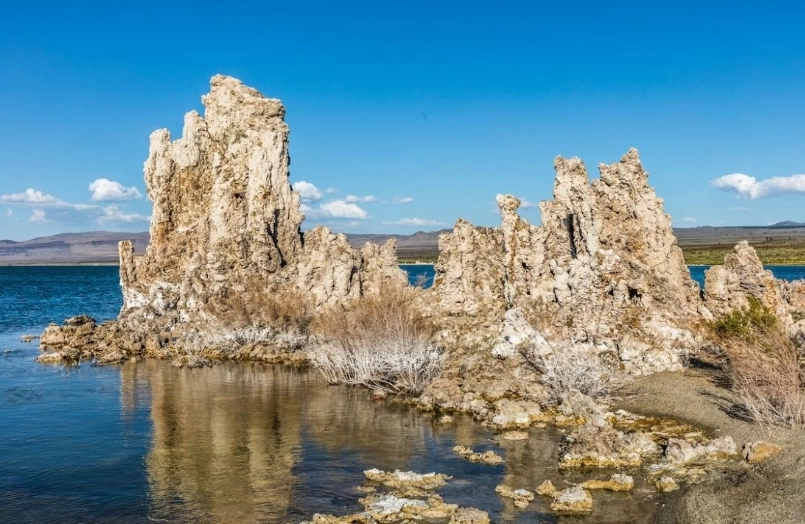
What's Inside This Guide
What Exactly Is Mono Lake?
Mono Lake is a vast, ancient saline lake sitting in a volcanic basin east of the Sierra Nevada mountains. It's over 1 million years old, making it one of the oldest lakes in North America. With no outlet, water only leaves through evaporation, leaving behind salts and minerals. This makes the lake about 2-3 times saltier than the ocean and highly alkaline.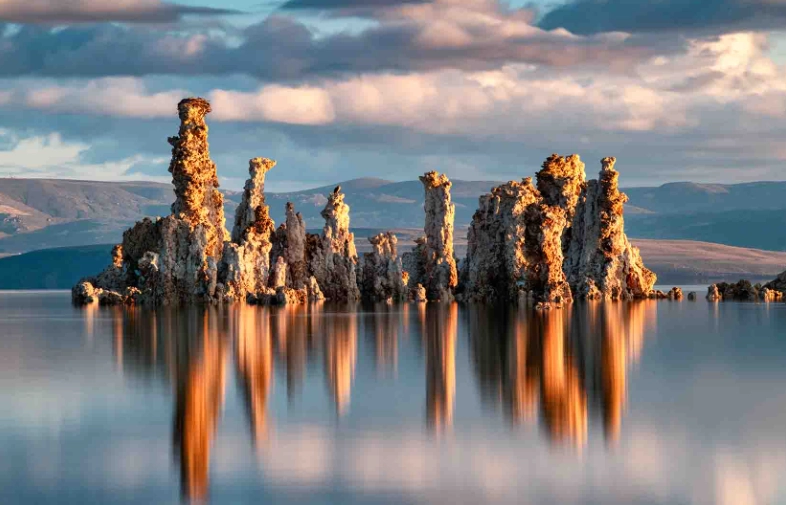
The lake's most famous residents are the tufa towers. These aren't ancient ruins, but natural limestone formations. They form underwater where freshwater springs rich in calcium bubble up into the carbonate-rich lake water. The reaction creates limestone, building towers over centuries. They only became visible because the lake level dropped dramatically. Seeing them is like seeing the lake's skeleton.
My first view of the South Tufa area at sunrise was humbling. The silence is profound, broken only by the call of an occasional grebe. The towers look like a submerged city from a sci-fi film, and the water has a weird, viscous quality. It's not a "pretty" postcard scene; it's powerful and slightly eerie.
How to Plan Your Mono Lake Visit
Here’s the practical stuff you need to know. Mono Lake is vast, and access points are specific.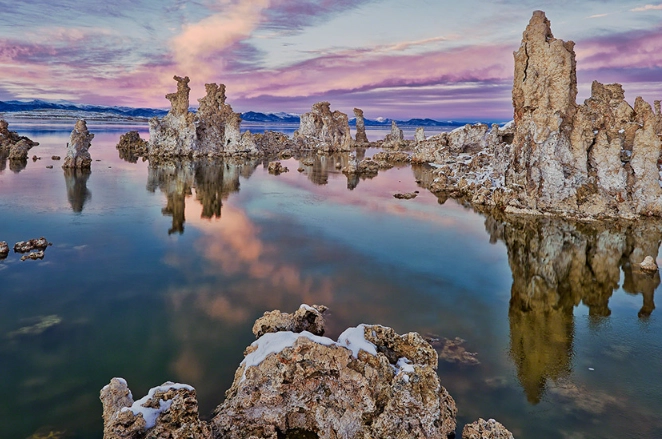
Location & Access: Mono Lake is located on Highway 395, roughly midway between the towns of Lee Vining and Mammoth Lakes in Mono County, California. It's about a 30-minute drive from the east gate of Yosemite National Park (Tioga Pass Entrance, open seasonally).
No Entrance Fee: It's public land managed by the U.S. Forest Service and the California State Lands Commission. There is no general entrance fee to visit the lake or its vista points.
Visitor Center: The excellent Mono Lake Committee Information Center & Bookstore is in Lee Vining. It's your best first stop for maps, current conditions, and guided tour info. They have restrooms and fresh water.
Getting There and Getting Around
You need a car. There's no meaningful public transport. From the San Francisco Bay Area, it's a 4.5-5 hour drive via US-395. From Los Angeles, it's about 5.5-6 hours. The closest major airport is in Reno, Nevada (about 2 hours north).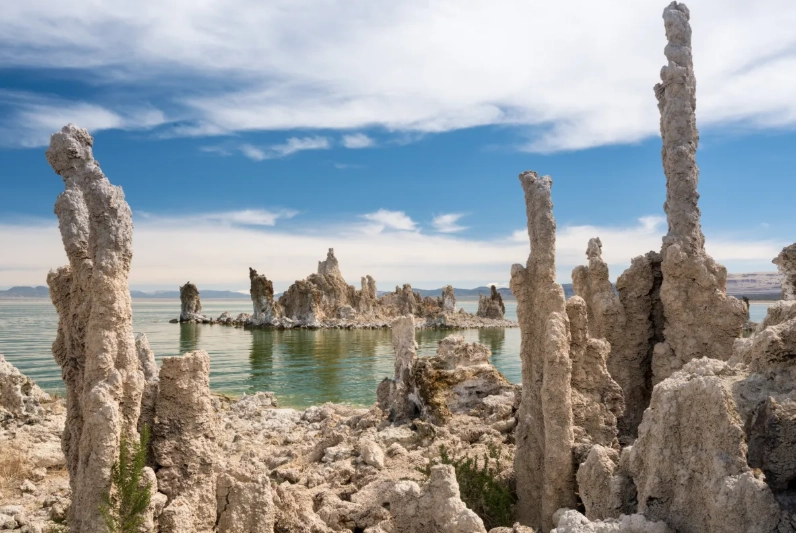
The lake shoreline is over 70 miles long, but visitor activity focuses on a few key, easily accessible areas. The main roads are paved, but some dirt roads lead to more remote spots (like the Navy Beach turnoff) and are generally okay for passenger cars when dry.
When to Go and What to Bring
Best Time: Late spring (May-June) through fall (October). Summer days are warm, but nights get cool. Fall is spectacular with fewer crowds and golden aspen trees in the surrounding canyons. Winter is harsh—snowy, cold, and access can be limited, but it's stunningly quiet.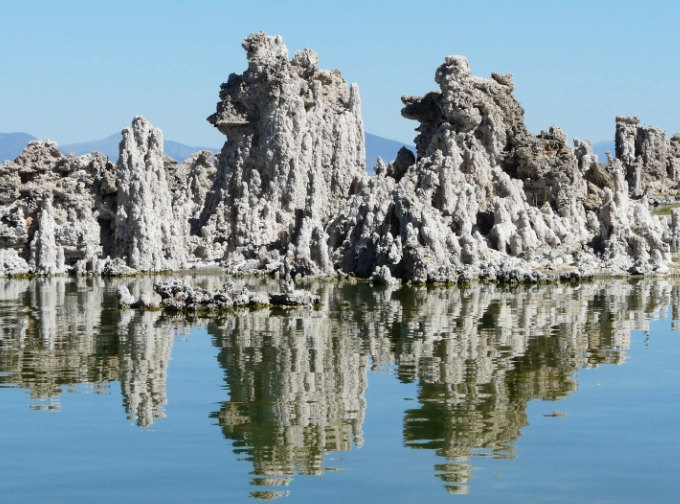
Pack This: Sunscreen, hat, and sunglasses (the reflection off the water and white sand is intense). Plenty of water—it's a dry, high-desert climate at about 6,400 feet. Sturdy shoes for walking on uneven, sometimes crunchy, alkaline crust. A windbreaker—afternoons can get breezy. And your camera, obviously.
The Best Things to See and Do at Mono Lake
Don't just pull over, snap a pic from the highway, and leave. To get Mono Lake, you have to get close. Here’s where to go.
| Spot | What You'll Find | Best For | Notes |
|---|---|---|---|
| South Tufa Area | The iconic, dense forest of tufa towers. A 1-mile self-guided loop trail gets you right among them and to the water's edge. | First-time visitors, photography (especially sunrise/sunset), understanding tufa formations. | A $3 per person access fee is collected via an honor system. The most popular spot. |
| Mono Lake County Park & Navy Beach | Easy lake access, a small sandy beach, and more tufa formations. Less crowded than South Tufa. | Birdwatching, a quiet picnic, getting on the water (kayaking). | Free access. The beach is a common launch point for kayaks. Portable toilets available. |
| Panum Crater | A young volcanic crater (only 650 years old) on the lake's south shore. A short but steep hike leads to a fascinating obsidian dome. | Geology buffs, a unique perspective looking down on Mono Lake. | Rough dirt road access. Bring good hiking shoes and water. |
| Mono Basin National Forest Scenic Area Visitor Center | Located north of Lee Vining off Highway 395. Excellent exhibits, a stunning elevated boardwalk with panoramic views. | Learning the full ecological history, accessible viewing, family-friendly. | Free. Often has ranger-led talks. Great alternative if mobility is an issue. |
Beyond the table, here's what you actually do at these places.
For Photography: South Tufa at sunrise is the holy grail. The low light paints the tufa gold and pink. Sunset at the Old Marina area offers reflections of the Sierra in the still water. A polarizing filter helps cut the intense glare.
For Birdwatching: Mono Lake is a critical stop on the Pacific Flyway. From late July through September, hundreds of thousands of Wilson's Phalaropes and Red-necked Phalaropes stop to feast on brine shrimp. Eared Grebes are common. Bring binoculars and scan the open water and shoreline from Navy Beach or the Scenic Area boardwalk.
For a Unique Float: Yes, you can swim. The high salinity makes you incredibly buoyant—it's a surreal, weightless experience. But here's the expert tip everyone misses: Rinse off COMPLETELY in fresh water ASAP after getting out. The alkaline water is harsh on skin and hair. Do not submerge your head or get water in your eyes. Public showers are scarce, so many people use a large jug of water and a towel in their car. It's fun, but it's not a leisurely swim.
Take a Guided Tour: The Mono Lake Committee offers fantastic canoe tours and walking tours. Paddling silently among the tufa towers while a naturalist explains the ecology is an unforgettable experience you can't get on your own. Book ahead in summer.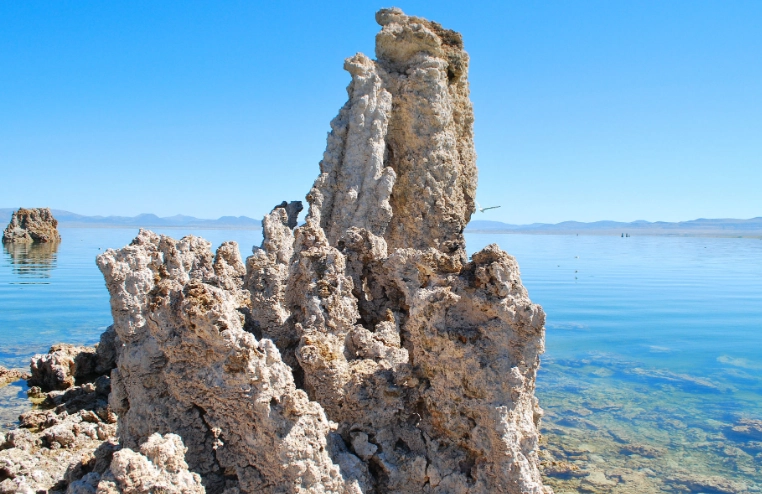
The Crucial Ecological Story of Mono Lake
You can't talk about Mono Lake without talking about Los Angeles. In 1941, the Los Angeles Department of Water and Power (LADWP) began diverting water from Mono Lake's tributary streams. The lake level plummeted, halving its volume by 1982. The exposed lakebed created toxic dust storms, islands where nesting birds were vulnerable to predators became peninsulas, and the ecosystem neared collapse.
This sparked one of the most famous environmental legal battles in U.S. history. The Mono Lake Committee formed and, using the public trust doctrine, fought to protect the lake. In 1994, the State Water Resources Control Board ruled that diversions must be reduced to allow the lake to reach a sustainable level.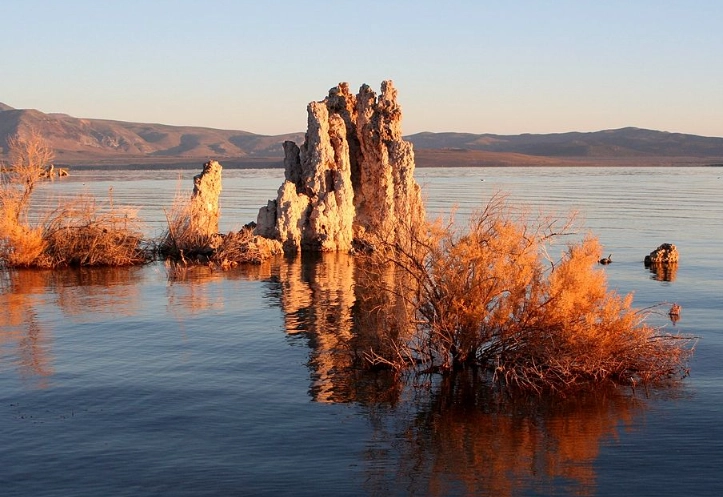
The recovery is ongoing and monitored closely by agencies like the U.S. Geological Survey. It's a precedent-setting case study in balancing urban water needs with environmental protection. When you visit, you're seeing a landscape in active recovery, a testament to citizen action. Supporting the non-profit Mono Lake Committee by visiting their store or taking a tour directly funds this ongoing stewardship.
Reader Comments