If you've ever driven through Flagstaff, Arizona, you've seen them. A massive, sprawling mountain range that dominates the northern horizon. To most travelers, they're the San Francisco Peaks, a popular hiking and skiing destination. But to the Navajo (Diné) people, they are something profoundly different: Dook'o'oosłííd, the Sacred Mountain of the West, one of the four cardinal pillars that bound and protect Navajo traditional territory. This isn't just a scenic backdrop; it's a living, breathing entity central to identity, story, and survival. Understanding this dual reality—the recreational and the sacred—is the key to a truly meaningful visit. This guide will walk you through exactly what that means, from the deep cultural significance to the practical steps for planning a respectful and unforgettable trip.
What You'll Find in This Guide
Why Are the San Francisco Peaks Sacred to the Navajo?
Let's get this straight from the start. For the Navajo, the peaks aren't just "important" in a historical sense. They are an active, integral part of the cosmology. In the Navajo creation story, First Man and First Woman placed four sacred mountains at the cardinal directions to mark the boundaries of Dinétah, the Navajo homeland. Dook'o'oosłííd (the San Francisco Peaks) marks the western boundary.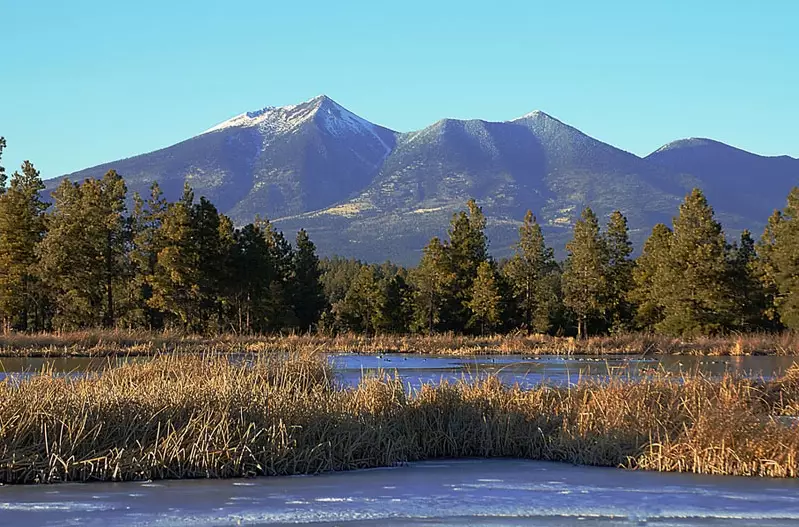
It's associated with the color yellow, the female gender, and the precious substance of abalone shell. More than a symbol, the mountain is considered a living being. Deities, or Holy People, reside there. It's a source of spiritual power, a place for prayer, and a provider of essential herbs and medicines used in ceremonies. When Navajo people face the east at dawn to pray, they are acknowledging all four sacred mountains, including the peaks to their west.
This isn't ancient history. It's contemporary belief. Many Navajo families have specific stories and connections to the area. The proposed use of recycled wastewater to make artificial snow at the Arizona Snowbowl ski resort on the peaks led to a decade-long legal battle by the Navajo Nation and other tribes. They argued it would desecrate a sacred being. The courts ultimately allowed it, but the conflict highlighted the stark difference in worldview. For visitors, recognizing this ongoing, living relationship is step one.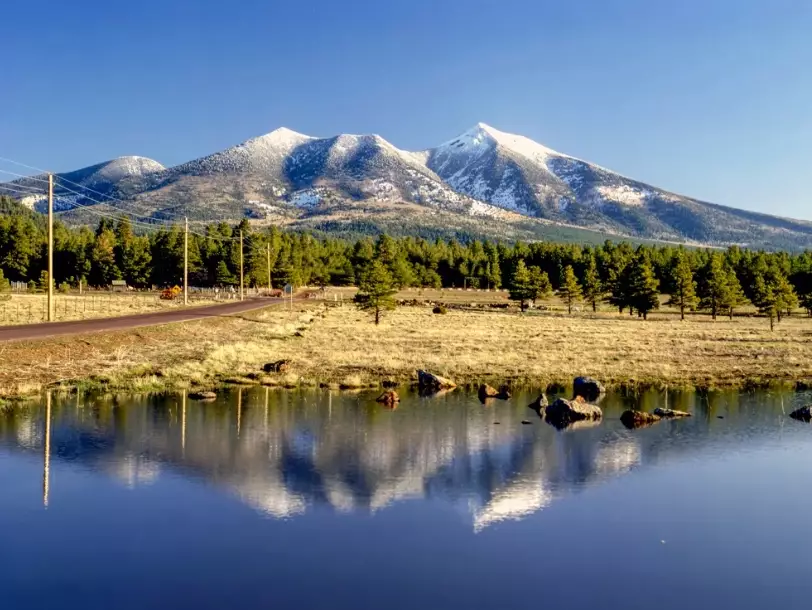
A Quick Note on Names and Perspective
The name "San Francisco Peaks" comes from Spanish explorers. The individual summits are named after American scientists (Humphreys, Agassiz, Fremont). But in the indigenous view, the entire massif is one sacred entity. You'll also hear the Hopi name, Nuvatukya'ovi, meaning "Place of Snow on the Very Top." When we talk about the "San Francisco Peaks Navajo" context, we're specifically engaging with the Diné perspective of Dook'o'oosłííd.
Geography and How to Visit the Peaks
The San Francisco Peaks are the remains of a massive stratovolcano that collapsed millions of years ago, forming the San Francisco Volcanic Field. The range includes six main summits, with Humphreys Peak being the highest point in Arizona at 12,637 feet (3,852 meters).
Location & Address: The peaks are located within the Coconino National Forest, north of Flagstaff, AZ. There is no single "address." Your entry points are specific trailheads or the Arizona Snowbowl ski area.
Getting There: Nearly all visitors base themselves in Flagstaff. From downtown Flagstaff, take US-180 north for about 7 miles. You'll see signs for the Arizona Snowbowl. Turn left onto FR 516 (Snowbowl Road) and drive about 7 more miles up the mountain to the ski area parking lots. The road is paved and well-maintained.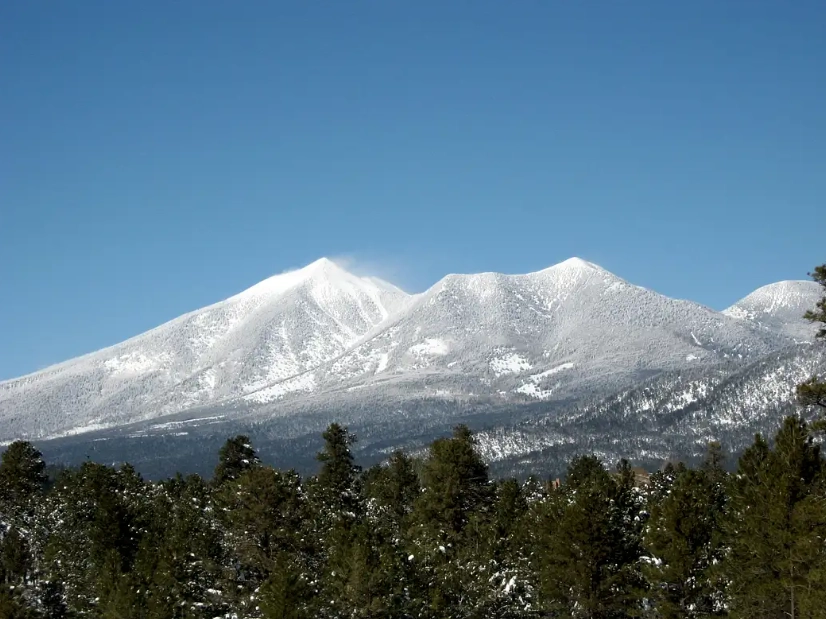
No Entrance Fee: There is no general entrance fee to access the Coconino National Forest. However, you need a pass to park at most trailheads.
Parking Pass Required: You must display a valid recreation pass. The easiest options are the America the Beautiful Interagency Annual Pass or a Coconino National Forest Day Pass ($5, available at self-service kiosks at the trailhead or online). Don't risk a ticket.
Best Time to Visit: Late June through early October is the prime window for hiking. July and August bring monsoon thunderstorms—be off the summit by noon. Winter (Nov-Apr) is for skiing/snowboarding at Snowbowl; hiking is extremely dangerous due to snow, ice, and avalanche risk. Spring (May-June) often has deep, lingering snowpack on high trails.
| Peak Name | Elevation (ft) | Key Feature & Note |
|---|---|---|
| Humphreys Peak | 12,637 | Highest point in AZ. Popular, strenuous hike. |
| Agassiz Peak | 12,356 | Second highest. Closed to hiking to protect fragile tundra. |
| Fremont Peak | 11,969 | Often visible from the Humphreys trail. |
| Aubineau Peak | 11,818 | Part of the scenic ridge. |
| Rees Peak | 11,474 | -- |
| Doyle Peak | 11,460 | -- |
Hiking Humphreys Peak: The Complete Guide
The Humphreys Peak Trail (#151) is the big draw. It's a serious undertaking, not a casual walk. Here’s the raw data and the stuff you won't find on a basic park sign.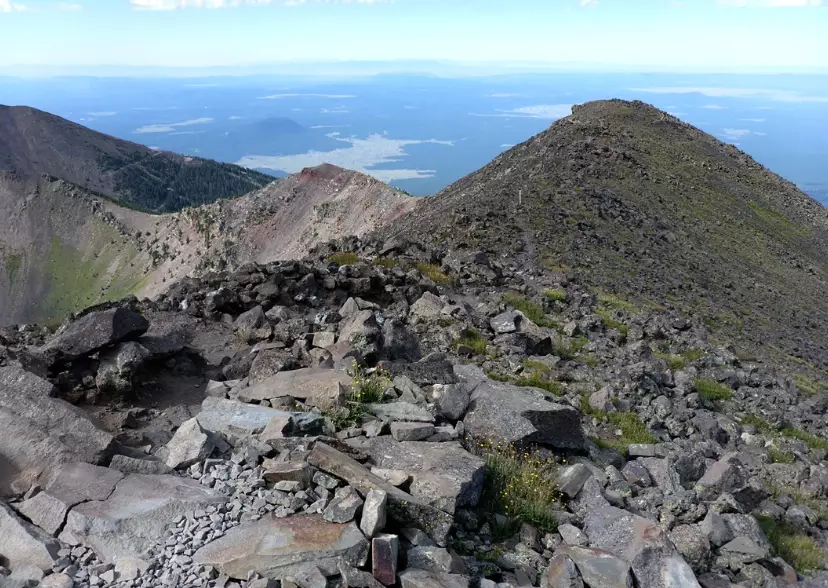
Trail Stats: 10.5 miles round trip. Elevation gain: 3,333 ft. Rated: Strenuous. Allow 6-9 hours.
Trailhead: Humphreys Peak Trailhead at the Arizona Snowbowl upper parking lot (end of Snowbowl Rd).
The Hike Breakdown:
The first 2 miles are the easiest, winding through beautiful aspen and pine forests. After the treeline, it gets real. You're on exposed, rocky tundra. The wind is almost always howling up here, even on calm days in Flagstaff. The final push to the summit involves navigating a rocky saddle—it's a scramble, not a paved path.
The Expert Mistake Everyone Makes: Underestimating the weather. The summit can be 30°F colder than Flagstaff with hurricane-force winds. I've seen people in shorts and tank tops turning blue. It's not just uncomfortable; it's life-threatening. Hypothermia can set in fast.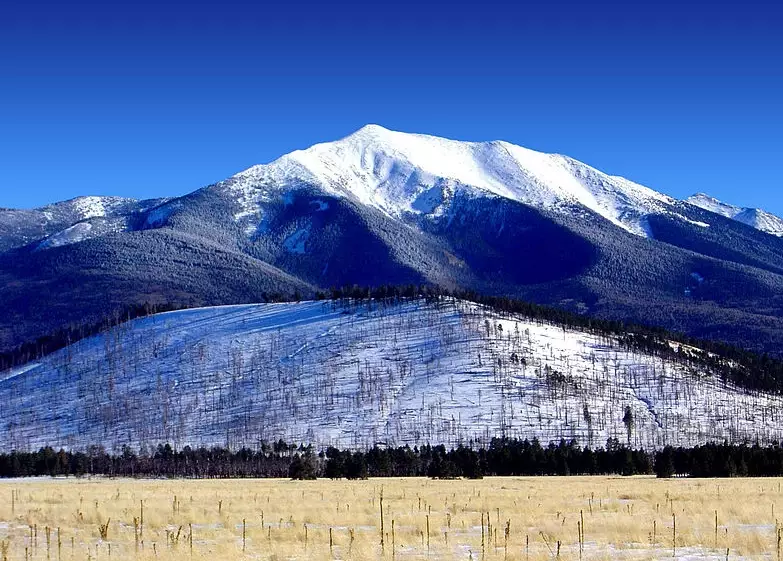
What You Absolutely Must Bring:
- Layers: Moisture-wicking base, insulating mid-layer (fleece/puffy), waterproof/windproof shell.
- Sturdy Hiking Boots: Ankle support is crucial for the rocky terrain.
- More Water Than You Think: 3-4 liters minimum. There are no water sources.
- High-Energy Food: Snacks, lunch, electrolytes.
- Map/GPS: The trail is clear, but above treeline in fog, it's easy to get disoriented.
- Headlamp: In case your hike takes longer than planned.
The view from the top? On a clear day, you can see the Grand Canyon. It's spectacular. But remember where you are standing. Take a quiet moment.
How to Visit the San Francisco Peaks Responsibly
This is the most important section. Being a responsible visitor here goes beyond "Leave No Trace." It's about cultural respect.
1. Mindset Shift: You are not just in a national forest. You are on the slopes of a being that is sacred to multiple Indigenous nations. Act with the reverence you would in any holy place.
2. Leave Everything as You Find It: This is amplified. Do not stack rocks (cairns) unless it's an official trail marker. Do not pick plants, flowers, or stones. Many plants are used ceremonially. Taking a "souvenir" rock is culturally analogous to taking a piece of a cathedral's altar.
3. Stay on Designated Trails: The alpine tundra is incredibly fragile. A single footstep can kill lichens that take decades to grow. More importantly, wandering off-trail could lead you into an area of specific ceremonial importance.
4. Be Discreet and Respectful: Keep noise levels down. Loud voices and music are disruptive to both other hikers and the solemnity of the place. If you see someone in prayer or meditation, give them wide space.
5. Educate Yourself Further: Before you go, spend 20 minutes on the Navajo Nation Parks & Recreation website or read about the Navajo (Diné) worldview. It enriches the experience immensely.
Some people feel this is restrictive. I see it as the opposite. It adds a layer of depth and meaning that turns a hike into a pilgrimage.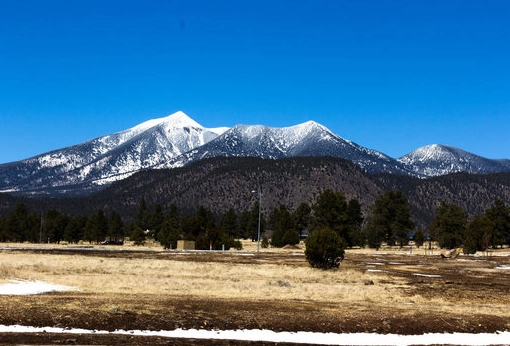
What to See and Do Beyond the Summit Hike
Not everyone is up for a 10-mile slog. Luckily, the area offers incredible access for all ability levels.
Scenic Drive and Gondola at Arizona Snowbowl
Drive up Snowbowl Road for stunning views. In summer, the Scenic Chairlift operates, whisking you to 11,500 ft with minimal effort. The view from the top of the lift is breathtaking and gives you a real sense of the volcanic landscape. It costs around $20-25 for adults. Check the Arizona Snowbowl website for summer hours.
Excellent Shorter Hikes
Kachina Trail (#150): This is my personal favorite for a moderate day. It starts near the Snowbowl parking and traverses the slopes through aspen groves and meadows with phenomenal views of the inner basin. You can hike out and back as far as you like. 6 miles one-way to its end, but even 2 miles in is rewarding.
Weatherford Trail (#102): Access from the Schultz Pass area. A longer trail that gradually climbs through forest towards the peaks, offering different perspectives.
Visit the Museum of Northern Arizona
Before or after your trip, stop at the Museum of Northern Arizona in Flagstaff. Their exhibits on Colorado Plateau geology and Indigenous cultures, including the Navajo, provide essential context that makes seeing the peaks so much more powerful.
Your Questions Answered: Visiting a Sacred Site
Is it disrespectful for non-Native people to hike Humphreys Peak?
This is a nuanced question many wrestle with. Based on conversations with cultural interpreters, the issue is rarely the physical act of hiking itself. The disrespect comes from behavior: treating the mountain solely as a recreational playground, being loud and disruptive, removing natural objects, or ignoring its sacred significance. If you approach the hike with respect, mindfulness, and follow the guidelines outlined here, your visit can be one of appreciation rather than appropriation. The key is intention and education.
I want to learn directly from Navajo guides. Are there tours?
Yes, and this is the single best way to deepen your understanding. While specific tours *on* the peaks are less common due to their sacred nature, several reputable companies in Flagstaff and the surrounding region offer cultural tours led by Navajo guides. These might focus on general Navajo history, geology of the area, or visits to other significant sites like the Wupatki National Monument. Search for "Navajo guided tours Flagstaff" and look for companies with clear ties to the community. Always book directly through official tribal or certified guide outlets.
What's the biggest mistake first-time visitors make regarding the cultural aspect?
Assuming silence equals emptiness. People hike up, see the great view, and leave thinking it's just a pretty mountain. They miss the entire narrative. The mistake is not seeking to understand the stories embedded in the landscape. Before you go, read about the Four Sacred Mountains. When you're on the trail, consider that every spring, ridge, and rock formation likely has a name and a story in Navajo tradition. You don't need to know them all, but acknowledging they exist changes everything.
Are there any areas completely off-limits to visitors?
Yes. Agassiz Peak, the second highest summit, is permanently closed to all public access by the U.S. Forest Service to protect its extremely fragile alpine tundra ecosystem. This closure also honors its particular cultural sensitivity. Respect all posted closures and signs—they are there for vital environmental and cultural reasons, not to spoil your fun.
How do weather conditions change so drastically from Flagstaff to the summit?
It's a classic orographic effect. Flagstaff sits at 7,000 ft. The summit is over 12,600 ft. That's a vertical mile of atmosphere difference. Temperatures drop roughly 3-5°F per 1,000 feet of elevation gain. So, a 75°F day in town could be 50°F at the trailhead and 35°F at the summit, not including wind chill. The peaks also create their own weather, snagging moisture and generating sudden clouds, fog, and storms. Always, always check the high-elevation forecast, not just the Flagstaff forecast.
The San Francisco Peaks stand as a powerful reminder that a landscape can hold multiple truths. They are a premier hiking destination and a sacred being. By choosing to engage with both truths, your visit becomes more than just a check on a bucket list. It becomes an exercise in perspective, humility, and connection to a place that has inspired awe and reverence for millennia. Pack your layers, your water, and most importantly, your respect, and go experience Dook'o'oosłííd for yourself.
Reader Comments