Let's cut to the chase. If you're driving into Grand Canyon National Park's South Rim for the first time through the South Entrance, Mather Point is likely the first major viewpoint you'll encounter. It's more than just a scenic stop; it's the park's de facto welcome center for your senses. The sheer scale hits you here. But here's the thing most blogs don't tell you: because it's the easiest to access, it's also where most visitors make their first big mistakes—staying too short, fighting the worst crowds, or missing the subtle magic just steps away.
I've lost count of my visits over the years. I've seen people gasp, cry, and then turn around after five minutes. I've also guided friends to spots 200 feet from the main railing where we had the sunset virtually to ourselves. This guide isn't just about what Mather Point is; it's about how to experience it like someone who knows its rhythms, its hidden corners, and its logistical quirks.
Your Quick Trail Map to Mather Point
- What Exactly Is Mather Point?
- How to Get to Mather Point: Parking, Shuttles, and Walking
- The Best Time to Visit Mather Point for Photos and Fewer Crowds
- What to See and Do at Mather Point (Beyond the Obvious)
- Planning Your Visit: A Practical Blueprint
- 5 Common Mather Point Mistakes (And How to Avoid Them)
- Your Mather Point Questions, Answered
What Exactly Is Mather Point?
Mather Point is a promontory on the South Rim of the Grand Canyon, named after Stephen Mather, the first director of the National Park Service. Geographically, it's your introduction to the vast, multi-layered chasm. You get a classic, east-facing view down into the canyon, with prominent buttes like O'Neill Butte and Vishnu Temple in the distance.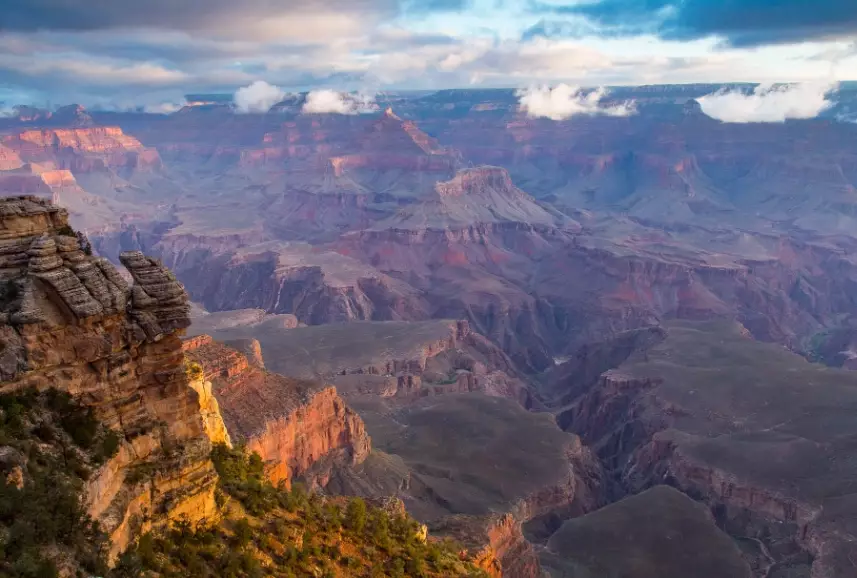
Its practical importance is huge. It's adjacent to the Grand Canyon Visitor Center. This means your typical first-timer flow is: Park, walk to Mather Point for the "wow" moment, then hit the visitor center for maps and info. It's efficient, but it creates a predictable bottleneck.
Location: South Rim, Grand Canyon National Park, Arizona. It's about a 5-minute walk north of the Visitor Center.
Park Entrance Fee: $35 per private vehicle (valid for 7 days). Consider the America the Beautiful Annual Pass ($80) if visiting multiple parks.
South Rim Operating Hours: The park is open 24 hours a day, 365 days a year. The Visitor Center has specific hours (usually 8 AM - 5 PM).
View Orientation: Primarily east-facing, making it a premier sunrise and morning spot.
How to Get to Mather Point: Parking, Shuttles, and Walking
This is where frustration often begins. The main parking lot near the Visitor Center fills up by 9:30 AM from spring through fall. I've circled it like a vulture more times than I'd like to admit.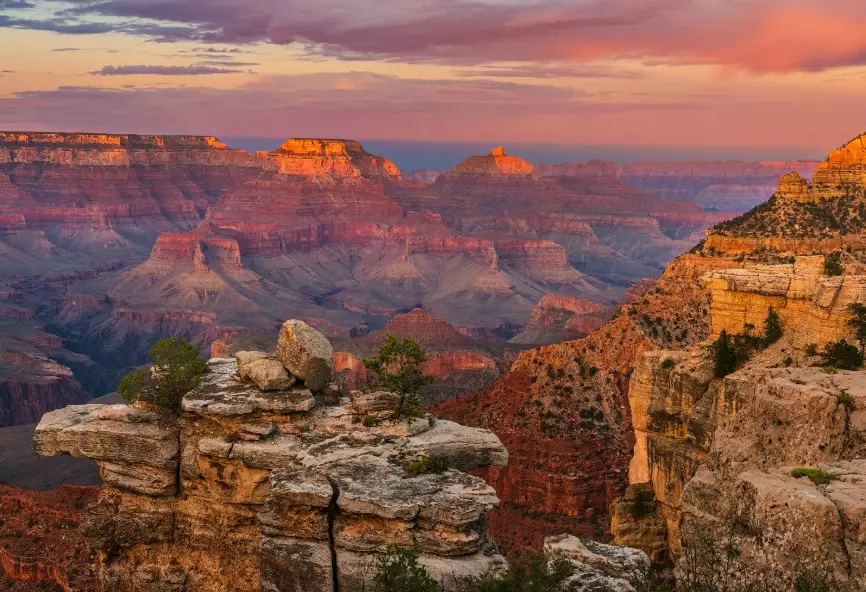
Your Transportation Options, Ranked
1. Park at the Visitor Center Lot (The Early Bird Gamble): Your best bet is to arrive before 9 AM. It's a flat, paved 0.4-mile walk from the lot to the viewpoint. If this lot is full, rangers will direct you to overflow.
2. Use the Free Park Shuttle (The Stress-Free Winner): The Blue Line (Village Route) shuttle stops at the Visitor Center Transit Center. From there, it's the same short walk to Mather Point. Park at the large, rarely-full Backcountry Information Center (Lot D) or the Market Plaza (Lot A) and hop on the shuttle. This is my default recommendation for anyone arriving after 10 AM.
3. Walk from Grand Canyon Village (The Pleasant Stroll): If you're staying at or near the historic lodges, you can follow the Rim Trail from places like Bright Angel Lodge. It's about a 1.5-mile scenic walk along the rim to Mather Point. All downhill going east, remember it's uphill on the way back.
The Best Time to Visit Mather Point for Photos and Fewer Crowds
Timing is everything. The difference between a chaotic, sun-washed snapshot and a serene, golden-hour masterpiece is just a few hours.
For Photography: Sunrise is unbeatable. The low eastern sun paints the canyon walls in warm oranges and reds, with long, dramatic shadows. You'll share the space with dedicated photographers, but it's a respectful crowd. Late afternoon is also good, but the canyon face starts to fall into shadow earlier than you'd think.
For Avoiding Crowds: Sunrise (pre-dawn arrival), or the last hour before sunset. The midday tour bus rush (11 AM - 3 PM) is when the main platform feels like a subway platform. Seriously, I've seen people give up and leave.
Seasonal Considerations: Summer has the longest days but the biggest crowds. Winter offers stunning snow-dusted views and solitude, but ice on the paths is a real hazard—wear traction devices. Spring and fall are the sweet spots.
What to See and Do at Mather Point (Beyond the Obvious)
Don't just walk to the main railing, snap, and leave. You're missing the point.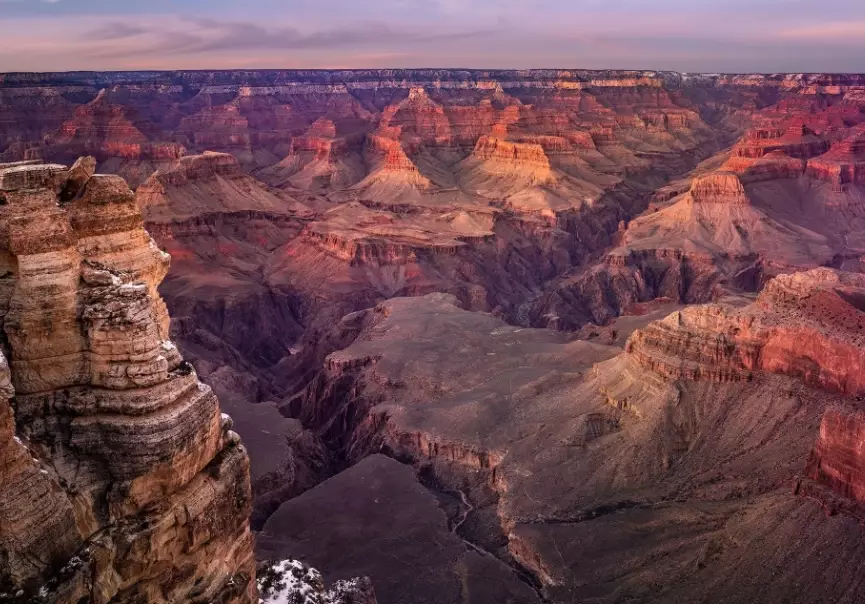
The Main Viewing Platform: Yes, do this first. Take it in. Identify the Colorado River if you can spot its silty green ribbon snaking through the inner canyon. Look for the Kaibab Trail zigzagging down the far wall.
The Eastward Rim Trail Stretch: This is the pro move. From the main platform, walk east (to your right if facing the canyon) along the Rim Trail. In just 5-10 minutes, the crowds thin dramatically. The views become more intimate, with different rock formations coming into focus. You'll find unofficial but safe perches on the limestone rock. This is where I always take first-time visitors after the initial shock.
The Geologic Exhibits: Near the main area are informative signs explaining the rock layers you're seeing—the Kaibab Limestone, Toroweap Formation, Coconino Sandstone. Understanding that you're looking at 200 million years of history stacked vertically changes the experience.
Visitor Center Integration: Pair your visit with the Grand Canyon Visitor Center. Check the schedule for ranger talks starting at Mather Point amphitheater. Their 20-minute "Canyon Conversation" talks are gold.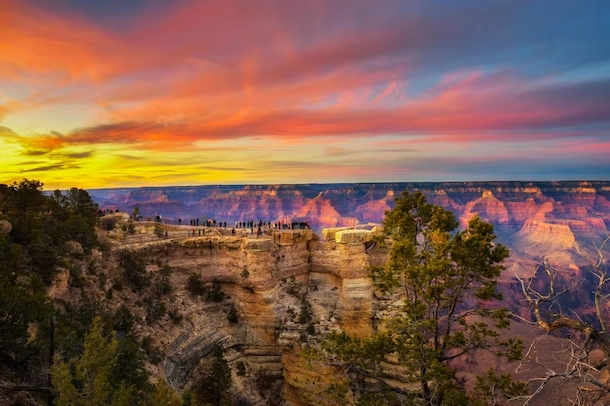
Planning Your Visit: A Practical Blueprint
The Mather Point Half-Day Experience
8:00 AM: Arrive, park at Visitor Center lot.
8:15 AM: Experience sunrise at Mather Point main platform.
8:45 AM: Walk east along the Rim Trail for quieter views.
9:30 AM: Head to the Visitor Center, watch the park film, get maps.
10:30 AM: Catch the Blue Line shuttle to explore other viewpoints like Yavapai or Hopi Point.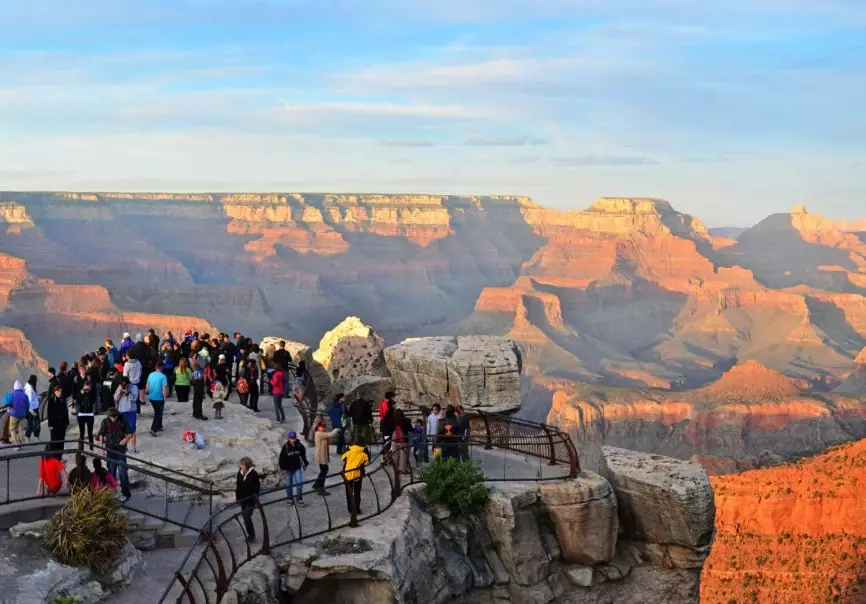
If You Only Have One Hour
Walk directly to the main platform, spend 10 minutes. Then immediately walk east on the Rim Trail for 15 minutes. Turn around and come back. You'll have seen more than 90% of visitors.
5 Common Mather Point Mistakes (And How to Avoid Them)
1. Mistake: Visiting only at high noon. Fix: Prioritize early morning or late afternoon.
2. Mistake: Never leaving the main platform. Fix: Commit to a 10-minute walk east on the Rim Trail.
3. Mistake: Driving around for 30 minutes seeking a closer spot when the main lot is full. Fix: Head straight to the Backcountry Info Center (Lot D) and take the shuttle.
4. Mistake: Not checking the weather. The rim can be windy and 20-30°F cooler than the desert floor. Fix: Always pack layers, even in summer. A windbreaker is a lifesaver.
5. Mistake: Rushing. The scale is incomprehensible at first glance. Fix: Sit down on a bench (there are some along the eastern trail). Stay for at least 20 minutes. Watch the light change, see birds soar below the rim. Let it sink in.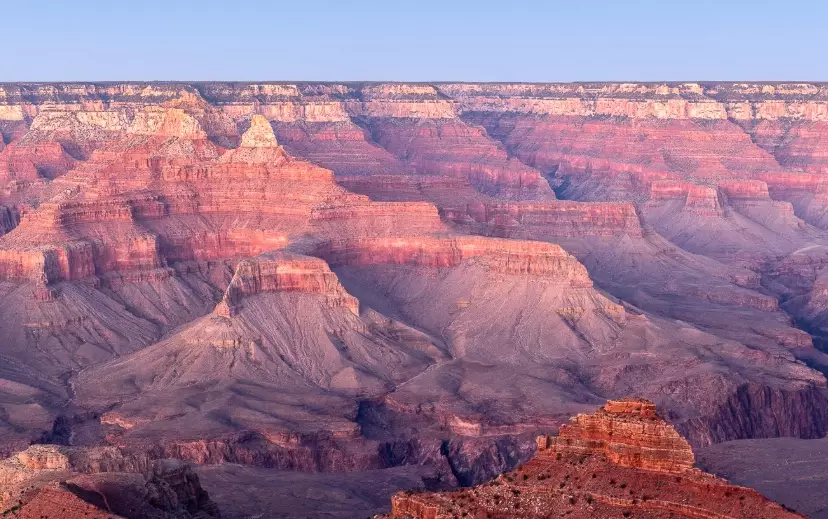
Your Mather Point Questions, Answered
Is Mather Point wheelchair accessible?
The main viewing platform and the paved path from the Visitor Center are fully accessible. The Rim Trail east of Mather Point is also a wide, paved path suitable for wheelchairs and strollers for a good distance. Accessible parking is available at the Visitor Center lot.
Can I see the Colorado River from Mather Point?
You can, but it's a distant view and requires knowing where to look. From the main platform, look almost straight down and slightly to the left (north). You're searching for a thin, dark green line deep in the inner gorge. It's easier to spot on clear, sunny days. If you can't find it, don't worry—viewpoints like Yavapai Observation Station offer much clearer river vistas.
What's the single most important thing to bring to Mather Point?
Water. Not a small bottle. A large one. The altitude (approx. 7,000 feet) and dry air dehydrate you quickly, even if you're just standing and looking. Sunscreen and a hat are non-negotiable seconds. The Arizona sun is relentless, and shade is scarce.
Is Mather Point a good place to start a hike into the canyon?
No. Mather Point itself is purely a viewpoint on the rim. The nearest trailhead for descending into the canyon is the South Kaibab Trailhead, which is accessed via the Orange Line shuttle bus. Never attempt to hike off-trail from the rim. The Bright Angel Trailhead is in Grand Canyon Village, west of Mather Point.
How does Mather Point compare to other South Rim viewpoints like Yavapai or Hopi Point?
Mather Point is the iconic, accessible first view. Yavapai Observation Station, a mile west, has more enclosed viewing areas and superior geologic exhibits, often with telescopes. Hopi Point, further west on the shuttle route, is considered the premier sunset viewpoint. Mather Point's advantage is its proximity to visitor services and its role as the grand introduction. It's the overture; the other viewpoints are the following movements.
Mather Point isn't just a pin on a map. It's a rite of passage. It's where the postcard becomes reality. By managing the logistics smartly—arriving early, using the shuttle, walking that extra bit down the Rim Trail—you claim your own experience of it, beyond the crowd. You get the silence, the scale, the slow reveal of color. That's the visit you'll remember.
Use it as your launchpad. Let that first breathtaking look fuel your curiosity to explore more of the South Rim, whether it's the history of the Village, the depth of a canyon trail, or the fiery spectacle of sunset at Hopi Point. But start here. Start right.
Reader Comments