Let's be honest. When you picture the Grand Canyon, you're probably thinking of Mather Point or Yavapai. Those spots are iconic for a reason. But they also share the stage with tour groups, selfie sticks, and a constant hum of chatter.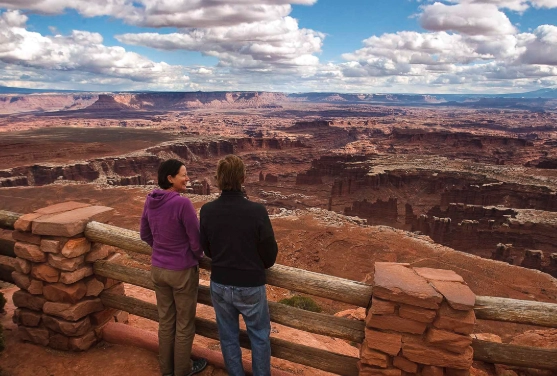
If that's not your scene, let me introduce you to Grandview Point.
It's not hidden, exactly. It's on the map. But it feels different. The parking lot is smaller. The vibe is quieter. People are here to look, not just check a box. The view? It's raw. It drops you straight into the canyon's belly, with none of the gentle lead-in you get further west. This is the Grand Canyon for people who want to feel its scale, not just see a postcard.
I've lost count of my visits. Last year, I brought friends who'd only seen the main viewpoints. Their reaction at Grandview was simple: "Oh. This is it." They meant the real deal.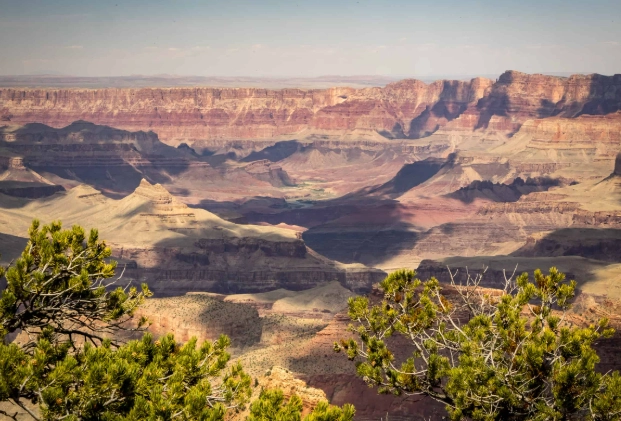
What You'll Find in This Guide
Why Grandview Point Stands Apart
Grandview Point sits on the South Rim, about 12 miles east of Grand Canyon Village. Its history is key to its character. In the late 1800s, this was the center of the canyon's copper mining activity. The Grandview Trail was originally a mining trail, built tough to haul ore. That legacy means two things: the views are oriented toward the mining areas (creating a unique perspective), and the trail is brutally steep and unforgiving—a remnant of its industrial past.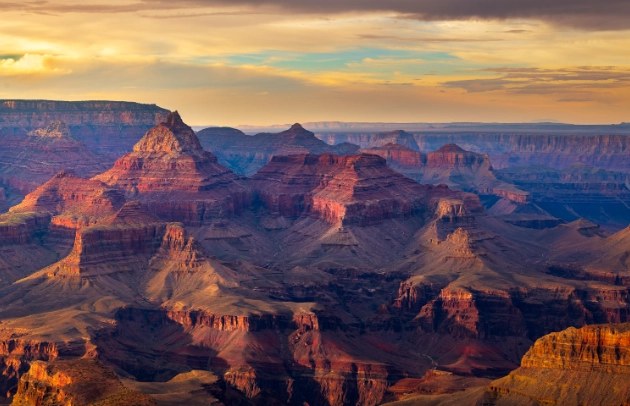
Compared to other South Rim stops, Grandview offers a more intimate, rugged encounter. The railing is shorter. The precipice feels closer. You're staring directly at Horseshoe Mesa, a vast plateau 2,400 feet below, and the dizzying depths of the Hance Creek drainage. The color striations in the rock are exceptionally clear here.
Here’s a quick comparison I often make for friends:
| Viewpoint | Crowd Level | View Character | Best For |
|---|---|---|---|
| Grandview Point | Low to Moderate | Sheer, deep, historic mining area | Serious photographers, hikers, avoiding crowds |
| Mather Point | Very High | Classic, wide panorama | First-time visitors, easy access |
| Yavapai Point | High | Geology-focused, partially enclosed | Learning about rock layers |
| Desert View | Moderate to High | Eastern end, includes Colorado River & Watchtower | Sunrise, river views, cultural sites |
Grandview’s advantage is its niche. It doesn't try to be everything. It's for the view purist.
Getting There: Location, Hours & Essentials
Address/Location: Grandview Point is located on Desert View Drive (State Route 64), approximately 12 miles/19 km east of Grand Canyon Village. There is no street address. Use GPS coordinates: 35.9961° N, 111.9875° W.
Getting There: You have two main options:
- By Car: This is the easiest way. Drive east from the village on Desert View Drive. The road is open year-round, though it may close temporarily after heavy snow. The drive takes about 25 minutes.
- By Shuttle (Seasonal): The Orange Route (Kaibab/Rim) shuttle does NOT go to Grandview Point. The Purple Route (Tusayan) also does not go there. To reach Grandview Point via shuttle, you must take the Hiker's Express Shuttle early in the morning (times vary by season), which goes to the South Kaibab Trailhead, from which it is a very long walk along the rim. Realistically, if you want to go to Grandview Point, you need a car or to join a guided tour that includes it.
- Open: 24 hours a day, 365 days a year. Restrooms and parking lot are accessible sunrise to sunset.
- Entrance Fee: Access is included with the Grand Canyon National Park entrance fee ($35 per vehicle, valid 7 days). No separate ticket for the point.
- Parking: One medium-sized paved lot. It fills up between 10 AM and 2 PM. If full, do NOT park on vegetation or along the road—rangers ticket aggressively. Consider visiting early or late.
- Facilities: Flush toilets (seasonal, may be closed in winter), picnic tables, and informational plaques. No water fill station, no gift shop, no café.
The lack of commercial fuss is part of the charm. Come prepared.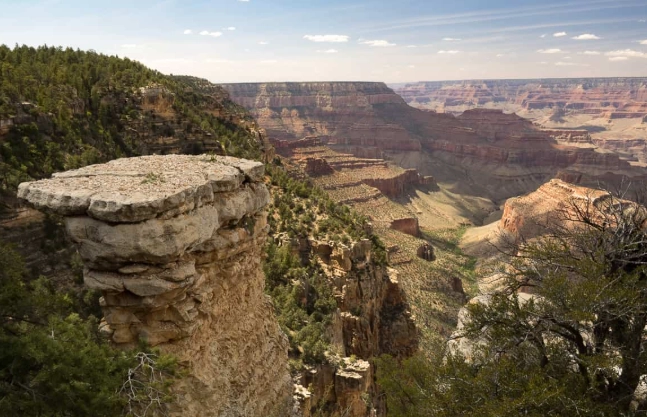
What to See From the Rim
You can spend an hour just deciphering the landscape. Start at the main, paved viewpoint. Look straight out. That massive tabletop directly across is Horseshoe Mesa. See the tiny, light-colored zig-zags on its side? Those are remnants of the Last Chance Copper Mine.
Now look down. I mean, really lean (safely!) and look down. The cliff face below you is nearly vertical. This immediate drop is what gives Grandview its intense feeling of exposure.
Follow the canyon to your left (east). That's the Hance Creek drainage. On a clear day, with binoculars, you can spot the thin, dark line of the Colorado River at the very bottom. It's over a mile away and 4,000 feet down. It's not the best river view in the park (try Desert View or South Kaibab for that), but spotting it feels like an accomplishment.
The rock layers are a geology lesson. The bright white band near the top is Coconino Sandstone. The reddish slope below it is the Hermit Shale. The deep, rusty-red cliffs forming the inner canyon are the Redwall Limestone.
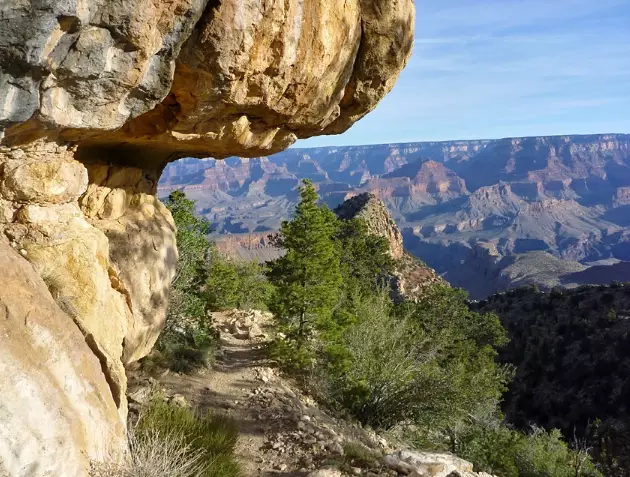
Walk a few steps west along the rim path (not the hiking trail) for a slightly different angle. You'll get a better view of the Grandview Trail clinging to the cliffside. Watching hikers look like ants on that path puts the scale into terrifying perspective.
Hiking the Infamous Grandview Trail
This is why many come to Grandview Point. The Grandview Trail is not a National Park Service maintained trail. It's a "historic trail" kept in its rough, original condition. That's a polite way of saying it's tough, steep, and requires serious respect.
Trailhead: Starts at the west end of the parking lot. Impossible to miss.
Key Distances & Elevation:
- To Coconino Saddle: 0.7 miles one-way. 500 ft descent. A good, challenging taste. The view back up is stunning.
- To Horseshoe Mesa: 3.0 miles one-way. 2,500 ft descent. This is the classic day-hike goal. Allow 6-8 hours round trip.
- To the Colorado River: Do not attempt as a day hike from here. It's another 4+ miles and 2,000+ ft down from the mesa.
What No One Tells You About Hiking This Trail
First, the trail is dry. There is NO reliable water source until you reach a seasonal seep on Horseshoe Mesa (and even that is not guaranteed). You must carry all your water. For a day hike to the mesa, I carry a minimum of 4 liters.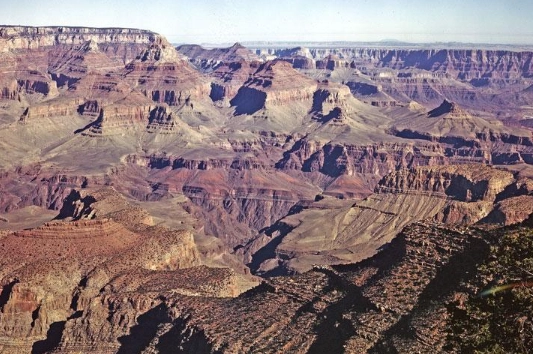
Second, the difficulty is asymmetric. Going down is hard on your knees. Coming back up is a relentless, sun-exposed grind that tests your lungs and willpower. Most rescues happen because people go too far, too late, with too little water. Turn around when you have half your water left, not when you run out.
Third, the trail is exposed and narrow in sections. Sure-footedness is required. If you have a fear of heights, the first mile will be intensely stressful.
Is it worth it? Absolutely. Standing on Horseshoe Mesa, looking up at the rim you came from, is a feeling of earned solitude you can't get on the busier Corridor trails (Bright Angel, South Kaibab). You'll see mine ruins, wildflowers in season, and maybe a desert bighorn sheep.
Planning Your Visit: Tips from a Regular
Here’s my personal playbook for a great Grandview Point visit:
For Viewers Only: Come for sunset. The late afternoon light makes the red rocks glow. The crowds thin dramatically after 4 PM. Bring a jacket—it gets windy and cold quickly once the sun dips.
For Hikers: Start early. I mean, be at the trailhead by 7 AM. You want to be climbing back up before 11 AM to avoid the worst heat. Wear sturdy boots with ankle support—the trail is rocky and uneven. Trekking poles are a knee-saver on the descent. File a backcountry hiking plan with someone.
Photography Tip: The classic shot is from the main viewpoint with Horseshoe Mesa centered. Use a polarizing filter to cut haze and make the sky pop. For a unique shot, find a safe spot along the rim path to the west and use a telephoto lens to compress the view of the trail snaking down the cliff.
What to Pack (Beyond the Usual):
- Water, water, water. More than you think.
- High-energy snacks (nuts, jerky, energy bars).
- A wide-brimmed hat and sunscreen. Shade is scarce.
- Binoculars. They transform the view.
- A detailed map if hiking. The National Park Service has good resources on trail conditions.
Your Questions, Answered
Grandview Point isn't the easiest or most convenient stop. It asks for a bit more effort—a longer drive, an earlier start, a more careful step. In return, it gives you a version of the Grand Canyon that feels less curated and more elemental. It’s the view you remember when the postcard memories of the crowded spots fade.
Go see for yourself.
Comments