Quick Guide
- Building the Basin: The Major Stratigraphic Players
- The Cretaceous Powerhouse
- Beyond the Rocks: The Hydrocarbon Story They Tell
- Where to Find the Real Data: Trustworthy Sources
- Putting the Column to Work: Practical Applications
- Common Questions Geologists Actually Ask
- The Takeaway: It's a Dynamic Tool, Not a Static Picture
Let's talk about the San Juan Basin. If you're in the oil and gas world, or just love geology, you've probably heard the name. It's a big deal in the Four Corners region. But to really understand it—I mean, truly get what makes it tick—you need to get friendly with its stratigraphic column. That's not just a fancy diagram; it's the storybook of the basin. It tells you where the oil and gas decided to take a nap for a few million years, where the ancient seas came and went, and why drilling in one spot is a goldmine and in another, a money pit.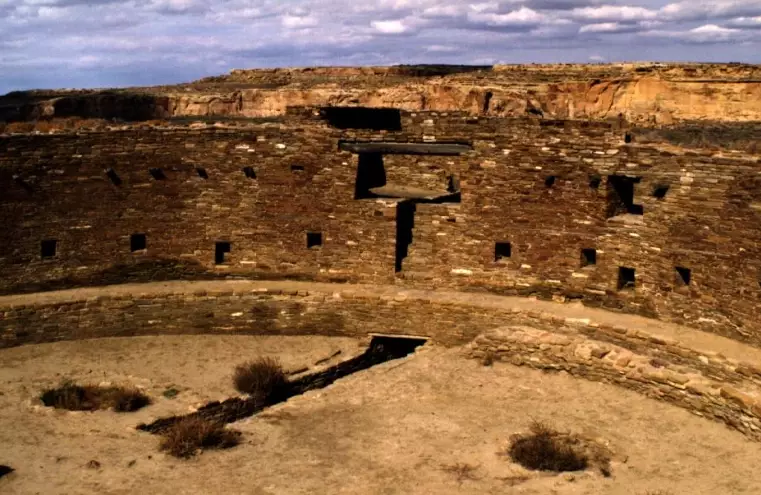
I remember the first time I looked at a detailed San Juan Basin stratigraphic column. It was a mess of colors and names. Fruitland, Pictured Cliffs, Mancos Shale. It felt like reading a foreign language. But once you crack the code, it's like having the basin's diary in your hands. This guide is here to help you do that. We're going to walk through the layers, from the oldest rocks at the bottom to the youngest at the top, and I'll point out what each one means for anyone trying to understand or explore this incredible piece of earth.
Quick Take: The San Juan Basin stratigraphic column is a stacked record of sedimentary rocks, primarily from the Cretaceous and Tertiary periods. It's famous for holding massive coalbed methane resources in the Fruitland Formation and conventional gas in deeper sandstones. The column isn't uniform—it changes thickness and character from the basin's deep center to its shallow edges, which is a critical detail for exploration.
Building the Basin: The Major Stratigraphic Players
So, what exactly are we stacking? The column isn't just a random pile of dirt. It's a chronological sequence, each layer or "formation" representing a specific chapter in the basin's history. These chapters were written by different environments—deep oceans, swampy coasts, sandy beaches. To make sense of it all, geologists group these formations into larger packages called "groups." For the San Juan Basin, the main story is in the Cretaceous and Paleogene rocks.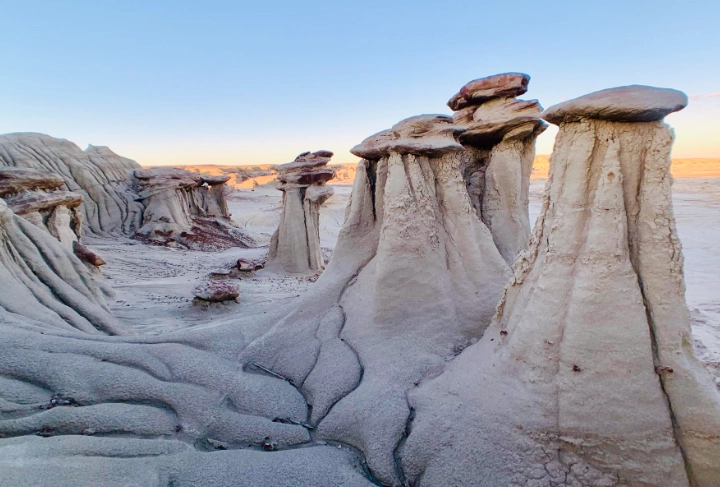
Here’s the thing that often gets glossed over: the names on the column aren't just labels. They're tied to specific type locations—places where that rock unit was first described and defined. The San Juan Basin stratigraphic column draws on work from all over the region. When you see "Mancos Shale," you're looking at a unit defined near the town of Mancos, Colorado. This isn't just academic; it grounds the science in real, mappable geography.
The Cretaceous Powerhouse
This is where the big action is, economically speaking. The Cretaceous sea flooded the area multiple times, leaving behind a classic sequence of marine shales (seal rocks) and shoreline sandstones (reservoir rocks).
| Group / Formation | Approx. Age | Dominant Rock Types | Depositional Environment | Key Significance in the Basin |
|---|---|---|---|---|
| Mesaverde Group | Late Cretaceous | Sandstone, Shale, Coal | Coastal Plain, Deltaic, Shallow Marine | Holds major gas reservoirs (e.g., Pictured Cliffs Sandstone) and coal sources. |
| — Fruitland Formation | ~75-74 Ma | Sandstone, Siltstone, Coal | Coastal Plain / Swamp | Primary coalbed methane (CBM) target. The coal seams are the source and the reservoir. |
| — Pictured Cliffs Sandstone | ~75 Ma | Sandstone | Shoreface / Beach | A major conventional gas sandstone. Its quality is hugely variable. |
| Mancos Shale | Late Cretaceous | Shale, Mudstone | Deep Marine / Offshore | The giant source rock and regional seal. Also a modern shale gas target. |
| Dakota Sandstone | Early-Late Cretaceous | Sandstone, Conglomerate | Fluvial (River) to Shallow Marine | An important, deeper conventional reservoir. Often overpressured. |
Looking at that table, you can start to see the play. The Mancos Shale was the deep, quiet ocean where organic matter piled up and cooked into hydrocarbons. Then, as shorelines moved back and forth, sand bodies like the Pictured Cliffs were deposited right in the path of migrating gas. Finally, the Fruitland swamps capped it with coal. It’s a perfect geological trap system. But I have to say, the correlation of these units across the basin can be a headache. A sandstone that's 50 feet thick in one well might pinch out completely ten miles away. That's why a single, generic San Juan Basin stratigraphic column is almost useless without local well control.
Beyond the Rocks: The Hydrocarbon Story They Tell
Okay, so we have the layers. Why does anyone care? Because this specific sequence created one of the most prolific natural gas provinces in the U.S. The stratigraphic column is literally a map to the treasure, but you have to know how to read it.
The two biggest plays are fundamentally different, and it all depends on where you are in the column:
- Coalbed Methane (CBM) from the Fruitland Formation: This was the boom. The methane is adsorbed onto the coal itself. Production involves dewatering the coal seams to release pressure and allow the gas to desorb. It sounds straightforward, but the water disposal issues and declining production rates gave this play a mixed reputation. The coal quality and thickness in the Fruitland are the top-tier controls, and they change rapidly.
- Conventional & Tight Gas from Sandstones (Pictured Cliffs, Dakota, etc.): This is the older, more traditional play. Gas is stored in the pore spaces between sand grains. The challenge here is reservoir quality. Porosity and permeability in these sandstones are often low (making them "tight gas" reservoirs), and they are compartmentalized. A good well depends on hitting a "sweet spot" of better sandstone development.
A Personal Gripe: You'll see a lot of generalized cross-sections that make the Pictured Cliffs Sandstone look like a continuous, blanket sand. In the field, it's anything but. It's a series of messy, discontinuous lenses. Assuming it's uniform has led to more than a few dry holes, in my opinion. Always look for the net sand maps, not just the column.
And let's not forget the Mancos Shale. While the Bakken and Eagle Ford got the early glory, the Mancos is a significant emerging shale play. The stratigraphic column shows it as a thick, monotonous shale, but within it are thinner, more brittle limestone or siltstone benches—often called the "Mancos B bench" or similar—that are the actual fracture targets. The full-column context is essential to understand these targets.
Where do you even get the data to build your own understanding of the San Juan Basin stratigraphic column?
Where to Find the Real Data: Trustworthy Sources
You can't just rely on a pretty picture from a textbook. For serious work, you need digital logs, core descriptions, and regional studies. Here are the go-to places, and I'm emphasizing the free, authoritative ones because they're gold dust.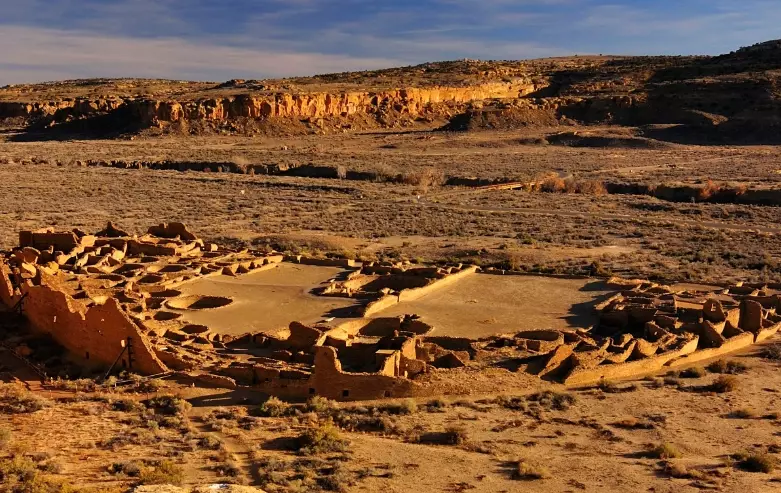
First stop should always be the U.S. Geological Survey (USGS). Their energy program has published decades of detailed studies on the basin. Searching for "San Juan Basin USGS professional paper" will yield PDFs with incredibly detailed stratigraphic columns and cross-sections. They are the bedrock of public data.
Next, the state surveys. The New Mexico Bureau of Geology and Mineral Resources and the Colorado Geological Survey have vast resources. They often have more localized mapping and studies that zoom in on specific parts of the basin stratigraphy. I've found their open-file reports to be incredibly practical.
For well-specific data—the logs that let you see the column in one spot—you head to the regulatory bodies. The New Mexico Oil Conservation Division and the Colorado Oil & Gas Conservation Commission maintain databases of well logs and completion reports. Navigating these sites can be clunky, but the data is official and essential.
The best interpretation blends the big picture from the USGS with the granular detail from the state well logs.
Putting the Column to Work: Practical Applications
So you've studied the San Juan Basin stratigraphic column. Now what? How does this translate from academic knowledge to practical action?
For an exploration geologist, the column is the starting point for every map. You're not just looking for "sandstone"; you're looking for the Pictured Cliffs sandstone. You use the column to pick your correlation markers—a persistent shale bed, a coal seam—to accurately track your target zone between wells. Mis-picking a zone by even a hundred feet can mean missing the reservoir entirely.
For a petroleum engineer, the column dictates completion design. Fracking a brittle sandstone in the Mesaverde Group is a different game than trying to stimulate the organic-rich but clay-heavy Mancos Shale. The mechanical properties of each layer, which you can infer from the rock types in the column, guide everything from fluid chemistry to pump pressure.
Even for environmental work, the stratigraphic column is crucial. If you're dealing with produced water or planning a disposal well, you need to know which formations are sealed (good for disposal) and which are aquifers (must be protected). The column shows the vertical sequence of seals and permeable zones.
Common Questions Geologists Actually Ask
The Takeaway: It's a Dynamic Tool, Not a Static Picture
I hope this has shown that the San Juan Basin stratigraphic column is more than a colorful stack of rectangles. It's a dynamic, interpretive framework. The version from the 1980s is different from today's, because we have more data and better understanding. New biostratigraphic dating or sequence stratigraphic concepts can subtly shift formation boundaries.
The real power comes from using the column as a guide to ask better questions. Why does the Dakota sandstone thicken here? What caused the Fruitland coals to be so much richer in that area? The answers to those questions, which lie in the details of the stratigraphy, are where you find the opportunities—and avoid the expensive mistakes.
Ultimately, mastering the San Juan Basin stratigraphic column is about respecting the basin's history. It’s a complex story written in rock, and taking the time to read it carefully is the first and most important step in any successful project here. Whether you're modeling a reservoir, planning a well, or just trying to grasp the geology of the Southwest, this column is your foundational text. Don't just memorize it. Understand the story it's telling.
Comments