
The short answer to what is the difference between a canyon and a box canyon: a canyon is any deep, narrow valley with steep sides, open at both ends. A box canyon is a canyon with steep walls on three sides and only one way in or out. That single entrance changes everything, from how you navigate to how fast water can turn a dry trail into a trap.
The core difference, in plain terms
I've guided people through both open canyons and box canyons. The confusion usually comes from the word "canyon" being used for everything from the Grand Canyon to a 30-foot crack in the desert. So let's strip it back.
A canyon is a landform. Erosion cuts it, usually by a river or flash floods working over a very long time. It has two open ends because the water that carved it had to flow through. Walk into one end, and you can walk out the other.
A box canyon has a headwall. The upper end is closed by a steep cliff or rock face. You walk in, and to leave, you turn around and walk back out the same way. That's the defining feature. If you're standing on a rim looking down and the canyon looks like a U-shape with no exit at the back, you're looking at a box canyon.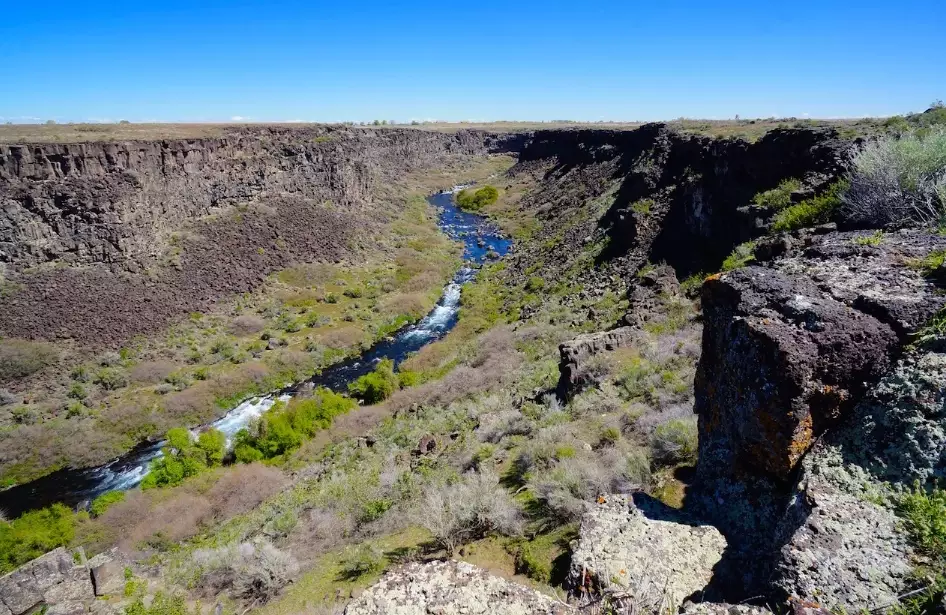
How does a box canyon actually form?
Box canyons form where water enters a drainage at a single point and the surrounding rock is hard enough to resist widening at the top. Typical setups include:
- Headward erosion that stops when the water hits harder rock, leaving a steep closed head.
- Layered sedimentary rock where a hard caprock sits over softer stone, so the softer rock erodes away but the walls stay upright.
- Joint systems and faults that channel the flow into a narrow cut with no second exit.
- Faulting and uplift that creates a pocket-shaped depression draining through one gap only.
None of that matters if you're just hiking, though. What matters is that one entrance. That's the part I care about when I'm looking at a weather report.
Canyon vs box canyon, side by side
| Feature | Canyon | Box Canyon |
|---|---|---|
| Openings | Two ends, water flows through | One entrance, closed headwall |
| Shape from above | Long, winding corridor | Pocket or U-shape with no back exit |
| Navigation | Point-to-point or shuttled hike | Out-and-back only |
| Flash flood risk | High in narrow sections | Very high, no escape at the head |
| Typical examples | Grand Canyon, Zion Narrows | Box Canyon near Ouray, Little Wild Horse approach |
| Best use | Through-trips, photography | Short scrambles, geology study |
If a table row makes it sound clean and simple, that's just the table. Real canyons blur the boundaries. I've walked a canyon that has an open top end but a choke point in the middle that feels exactly like a box canyon once the rain starts.
What the shape means on the ground
Navigation and exit strategy
A standard canyon lets you plan a through-hike. A box canyon forces an out-and-back. That sounds like a minor point until you're three miles in and realize your turnaround time is based on an exit that doesn't exist.
My habit: before entering any narrow canyon, I mark the entrance coordinates on my phone and note the time. In a box canyon, that entrance is the only exit. It's also the only place you'll get a weather signal in some drainages, so check the forecast there, not back at the trailhead.
Flash flood risk is not the same
This is where I see beginners make a real mistake. They check the National Weather Service forecast for the trailhead town and assume they're fine. In a box canyon, the rain that matters is often falling miles away on the plateau above the headwall. The canyon can be bone dry with blue sky overhead and still flood within minutes.
I've seen this at Box Canyon Falls near Ouray. Dry in the morning, and by early afternoon the stream below the falls was brown and moving fast. Nobody was hurt, but two hikers had to wait out the pulse behind a boulder. The sky above us was clear the whole time.
Scrambling and route-finding
Box canyons often require scrambling up ledges near the entrance because the floor drops away from the apron. Standard canyons usually have a gentler grade along the rim access. If you're new to canyoneering, start with an open canyon with a clean through-line before stepping into a box canyon with a headwall you might have to climb beside.
A real example I walked
The Box Canyon just outside Ouray, Colorado, is a good one to picture. It's a narrow, deep cut with a waterfall at the head, and the only way in is from the access trail at the bottom. People walk in, look up at the falls, and walk back out.
For comparison, the Zion Narrows is a canyon. You enter from the top or bottom and travel through, and the exit is a different point from the entrance. It's a corridor, not a pocket.
Same word on the sign. Completely different experience on the ground.
Questions hikers keep asking
Is a box canyon safer than a regular canyon because it's short?
Shorter doesn't mean safer. The closed head is the problem. In a flood pulse, a box canyon has no high ground at the back, so you have to get out the same entrance you came in. Carry a weather radio, check the radar for the whole drainage basin, and set a hard turnaround time before you step in.
Can a box canyon turn into a regular canyon over time?
Geologically, yes. Headward erosion keeps working on the headwall. Once the water cuts a notch through the hard caprock, the closed end opens, and the canyon becomes a through-corridor. That process can take thousands of years, but the shape you see on a map is a snapshot, not a permanent state.
How do I tell a box canyon from a dead-end canyon on a topo map?
Look at the contour lines at the head. If the lines wrap around the canyon's upper end and stay steep without a gap, it's a closed head. If you see a drainage split or a side gully breaking the contour pattern, there's likely a second exit. The map won't label it for you. You have to read the shape.
What should I bring specifically for box canyon hiking?
A helmet, for one, because the closed head tends to be where rockfall concentrates. A small weather radio or a phone loaded with a radar app that covers the whole watershed. And a headlamp. Box canyons get dark fast at the back, and if you're turning around late, you'll want light. Trekking poles are less useful than a single sturdy stick or a hand on a wall.
The difference between a canyon and a box canyon is not academic. It changes how you plan your exit, how you read the weather, and how much margin you build into a hike. I've been glad to know the shape more than once.
This article was fact-checked against park geology descriptions and first-hand trail notes.


Reader Comments