Quick Guide to Rainbow Vista
- So, Where Exactly Is This Place?
- A Fire That Burns in Every Color: The Geology of Rainbow Vista
- When Should You Go? Timing is Everything.
- Your Camera Will Thank You: Photography at Rainbow Vista
- Hiking Rainbow Vista: More Than Just a Viewpoint
- Gearing Up: What to Bring (And What to Leave Behind)
- Answers to the Questions You're Actually Asking
- The Final Word: Why Rainbow Vista Sticks With You
Let's be honest, when you hear "Nevada," your mind probably jumps straight to Las Vegas. The lights, the noise, the... well, you know. But about an hour's drive northeast of all that glitter, there's a place that feels like it's from another planet entirely. I'm talking about the Valley of Fire State Park, and within it, a specific spot that photographers and hikers whisper about: Rainbow Vista.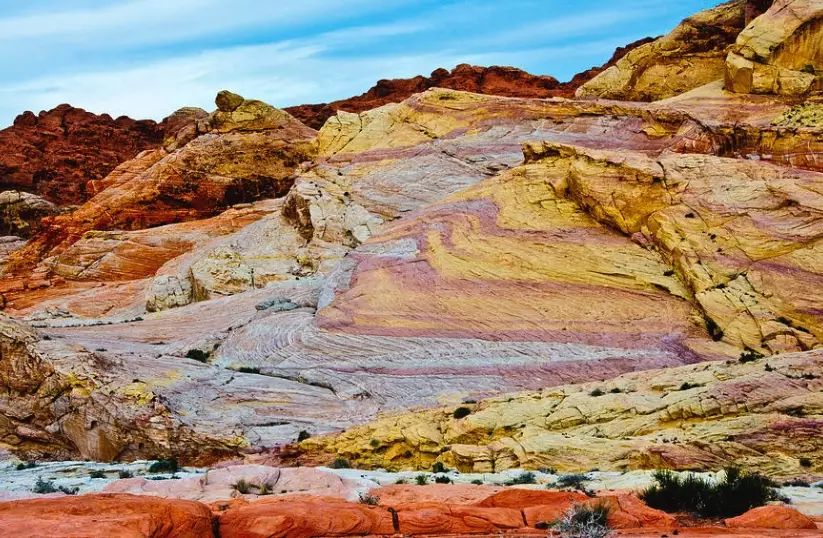
I stumbled upon it by accident a few years back. Tired of the strip, I rented a car with no real plan. The name "Valley of Fire" sounded dramatic enough to check out. What I wasn't prepared for was the turn-off for Rainbow Vista. The landscape didn't just change; it exploded into color. Layers of rock in shades of red, orange, pink, yellow, and even hints of purple and white, all stacked and swirled together like a giant, petrified layer cake. It was humbling, and honestly, a bit disorienting. This wasn't just a park; it was a geological storybook.
This guide is everything I wish I'd known before that first trip. It's not a dry list of facts. It's a practical, from-the-ground look at what makes Rainbow Vista in the Valley of Fire so unique, and how you can experience it for yourself without the common pitfalls (like going at high noon in July—trust me, don't).
So, Where Exactly Is This Place?
Rainbow Vista isn't a separate park; it's one of the crown jewels within Valley of Fire State Park. The park itself is Nevada's oldest and largest state park, sitting pretty in the Mojave Desert. The official address puts it near Overton, Nevada, but you'll be navigating desert highways to get there.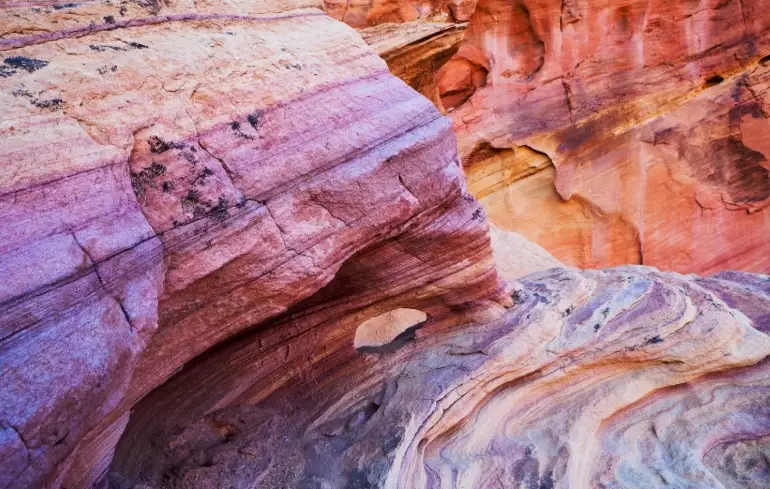
The most straightforward route from Las Vegas is I-15 North. You take Exit 75 for Valley of Fire Highway (State Route 169) and head east. The park's west entrance is about 20 minutes down that road. Once you're in, you'll follow the main park road (Mouse's Tank Road) for a few miles. The turn-off for the Rainbow Vista parking area is clearly marked. It's not a hidden trailhead; it's a major, paved stop.
Key Location Fact: Rainbow Vista sits at a sweet spot in the park. It's far enough in to feel immersed in the desert silence, but not so deep that it's a marathon drive from the entrance. From the parking lot, you get that iconic, panoramic view of the multicolored slopes. But the real magic starts when you start walking.
I made the mistake my first time of just snapping a photo from the lot and leaving. Big mistake. The view is great, but it's just the cover of the book. You need to read the chapters.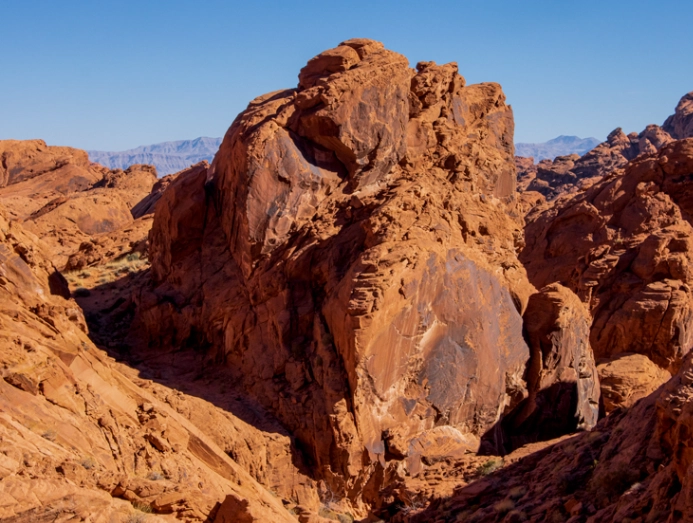
A Fire That Burns in Every Color: The Geology of Rainbow Vista
You can't really appreciate Rainbow Vista without understanding a bit about why it looks the way it does. The "Fire" in Valley of Fire comes from the blazing red Aztec Sandstone, formed from ancient sand dunes over 150 million years ago. But at Rainbow Vista, the story gets more complicated, and way more colorful.
Think of it like this. Those ancient dunes weren't uniform. Different minerals seeped into the sand at different times, under varying pressures and conditions. Iron oxides gave us the reds and oranges. Manganese added the darker purples and streaks. Other minerals created the yellows and whites.
Then, the real artist—time and erosion—went to work. Millennia of wind and water carved through these layered deposits, exposing the cross-section. What you're seeing at Rainbow Vista isn't just a red rock. It's a chronological slice of prehistoric desert environments, each layer a different chapter. The National Park Service has some fantastic, detailed resources on the geology of the region, which helps put the sheer scale of time into perspective. For a deep dive into the Aztec Sandstone formation that creates this spectacle, the NPS geology page for Valley of Fire is an authoritative source.
It's not abstract art. It's a historical record. Standing there, running your hand over the smooth, cool surface of a white stripe next to a rough, red outcrop, you're touching millions of years of difference. That gets you thinking.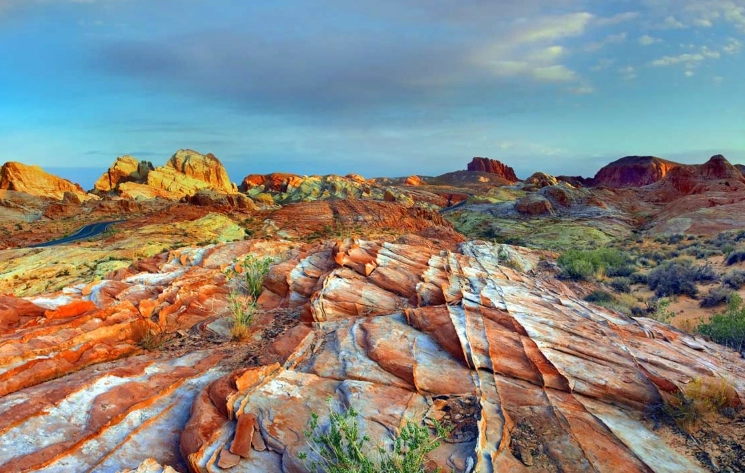
When Should You Go? Timing is Everything.
This might be the most important section in this entire guide. The desert doesn't care about your vacation plans. Go at the wrong time, and your dream trip to Rainbow Vista can turn into a miserable, even dangerous, slog.
The Undisputed Best Seasons: Fall and Spring
Late October through April is prime time. The temperatures are mild, often ranging from a crisp 50s F (10-15°C) in the morning to a comfortable 70s or low 80s F (20-27°C) in the afternoon. The light is softer, the shadows are longer, and the colors of the rocks seem to pop more. I prefer late fall (November) because the crowds from summer have thinned, and there's a certain clarity in the desert air.
The Shoulder Seasons: Handle with Care
Late spring (May) and early fall (September) can be okay, but you're flirting with heat. You must start your hike at sunrise. By 10 AM, it can be getting seriously warm. Carry way more water than you think you need. I mean, double it.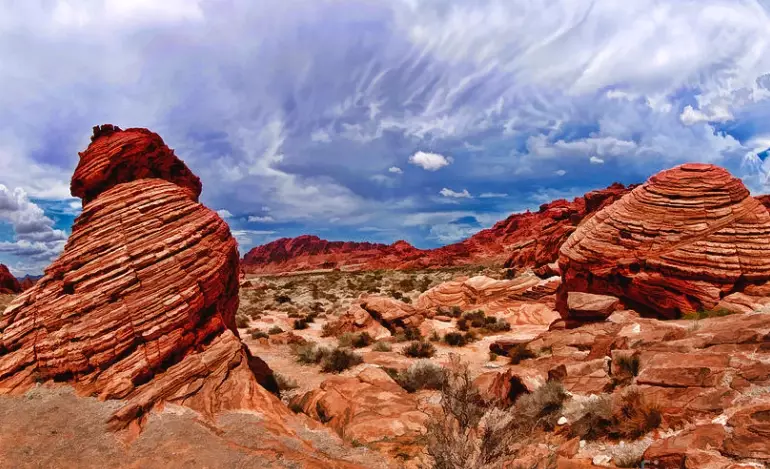
Summer in the Mojave Desert is no joke. Daytime temperatures at Rainbow Vista regularly soar above 100°F (38°C), and can hit 115°F (46°C) or more. The sun is brutal and relentless. Hiking can become a severe health risk due to heatstroke and dehydration. The park itself often posts extreme heat warnings. If you absolutely must go in summer, your visit should consist of driving to the vista point, getting out for 5 minutes for a photo from the shaded parking area, and getting back in your air-conditioned car. Any notion of a proper hike should be abandoned.
I learned this the hard way on an early June trip. It was only 95°F (35°C), which felt "manageable" coming from a humid climate. An hour into what I thought was an easy walk, I was dizzy and had gone through all my water. It was a stupid risk. The desert will humble you fast.
Your Camera Will Thank You: Photography at Rainbow Vista
This is why most people seek out Rainbow Vista Valley of Fire. The photographic potential is insane. But just pointing your phone at the rocks won't capture what you're seeing. Here’s what actually works.
The Golden Rule: The best light is within two hours of sunrise and sunset. The low angle of the sun rakes across the textured rock faces, creating deep shadows that define the layers and making the colors—especially the reds and oranges—glow with an inner fire. Midday light flattens everything out and washes the colors.
Sunrise is magical. You get cool blue shadows that gradually warm up. Sunset is more dramatic, with long, warm shadows and often spectacular sky colors. For that classic Rainbow Vista shot—the one looking out over the multicolored slopes toward the distant mountains—the late afternoon sun is perfect.
Don't just shoot the grand landscape. Get close. The textures and patterns in the rock are abstract art. Look for swirls, lines, and the stark contrast between color bands. A polarizing filter is incredibly useful here to cut glare off the rock surfaces and make the colors more saturated.
And for heaven's sake, bring a wide-angle lens for the vistas and a telephoto lens or a good zoom to compress those colorful layers and pick out details. My favorite shot from my last trip wasn't the big panorama; it was a tight shot of a single, rust-red fin with a slash of pure white sandstone cutting through it, taken with a 70-200mm lens.
Hiking Rainbow Vista: More Than Just a Viewpoint
This is the big secret. The parking lot view is a 10/10. But the hike from Rainbow Vista to Fire Canyon is an 11/10. It transforms the experience from sightseeing to exploration.
The trail starts at the north end of the Rainbow Vista parking lot. It's a well-marked, sandy path that heads down into the valley. You're not climbing up; you're descending into the heart of the color. As you walk, the walls of the canyon rise around you, and those stripes of color you saw from afar become the walls of your world.
It's a moderate hike. The sand can make it a bit slower going, and there's a bit of mild scrambling over rocks in places. But the distance isn't huge—roughly 1.5 to 2 miles round trip to the best viewpoints into Fire Canyon. The payoff is standing in a silent, narrow canyon surrounded on all sides by the swirling, fiery layers of the Rainbow Vista formation. The scale is completely different. You feel tiny.
Let's compare the main hiking options that start from or near the Rainbow Vista area:
| Trail Name | Start Point | Distance (Round Trip) | Difficulty | Key Experience |
|---|---|---|---|---|
| Rainbow Vista to Fire Canyon Overlook | Rainbow Vista Lot | ~1.5 - 2 miles | Moderate | Walking down into the colorful canyon, intimate views of rock layers. |
| Fire Wave Trail | Separate lot (Wave Rd) | ~1.5 miles | Easy/Moderate | Seeing the famous striped "wave" formation (requires permit). |
| Mouse's Tank Trail | Petroglyph Canyon Lot | ~0.8 miles | Easy | Seeing ancient petroglyphs and a natural water tank. |
| White Domes Trail | End of park road | ~1.25 miles | Easy | Variety: slot canyon, colorful rocks, movie set ruins. |
My personal ranking? For a first-time visitor who wants the essence of Rainbow Vista, the hike from the Rainbow Vista parking lot itself is non-negotiable. The Fire Wave is stunning, but it's a different kind of feature. The trail from Rainbow Vista gives you the full, immersive experience of the area's namesake geology.
Gearing Up: What to Bring (And What to Leave Behind)
Packing wrong can ruin your day. This isn't a city park.
Water: I can't stress this enough. A minimum of one gallon (4 liters) of water per person, per day, even for short visits. In hot weather, you need more. I carry a 3-liter hydration bladder in my pack and still have a spare bottle in the car.
Footwear: Hiking boots or sturdy trail shoes with good grip. The sandstone can be slippery, and the trails are sandy and rocky. Flip-flops are a terrible idea.
Sun Protection: A wide-brimmed hat, sunglasses, and high-SPF sunscreen (reapply often). The sun reflects off the light-colored sand and rock, amplifying exposure.
Navigation & Safety: A paper map (cell service is spotty to non-existent in the park), a fully charged phone (in airplane mode to save battery), and a small first-aid kit. Tell someone your plans.
For Photography: Tripod for low-light shots, extra batteries, lens cloths (dust is everywhere), and those filters I mentioned.
Leave Behind: Any thought of "winging it." Any expectation of facilities (there are basic restrooms at the visitor center and some trailheads, but that's it). All trash—this is a pack-in, pack-out place.
Pro-Tip from a Past Mistake: Bring a cooler with extra water and snacks in your car. That post-hike warm water from the bottle in your cup holder is deeply unsatisfying. A cold drink waiting for you at the trailhead is pure bliss.
Answers to the Questions You're Actually Asking
Based on forums, ranger chats, and my own dumb questions over the years, here's the real-world FAQ.
Is Rainbow Vista in Valley of Fire worth it if I only have a few hours?
Absolutely. If you have 2-3 hours, you can drive to the vista, do the short hike down into the canyon for 45-60 minutes, and get a powerful sense of the place. It's the most efficient way to see the park's iconic colorful geology in one stop.
How does it compare to the Fire Wave?
Different experiences. The Fire Wave is a single, spectacular, striped formation—like a stone waterfall. It's a masterpiece. Rainbow Vista is a vast, panoramic landscape of color. It's the whole gallery. The Fire Wave now often requires an online permit for parking, which adds planning. Rainbow Vista is (currently) first-come, first-served. I think you should see both if you can, but Rainbow Vista feels more expansive.
Can I bring my dog?
Technically, yes, on a leash (6ft max) and only in developed areas like parking lots and the campground. They are not allowed on any trails in Valley of Fire State Park, including the Rainbow Vista trail. The summer heat also makes the ground scorching for paws. Honestly, for the safety and enjoyment of your pet and the protection of the fragile desert ecosystem, it's best to leave them at home for this particular adventure.
Are there fees?
Yes. As of my last visit, the entrance fee for Nevada state parks was $10 per vehicle for day use ($15 for out-of-state). An annual pass is a great deal if you plan to visit multiple Nevada parks. You pay at a self-service station at the entrance if the visitor center is closed. Keep the receipt on your dashboard. Check the official Nevada State Parks page for Valley of Fire for the most current fee and pass information.
What about camping?
There are two campgrounds in the park with basic sites (no hookups). They are incredibly popular, especially in season, and often booked solid months in advance. If you want to camp, plan far ahead through the reservation system. Waking up for a sunrise at Rainbow Vista from a campsite inside the park is an unbeatable experience.
The Final Word: Why Rainbow Vista Sticks With You
Rainbow Vista in the Valley of Fire isn't just a checklist item. It's a mood. It's the feeling of dry, clean air. It's the sound of gravel crunching under your boots giving way to absolute silence. It's the shock of seeing geology that looks more like a painting.
It's also a reminder. The forces that created this are unimaginably old and powerful. Our visit is a brief, privileged glance. That perspective is the real souvenir you take home, long after the photos on your phone have been scrolled past.
So plan ahead. Respect the desert. Carry the water. Chase the good light. And when you finally stand there, looking out over that rainbow-colored valley, take a minute to just put the camera down. Listen to the wind. That's the part you'll remember.
Maybe I'll see you out there on the trail. I'll be the one with the comically large hat, sweating slightly, and grinning like a kid at the sheer, improbable beauty of a place called Rainbow Vista Valley of Fire.
Reader Comments