Your Peaks Journey
Let's be honest. You've probably seen pictures. A stunning line of mountains rising out of the flat Colorado Plateau, sometimes dusted with snow even in May, framing the quirky town of Flagstaff. That's the San Francisco Peaks. But there's a gap between seeing a photo and actually standing there, wind whipping at your jacket, trying to catch your breath at 12,000 feet. Most guides just list the trails. I want to tell you what it's actually like.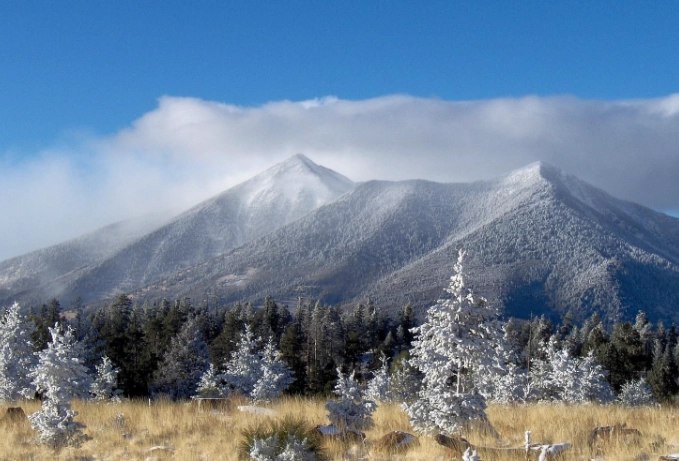
I remember my first time driving into Flagstaff from the desert. The heat was fading in the rearview mirror, and then boom—these massive peaks just appeared. It wasn't just scenery; it felt like a landmark for the whole region. That's because they are. The San Francisco Peaks are the remains of a massive stratovolcano, and at 12,633 feet, Humphreys Peak is the highest point in all of Arizona. But they're so much more than a geological factoid.
For over a dozen Native American tribes, including the Navajo, Hopi, and Havasupai, these mountains are sacred. They're not just peaks; they're beings, central to creation stories and spiritual life. The Navajo name is Dookʼoʼoosłííd, which means "the summit that never melts." That respect is something you feel when you're there, or at least you should. It changes the vibe from a simple hiking destination to something with real weight.
Meet the Peaks: A Quick Personality Check
Not all peaks are created equal. If you're looking at the skyline from downtown Flagstaff, here’s who’s who.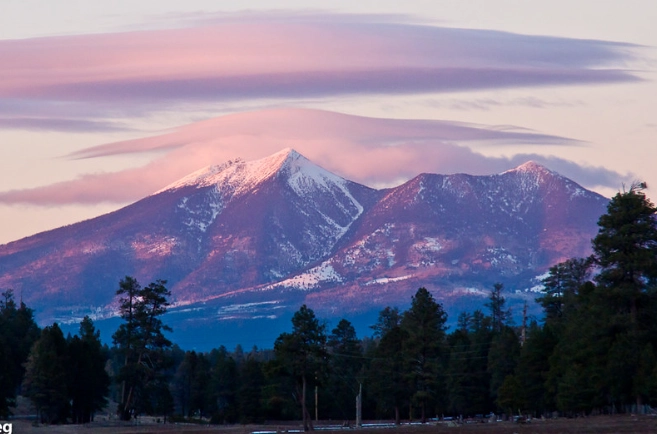
| Peak Name | Elevation | What Makes It Special | Can You Hike It? |
|---|---|---|---|
| Humphreys Peak | 12,633 ft | Highest point in Arizona. The big one. The views are, predictably, insane. | Yes, via the Humphreys Peak Trail. It's a serious day hike. |
| Agassiz Peak | 12,356 ft | The second highest, right next to Humphreys. Looks almost like a twin from town. | No. It's permanently closed to hiking to protect a rare alpine habitat and for cultural reasons. |
| Fremont Peak | 11,969 ft | Often has a distinctive, pointed cap of snow. Named for an explorer. | Access is tricky and not via a maintained trail. Best left to experienced climbers. |
| Doyle Peak | 11,460 ft | The northernmost major summit. Has a more rounded profile. | Access is also not straightforward and not recommended for casual hikers. |
See that? For most visitors, Humphreys Peak is the star of the show when it comes to accessible hiking. The others are mostly for looking, photographing, and respecting. That closure on Agassiz is a big deal—it's a reminder that we're visitors in a place that has rules and reasons beyond our recreation.
So you're set on hiking? Let's talk about the main event.
Conquering Humphreys Peak: The Trail Truth
The Humphreys Peak Trail is the only maintained path to the top of Arizona. It's about 10 miles round trip with over 3,000 feet of elevation gain. Sounds straightforward on paper. It is not.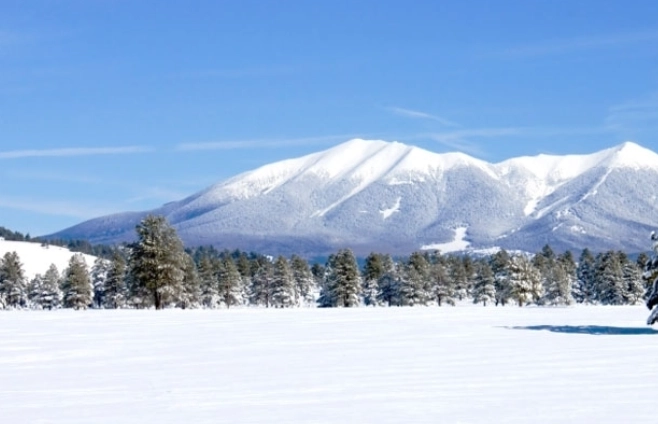
What They Don't Always Tell You
The trail starts at the Arizona Snowbowl ski area parking lot (around 9,300 ft). You're already high. The air is thin. The first few miles through the dense Engelmann spruce and aspen forest are beautiful, but it's a steady, unrelenting climb.
Then you hit the treeline. This is where the real test begins. The trail becomes a rocky, rugged scramble across the alpine tundra. The wind up here is no joke. I've been up there on a perfectly calm day in Flagstaff only to get nearly knocked over by gusts that came out of nowhere. The temperature can be 30+ degrees colder than in town.
The summit itself is a rocky pile with a USGS marker. The 360-degree view is the reward. You can see the Grand Canyon to the north, the red rocks of Sedona to the south, the Painted Desert to the east. On a clear day, it feels like you can see half the state. It's humbling.
But here's a personal, slightly negative take: the final push to the summit can feel a bit brutal. It's loose scree and seems to go on forever. The altitude headache is real for many people. It's not a hike to be taken lightly, and I've seen plenty of unprepared people turning around miserably at the treeline. Start early (like, 6 AM early) to avoid afternoon thunderstorms, which are deadly serious in these mountains.
Beyond the Summit Hike: Other Ways to Experience the Peaks
Not everyone is up for a 10-mile sufferfest, and that's perfectly okay. The beauty of the San Francisco Peaks Flagstaff area is the variety.
Fantastic (and Easier) Hikes
- Kachina Trail: This is my personal favorite for a moderate, gorgeous hike. It traverses the slopes of the peaks between the Snowbowl and the Weatherford Trailhead. You get phenomenal views across the Inner Basin without the brutal elevation gain. It's about 10 miles point-to-point, but you can do shorter out-and-back sections.
- Fatman's Loop: A great, shorter option right on the edge of Flagstaff. It's a 2.5-mile loop that gives you a taste of the Peaks' lower slopes, with nice views of the city. Perfect for a sunrise or sunset walk.
- Inner Basin Trail: This hike takes you into the heart of the ancient volcano. In late September/early October, the aspens here are a legendary sea of gold. It's a moderately steep 3-mile round trip to the first meadow, but absolutely worth it.
And it's not just summer fun.
Winter on the San Francisco Peaks
The Arizona Snowbowl is a full-fledged ski resort on the slopes of the peaks. It's a local treasure. But even if you don't ski, you can snowshoe or cross-country ski on the extensive trails. The quiet of a snow-covered evergreen forest with those massive peaks overhead is magical. The Snowbowl's website has all the details on conditions and rentals.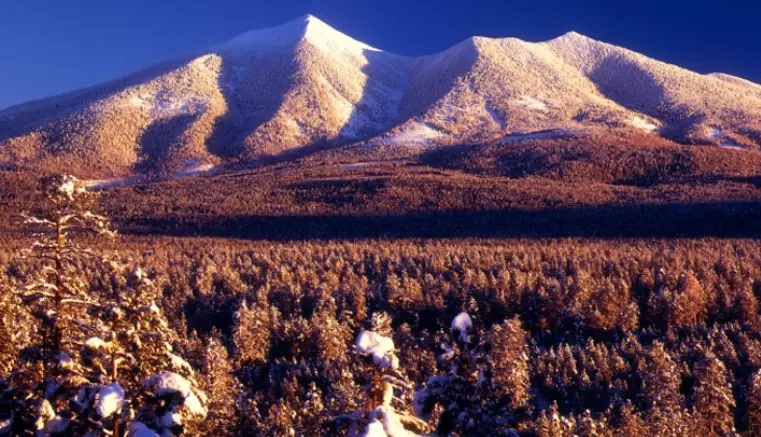
Then there's the stargazing. Flagstaff is the world's first International Dark Sky City. Drive just a little way up the road toward the Peaks, away from the city lights, and the Milky Way will look like a thick brushstroke across the sky. The Lowell Observatory, where Pluto was discovered, is a must-visit for astronomy buffs.
Planning Your Trip: The Nitty-Gritty Details
Okay, you're sold. How do you make this happen without a hitch?
When to Go
Best All-Around: Late May through early October. July and August bring monsoon storms (hike early!). September is golden, literally, with the aspens changing.
For Wildflowers: July and August in the alpine meadows.
For Solitude & Snow: Winter. It's cold, but stunning. Check road conditions, as the Snowbowl road requires chains or 4WD during storms.
Season to Maybe Avoid: April and early May. It's a muddy, slushy mess up there—the trail can be a snowfield one minute and a muddy stream the next. Not fun.
Where to Stay
Flagstaff has everything from hotels and motels to cute B&Bs and tons of Airbnb options. Book well in advance for summer weekends and fall foliage season. For the full experience, consider camping in the Coconino National Forest. Dispersed camping is allowed in many areas—just follow Leave No Trace principles.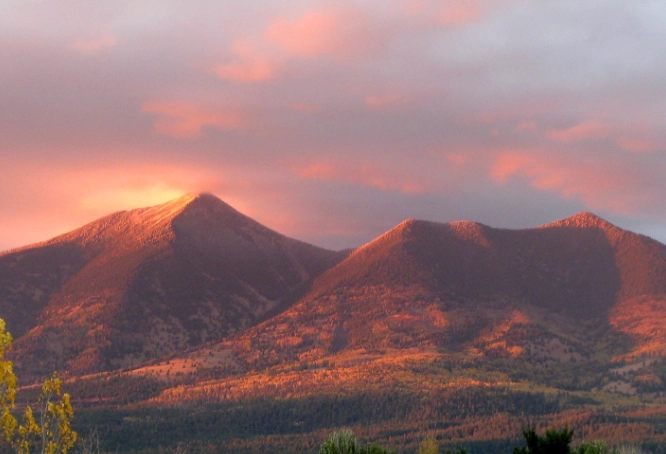
Getting There and Around
Flagstaff is on I-40 and I-17, and has a small airport. You'll want a car. The drive from Phoenix is about 2 hours, from Sedona about 45 minutes. To get to the trailheads, you take US-180 north from Flagstaff toward the Snowbowl. It's a beautiful, winding mountain road.
Answering Your Questions (The Stuff You Actually Google)
Wrapping It Up: More Than a Checklist
Visiting the San Francisco Peaks near Flagstaff isn't about just ticking off Arizona's high point. It's about feeling the shift from desert to alpine in an hour's drive. It's about understanding that a landscape can be a playground, a sanctuary, and a church all at once.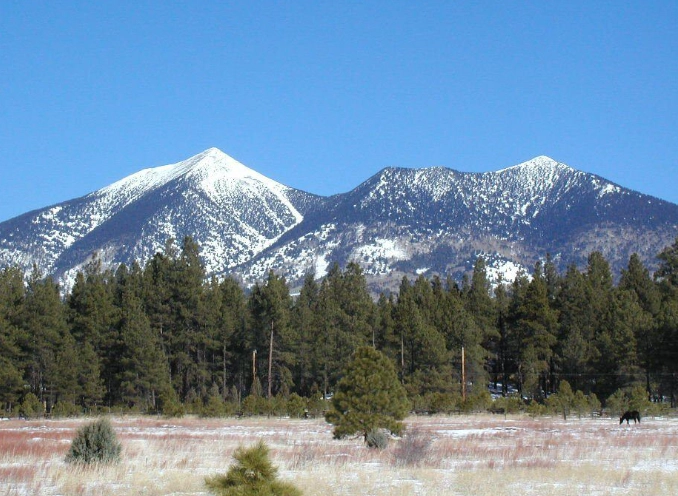
You can chase the summit, or you can wander through a silent aspen grove. You can ski down them in winter or just sit in a Flagstaff coffee shop admiring their morning light. The key is to come prepared—for the weather, for the altitude, and with the right mindset.
They dominate the horizon for a reason. They're the soul of northern Arizona. Go see them, hike them respectfully, and you'll understand why everyone from ancient cultures to modern-day adventurers keeps looking up.
Maybe I'll see you on the trail. I'll be the one with too many layers, moving slowly, and stopping way too often to just stare.
Comments