Your Quick Guide
- Why Does Knowing the State Matter So Much?
- Breaking Down the Grand Canyon's Location in Arizona
- Key Towns and Cities Near the Grand Canyon (Arizona Edition)
- South Rim vs. North Rim: An Arizona Showdown
- Planning Your Visit: The Arizona Logistics
- Common Questions (The Stuff You're Really Wondering)
- Beyond the Rim: Other Arizona Gems Nearby
You hear "Grand Canyon" and you think of this massive, jaw-dropping hole in the ground, right? But when it comes time to actually plan a trip, a really basic question pops up: what state is Grand Canyon located in? It seems simple, but the answer is your starting point for everything else. Let's get this out of the way first.
The Grand Canyon is located in the state of Arizona.
There you go. Straight answer. But if you're just looking for that one sentence, you probably wouldn't be reading this. You're here because knowing which state is just the ticket. You need to know what that means. Where exactly in Arizona? How do you get there? What part should you visit? Is any of it in another state? That's what we're going to dig into. I've been a few times, and trust me, understanding its location in Arizona is the key to not wasting time and money.
Core Fact: The vast, overwhelming majority of the Grand Canyon, and all the main tourist areas managed by the National Park Service (the famous South Rim and North Rim), are located entirely within the northern part of the state of Arizona. When people ask "what state is Grand Canyon located in?", Arizona is the unequivocal answer.
Why Does Knowing the State Matter So Much?
It might sound like trivia, but it's not. Pinpointing the Grand Canyon's location in Arizona shapes your entire trip. Think about it.
Your flight? You're likely flying into a major Arizona airport like Phoenix Sky Harbor (PHX) or Las Vegas McCarran (LAS) in Nevada, which is close but in a different state. Your road trip route? Entirely dependent on which part of Arizona you're targeting. The climate and when to go? Classic high-desert Arizona weather, which means scorching summers and cold, sometimes snowy winters at the rim. Even the laws and regulations you follow while in the park are those of Arizona and the U.S. National Park Service.
So, asking "what state is the Grand Canyon in" is really asking for the foundational piece of travel intel. It's the "you are here" dot on the map.
Breaking Down the Grand Canyon's Location in Arizona
Saying it's in "Arizona" is like saying a city is in "Texas." It's a big state. You need specifics. The Colorado River carved the Canyon, and that river forms much of Arizona's northern border. The park itself sits in the northwest corner of the state.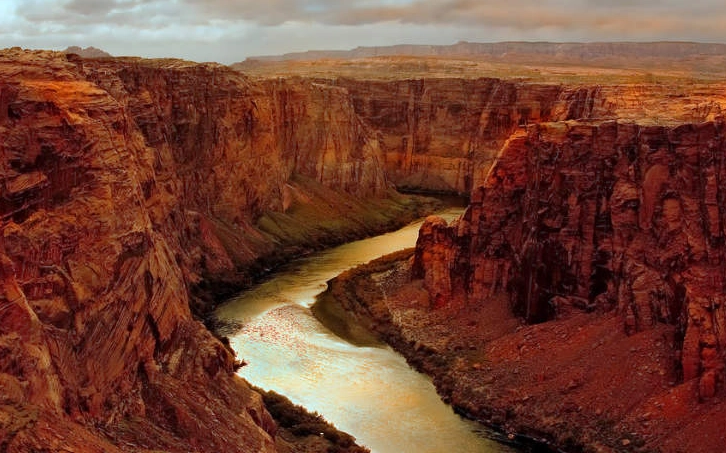
The Main Sections and Their Arizona Addresses
Not all parts of the Grand Canyon are created equal, and their specific locations within Arizona affect accessibility dramatically.
- The South Rim: This is the superstar. When you see the classic postcard shots, 90% of the time it's from here. It's located in Coconino County, Arizona. The main gateway town is Tusayan, Arizona, just outside the park's south entrance. This rim is open year-round and is about a 90-minute drive north from the city of Flagstaff, Arizona, or a 4-hour drive from Phoenix, Arizona.
- The North Rim: The quieter, cooler, and more remote sibling. It's also located in Arizona, but in a different county—it's in Mohave County. The nearest real services are in Jacob Lake, Arizona, and then further afield in Kanab, Utah. Here's the kicker: while both rims are in Arizona, they are only about 10 miles apart as the crow flies across the canyon. But to drive from one to the other? It's a 212-mile, 4.5-hour drive because you have to go all the way around the eastern end of the canyon. This is a crucial piece of logistics many first-timers miss.
- The West Rim (Grand Canyon West): This is where it gets tricky and causes confusion. This area is not part of Grand Canyon National Park. It's located on the Hualapai Indian Reservation. And yes, it is still in Arizona. However, it's the section closest to Las Vegas, Nevada (about a 2.5-hour drive), which is why it's famous for the Skywalk. So, to be clear, the Grand Canyon Skywalk is also in Arizona, just a different, more remote part managed by a tribal nation.
My Take: A lot of promotional material from Las Vegas plays up the "Grand Canyon" trips, which almost always go to the West Rim. It's an experience, sure, but it's expensive, feels more commercial, and lacks the vast, protected wilderness feel of the National Park's South or North Rims. If you want the iconic, awe-inspiring national park experience, you want the South or North Rim in Arizona.
Does Any Part Touch Another State?
This is a follow-up question people have. The Colorado River, at the very bottom of the canyon, is the state boundary line for much of its length. So, the very bottom of the eastern part of Grand Canyon National Park, where the river flows, forms the border between Arizona and Utah. However, the park land itself, the rims, the trails, and all visitor facilities—the parts you actually visit—are on the Arizona side. For all practical travel purposes, you are in Arizona.
You can see this officially on the National Park Service map for Grand Canyon National Park, which clearly shows the park's boundaries within Arizona.
Key Towns and Cities Near the Grand Canyon (Arizona Edition)
You won't find a major metropolis right on the rim. The location is remote. Here are your Arizona-based hubs:
| Town/City | State | Distance to South Rim | Why It Matters |
|---|---|---|---|
| Flagstaff | Arizona | ~80 miles / 1.5 hours | Your major supply and lodging hub. A cool mountain town with a great vibe, restaurants, and an airport (FLG). |
| Williams | Arizona | ~60 miles / 1 hour | Historic Route 66 town. This is where the iconic Grand Canyon Railway departs for the South Rim. |
| Tusayan | Arizona | ~7 miles / 10 minutes | The literal gateway to the South Rim entrance. Hotels, restaurants, IMAX theater. Saves you driving in/out each day. |
| Page | Arizona | ~136 miles / 2.5 hours (to East Entrance) | Not a direct route to the main rims, but the gateway to amazing things like Antelope Canyon and Horseshoe Bend. Often combined in a longer Southwest road trip. |
| Phoenix | Arizona | ~230 miles / 3.5-4 hours | Major international airport (PHX). The start of a classic Arizona road trip to the canyon. |
Notice a pattern? They're all in Arizona. Your base of operations for a classic Grand Canyon trip is firmly in this state.
South Rim vs. North Rim: An Arizona Showdown
Since both are in Arizona, how do you choose? Their location on opposite sides of the canyon creates two totally different worlds.
| Feature | South Rim (Arizona) | North Rim (Arizona) |
|---|---|---|
| Elevation | ~7,000 ft | ~8,000 ft |
| Visitor Numbers | Very High (90% of visitors) | Low (10% of visitors) |
| Season | Open Year-Round | Mid-May to Mid-October only |
| Lodging & Services | Extensive (in-park & Tusayan) | Very Limited (book far ahead) |
| Scenery | Classic, expansive, more viewpoints | Greener, quieter, feels more intimate |
| Best For | First-timers, families, accessibility, year-round access | Solitude, backpackers, photographers, those seeking escape |
My personal experience? The South Rim feels like the "main event." It's easier, there's more to do, and the views are undeniably spectacular. The North Rim feels like a secret you stumbled upon. The drive there through the Kaibab National Forest is gorgeous, and the silence is profound. But that remoteness is real—if you forget something, you're out of luck.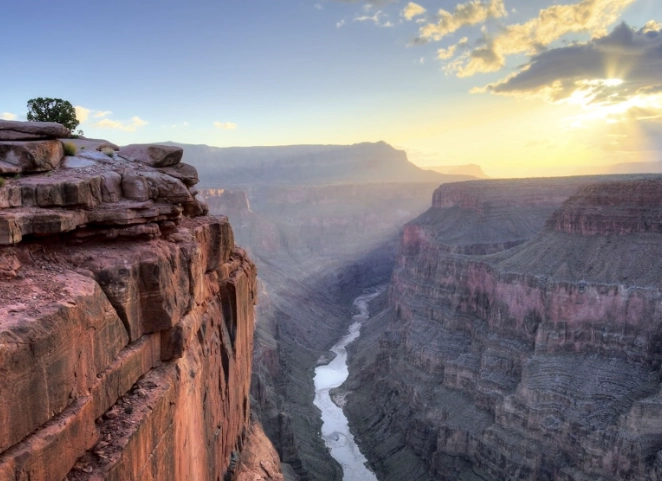
Planning Your Visit: The Arizona Logistics
Now that we've firmly established what state the Grand Canyon is located in, let's talk about what you actually do with that information.
Getting There: Airports and Drives
Your main air gateways are Phoenix Sky Harbor (PHX) in Arizona and Las Vegas Harry Reid (LAS) in Nevada. Phoenix is a straighter shot into the heart of Arizona and up to the South Rim. The drive is beautiful, passing through the Sonoran Desert and up into the pines of Flagstaff. The drive from Las Vegas cuts through the Mojave Desert and into Arizona, often heading to the West Rim or, via a longer route, to the South Rim.
I've done both drives. The Arizona route from Phoenix feels more like a gradual introduction to the state's diverse landscape. The Vegas route is stark and dramatic in its own way, but can feel long and empty.
Time Zone and Laws
Arizona throws a curveball here. Most of Arizona does not observe Daylight Saving Time (except for the Navajo Nation). So for much of the year, Arizona is on Mountain Standard Time (MST) which aligns with Pacific Daylight Time (PDT). This is crucial if you're driving from a neighboring state like Utah (which does observe DST) or Nevada. Your phone's auto-time might flip-flop. Just be aware.
The Grand Canyon is a UNESCO World Heritage Site, a designation managed internationally but administered locally. The day-to-day protection and management falls to the U.S. National Park Service and the state of Arizona. You can learn more about its World Heritage status on the UNESCO website, which confirms its location in Arizona, USA.
Climate and Packing
Northern Arizona's climate is no joke. The South Rim sits at 7,000 feet. Summers are sunny but can have dramatic afternoon thunderstorms. Winters are cold with snow. The inner canyon is a different beast—a desert climate that can be 20+ degrees Fahrenheit hotter than the rim. Packing layers is non-negotiable, regardless of the season. The Arizona sun is intense; a hat, sunglasses, and serious sunscreen are mandatory.
Seriously, don't underestimate the sun. I got fried on a spring hike, even when the rim air was cool.
Common Questions (The Stuff You're Really Wondering)
Let's tackle some of the specific questions that pop up once you know the state.
Beyond the Rim: Other Arizona Gems Nearby
One of the best parts about the Grand Canyon's location in Arizona is what else is within reach. This isn't a one-stop destination for most.
- Sedona, Arizona: About a 2-hour scenic drive south. Famous for its stunning red rock formations and spiritual vibe. A perfect add-on before or after the canyon.
- Monument Valley Navajo Tribal Park: While technically across the border in Utah, it's a staple of any extended Southwest road trip originating from the Grand Canyon area in Arizona.
- Antelope Canyon & Horseshoe Bend: Both located in Page, Arizona, a few hours northeast of the East Entrance. These are iconic photo spots and absolutely worth the detour.
- Historic Route 66: The stretch through Arizona, from Seligman through Williams to Flagstaff, is a classic American road trip experience right on your doorstep.
You start to see why knowing the state is key. You're not just visiting a canyon; you're planting yourself in northern Arizona, a region packed with world-class natural wonders.
So, let's circle back. What state is Grand Canyon located in? It's Arizona. But now you know that's not the end of the question—it's the beginning. It tells you about the deserts and pine forests you'll drive through, the dry heat and mountain chill you'll pack for, the long, beautiful drives past other Arizona wonders, and the specific, practical choices between the South Rim, North Rim, or West Rim. It grounds your entire adventure. Now you can plan a trip that's not just about seeing a big hole, but about experiencing a specific, incredible corner of the American Southwest. Have a fantastic trip out there.
Comments