You've seen the photos. That impossible, bird's-eye view of the Grand Prismatic Spring in Yellowstone, with its concentric rings of electric blue, emerald green, and fiery orange. Right in the middle of that vibrant orange margin, like a splash of bright paint, sits Canary Spring. Most visitors to Midway Geyser Basin walk right past it on the boardwalk, staring at the steam. But the real secret? Seeing Canary Spring as part of that iconic, full-color panorama requires a short hike most people don't take. I've been guiding in Yellowstone for over a decade, and I still think this view is the single most rewarding payoff for the least effort in the entire park. Let's get into exactly how to find it.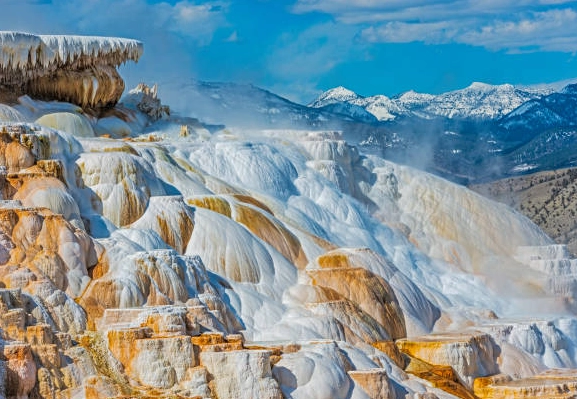
What You'll Find in This Guide
- What Makes Canary Spring So Special?
- How to Get to the Canary Spring Overlook
- The Step-by-Step Hike to the Best View
- When to Go: Timing Your Visit for Perfect Conditions
- Critical Safety Tips for Visiting Thermal Areas
- Grand Prismatic vs. Canary Spring: What's the Difference?
- What Else to See Nearby
- Your Canary Spring Questions Answered
What Makes Canary Spring So Special?
Canary Spring isn't a separate, standalone hot spring. It's a brilliant, vividly colored section of the massive Grand Prismatic Spring's runoff channels. Think of Grand Prismatic as a giant, simmering pot. The superheated water (around 160°F/70°C) flows out from the center, cooling as it travels. This creates perfect conditions for thermophiles—heat-loving microorganisms—to thrive in distinct temperature zones.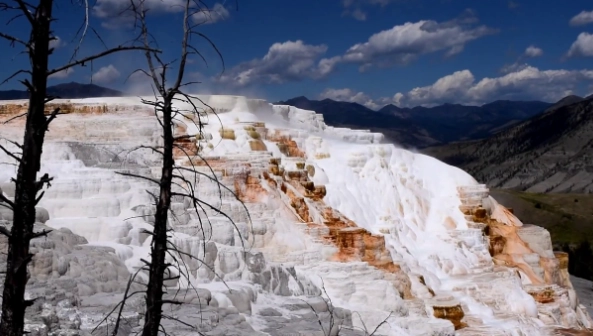
The canary yellow and bright orange mats you see are primarily filamentous bacteria and archaea. The specific shade depends on the water temperature and mineral content. Canary Spring gets its name from that striking, almost neon yellow band. From the ground-level boardwalk at Midway Geyser Basin, you get an intimate look at these microbial mats. But you miss the grand design.
The magic happens when you get elevation. From the overlook, you see how Canary Spring is just one piece of a vast, living artwork. The blue center, the green ring, then those explosive oranges and yellows flowing out like liquid fire. It's a geology and biology lesson painted across a football-field-sized canvas.
How to Get to the Canary Spring Overlook
This is where most online guides get fuzzy. There are two ways to see Canary Spring, and they offer completely different experiences.
Option 1: The Ground-Level Boardwalk (The Crowded View)
Drive to the official Midway Geyser Basin parking lot. In summer, this lot fills up by 9:30 AM. I've seen people circling for 20 minutes. If it's full, park legally along the main road shoulders—just be prepared for a longer walk. A short, paved path leads to a 0.8-mile loop boardwalk. This takes you right past the Excelsior Geyser crater, the Turquoise Pool, Opal Pool, and finally, the Grand Prismatic Spring and Canary Spring runoff channels. You'll be close enough to feel the steam, hear the water gurgle, and see the colors up close. But you'll also be shoulder-to-shoulder with dozens of other visitors, and you'll only see a slice of the spring.
Option 2: The Fairy Falls Trailhead Overlook (The Aerial View)
This is the view you came for. To reach it, you do not park at the Midway Geyser Basin lot. Instead, drive about 1 mile south of Midway on Grand Loop Road. Look for the sign for the Fairy Falls trailhead. There's a large, dirt parking lot here. It fills up later than the main lot, but still aim to arrive before 10 AM. From this trailhead, you hike a flat, wide path to an official overlook platform built on a hillside. This gives you the elevated, panoramic view of the entire Grand Prismatic system, with Canary Spring prominently featured. The trade-off? You don't get the close-up, ground-level perspective. My strong recommendation? If you have time, do both. See the details from the boardwalk, then hike to see the masterpiece from above.
The Step-by-Step Hike to the Best View
Let's walk through the overlook hike from the Fairy Falls trailhead. It's straightforward, but a few details make it smoother.
- Park at the Fairy Falls Trailhead. The lot is unpaved but well-maintained. No facilities here—no water, no toilets. Use the restrooms at the Midway basin before you drive over.
- Find the trailhead kiosk. The path is obvious. You'll head north, initially through a recovering burn area (from the 1988 fires), which offers its own stark beauty.
- Walk the service road. For about 1.6 miles, you're on a flat, gravel road used by park maintenance. It's boring. Bring water, wear a hat. The views are of trees and sky until you're almost there.
- Look for the turn-off. After roughly 30-40 minutes of walking, you'll see a well-signed spur trail branching off to the right, marked "Grand Prismatic Spring Overlook." Don't miss it.
- Climb the hill. This is the only uphill section—a series of switchbacks and stairs gaining about 100 feet in elevation. It takes 5-10 minutes and is moderately strenuous.
- You've arrived. The wooden platform gives you that famous, unobstructed view. Canary Spring will be directly below and to your left as you face the main spring. Spend time here. Let the crowds below on the boardwalk look like ants. The colors change with the sun and clouds.
Total round-trip distance is about 3.2 miles. Allow 1.5 to 2 hours total, including time at the overlook. It's an easy hike for most fitness levels. I've done it with kids as young as six.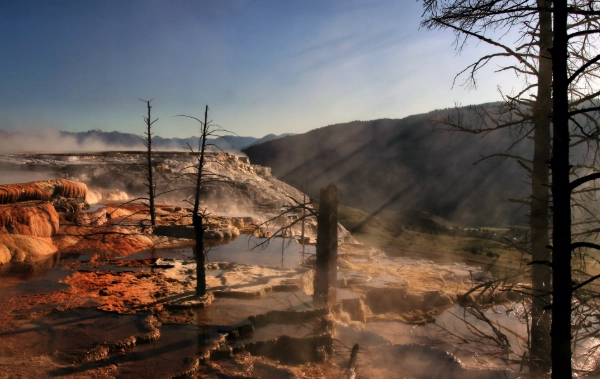
When to Go: Timing Your Visit for Perfect Conditions
Timing is everything for the colors. Midday on a sunny, calm day is the absolute peak. The sun cuts through the steam, illuminating the pigments. Early morning or late afternoon, the low sun angle and long shadows can leave the spring in shade, muting the colors. Overcast days? The blue center can look gray, and the vibrant rings lose their pop.
Wind is your enemy. A strong breeze spreads the steam blanket across the entire spring, completely obscuring it. I've waited an hour on the platform for a 30-second break in the steam. Check the weather forecast, but be ready for Yellowstone's mercurial changes.
Seasonally: The overlook trail is typically accessible from late May through October, depending on snow. Summer (June-August) is peak tourist season—go early. September is a sweet spot: fewer crowds, cooler hiking weather, and still-good visibility. Winter access is via guided snowmobile or snowcoach only, and the view is often shrouded in heavy steam.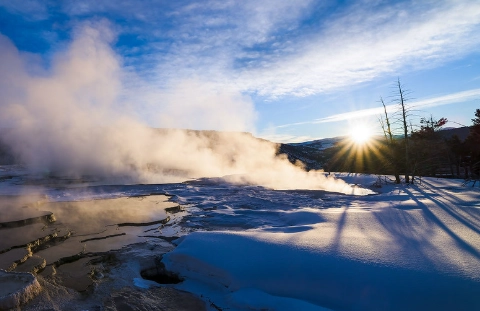
Critical Safety Tips for Visiting Thermal Areas
This isn't a suggestion; it's a requirement. The ground around thermal features is a thin crust over boiling water. Every year, people get severely burned because they step off the trail. The official National Park Service safety page is filled with tragic stories.
Keep a close eye on children. Hold their hands. The water is acidic and scalding hot. Do not throw anything into the springs. It's illegal and damages the ecosystem. And yes, that includes "eco-friendly" coins or rocks.
On the overlook hike, you're on a maintained trail, but you're still in bear country. Make noise, carry bear spray, know how to use it, and hike in groups. I always have my spray accessible, not buried in my pack.
Grand Prismatic vs. Canary Spring: What's the Difference?
This confuses a lot of first-timers. Is Canary Spring part of Grand Prismatic? Yes, exactly. Grand Prismatic Spring is the name of the entire, massive hot spring—the third largest in the world. Canary Spring specifically refers to the vibrant yellow and orange runoff channels flowing from Grand Prismatic's southwestern edge. When people search for "Canary Spring," they're usually looking for information on how to see that colorful runoff, which is best appreciated as part of the larger Grand Prismatic vista.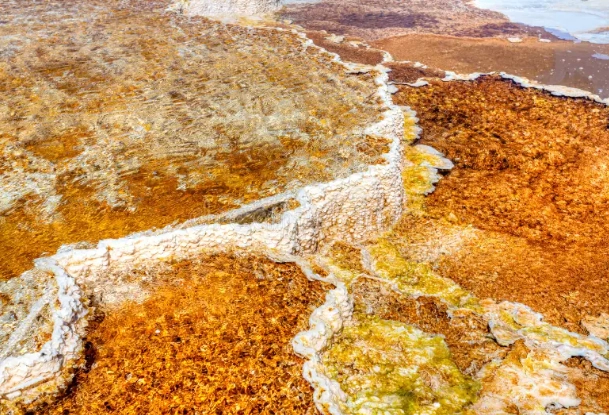
Think of it like this: Grand Prismatic is the masterpiece painting. Canary Spring is one of the most striking brushstrokes in that painting. You can't really see or appreciate one without the context of the other from the overlook.
What Else to See Nearby
You're in the heart of Yellowstone's geyser country. Don't make Canary Spring a quick stop. Build a half-day around it.
Old Faithful is 15 minutes south. Check the predicted eruption times at the visitor center. Upper Geyser Basin, behind Old Faithful, has miles of boardwalks past hundreds of other geysers and pools—it's far more than just the famous one.
Head north 10 minutes to Firehole Lake Drive, a one-way loop road past Great Fountain Geyser and other bubbling features. It's often less crowded.
If you hiked from the Fairy Falls trailhead, consider continuing another 1.5 miles (one-way) to see the actual Fairy Falls, a beautiful 200-foot waterfall. It makes for a longer, but very rewarding, day hike.
Your Canary Spring Questions Answered
So there you have it. Canary Spring isn't just a quick photo stop. It's the vibrant heart of a larger wonder, best understood from a little height and with a little effort. Skip that hike, and you're only getting half the story. Pack your water, lace up good shoes (not sandals—the gravel road is brutal on open toes), and get ready to see one of Yellowstone's most iconic sights the right way.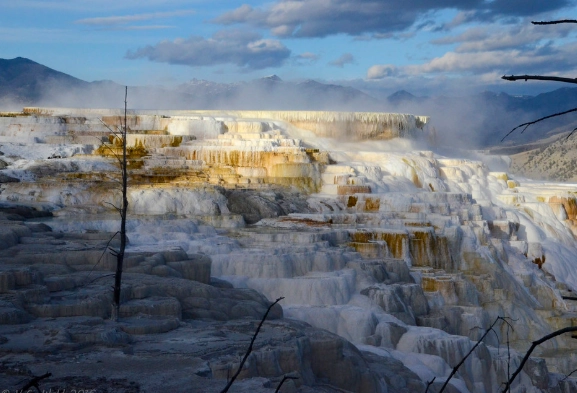
Comments