Quick Navigation
Let's be honest, when you hear "Great Salt Lake Desert," you probably picture one thing: that insane, perfectly white, flat-as-a-pancake salt plain you've seen in car commercials or maybe in a movie. And you're not wrong—that's the Bonneville Salt Flats, the absolute superstar of the region. But there's a whole lot more to this place. It's a weird, harsh, beautiful, and honestly, a bit troubling patch of the American West. I drove through it last fall, and let me tell you, it messes with your head. The scale is something your brain just can't process at first. One minute you're on normal highway, the next you're surrounded by nothing but blinding white or dusty gray as far as you can see. It feels less like a landscape and more like a stage set for an alien planet.
This guide isn't just a dry list of facts (though we'll get to those). It's about what you actually need to know if you're thinking of visiting, what's happening to this fragile place, and why it matters. We'll talk about the fun stuff—like where to stand for that perfect photo—and the serious stuff, like the fact that the Great Salt Lake itself is shrinking at an alarming rate, which has huge implications for the desert that bears its name.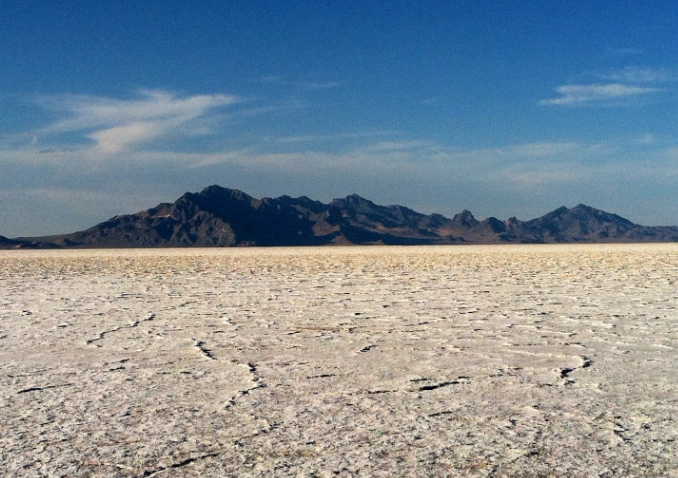
Getting Your Bearings: Where and What Exactly Is This Place?
First, a quick geography lesson to clear up confusion. The Great Salt Lake Desert is a massive endorheic basin in northwestern Utah. "Endorheic" is a fancy word that means water flows in but doesn't flow out to any ocean; it just evaporates. That's why all the salt and minerals are left behind. It's the largest of several deserts that make up the Great Basin. The most famous chunk of it, the Bonneville Salt Flats, sits right in the northwestern section, near the Nevada border along I-80.
Think of it in layers. At its heart is the modern Great Salt Lake. Surrounding that is a huge ring of ancient lakebed—the remnants of prehistoric Lake Bonneville, a massive freshwater lake that covered much of Utah during the last ice age. When that lake dried up, it left behind the salt crust we see today. So, the Great Salt Lake Desert is essentially the ghost of a giant lake. Kind of poetic, if you think about it.
Driving I-80 across the salt flats is an experience of pure surrealism. The mountains in the distance seem to float. The horizon line disappears. It's both profoundly isolating and weirdly peaceful.
The Star Attraction: Bonneville Salt Flats
Okay, let's dive into the main event. The Bonneville Salt Flats are about 30,000 acres of the hardest, flattest natural surface on Earth. It's not soft or squishy; it's a hard, crystalline crust. The reason it's so famous? Speed. This is the home of land speed racing. Since 1914, daredevils have come here to go mind-bogglingly fast because there's nothing to hit and almost infinite visibility.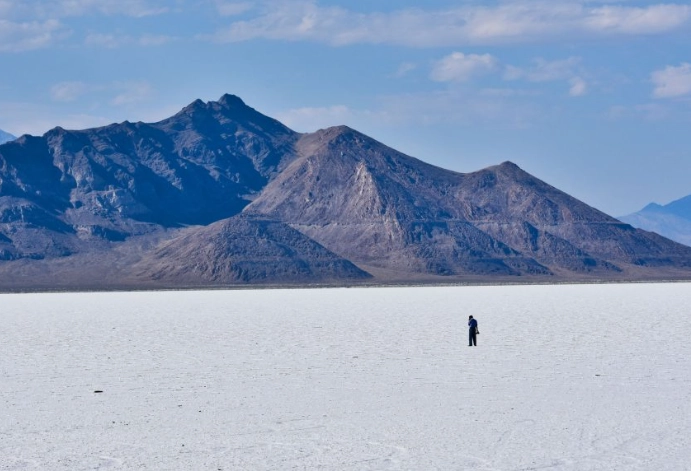
The Bureau of Land Management (BLM) oversees the area, and they have a handy page with current conditions and rules. Checking this before you go is crucial. Sometimes, after rain, the flats are covered in a thin layer of water and are closed to vehicles. Other times, it's dry and hard. The surface is delicate, so driving off the designated access roads is a big no-no. You'll see the tracks of people who ignored that rule, and it's pretty ugly—the damage can last for years.
Seeing the salt flats up close is free. Pulling off at the Bonneville Speedway rest area on I-80 is the easiest way. Just be prepared for the glare. Sunglasses are not a suggestion; they are a necessity.
More Than Just Salt: Ecology and Hidden Life
You look out at the Great Salt Lake Desert and think, "Nothing could possibly live here." You'd be dead wrong. This place is a masterclass in adaptation. It's an ecosystem built on extremes—extreme salt, extreme dryness, extreme temperature swings.
Along the edges of the salt flats, where a tiny bit of freshwater might seep in, you find salt-tolerant plants like pickleweed and saltgrass. These areas are critical for wildlife. Birds, in particular, are huge here. The Great Salt Lake is a vital stop on the Pacific Flyway, a migratory highway for millions of birds. Shorebirds like avocets and stilts wade in the briny waters, and the surrounding desert scrub provides nesting grounds. The Utah Division of Wildlife Resources has tons of information on the lake's critical bird habitats.
Then there are the mammals. You might spot pronghorn antelope in the distance, or kit foxes at dawn and dusk. Reptiles like the Great Basin gopher snake and the side-blotched lizard are experts at hiding from the sun. It's a subtle, quiet kind of life, but it's everywhere once you know how to look.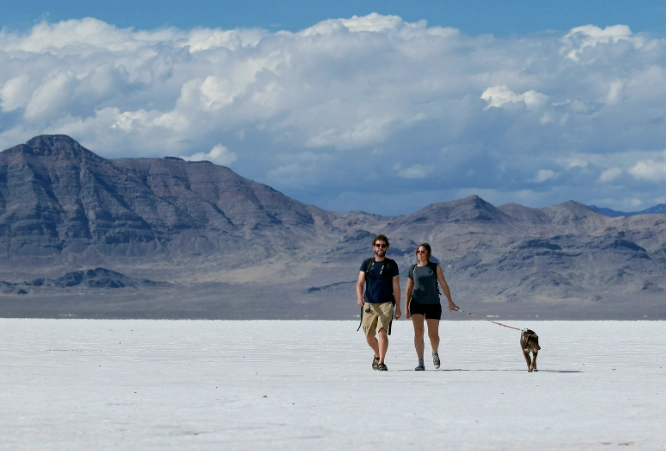
Planning Your Visit: A No-Nonsense Travel Guide
If you're adding the Great Salt Lake Desert to a Utah or Nevada road trip, here's the real talk on how to do it right and safely. This isn't a place to wing it.
When to Go (And When to Absolutely Avoid It)
Timing is everything. The sweet spot is late spring (April-May) and early fall (September-October). The temperatures are mild, and the skies are usually clear. Summer (June-August) is brutal. We're talking 100°F+ (38°C+) daily highs on the salt, with intense, relentless sun. Your car can overheat, and you can get dehydrated frighteningly fast. Winter can be cold and windy, and sometimes the flats are muddy. I made the mistake of going in late June once. Never again. The heat coming off that white surface was like an oven.
What to Pack: The Desert Survival Kit
Forgetting something here is more than an inconvenience; it's a risk. Here's your non-negotiable checklist:
- Water: Way more than you think you need. At least one gallon per person, per day. Keep extra in your car.
- Sun Protection: High-SPF sunscreen, a wide-brimmed hat, UV-blocking sunglasses, and long, light layers.
- Footwear: Closed-toe shoes. The salt crust can have sharp edges, and it will ruin your nice sneakers (trust me, I learned the hard way).
- Navigation & Communication: A paper map or offline GPS. Cell service is spotty to non-existent on most of I-80 through the desert and completely gone off the highway. Tell someone your route.
- Vehicle Preparedness: A full tank of gas (services are very spaced out), a spare tire, and jumper cables. Check your coolant levels.
Key Stops and Viewpoints
| Stop Name | Location (Nearest Milepost) | What You'll See & Why Stop | My Personal Take |
|---|---|---|---|
| Bonneville Salt Flats Rest Area | I-80, Exit 4 (near Wendover) | The classic, easy-access view of the salt flats. Pavement leads right onto the salt. Perfect for first-timers and photos. | It's crowded, but for a reason. The sheer accessibility is unbeatable. Get out, walk on the salt, feel the crunch. |
| Silver Island Mountains Backcountry Byway | Loop road starting at Exit 2 on I-80 | A 45-mile dirt road loop around dramatic mountains rising from the salt plain. Stunning 360° views. | This is where you get the epic, panoramic shots. Requires a high-clearance vehicle. Do NOT attempt after rain. |
| Knolls Recreation Area | South of I-80, near MP 50 | Sand dunes! A surprising area of rolling dunes right next to the salt flats. Popular for OHV use. | A fun contrast to the flat white. Kids (and adults) love running down the dunes. Can be very busy on weekends. |
| Great Salt Lake State Park (Southern Shore) | Near Magna, UT, off I-80 | Access to the lake itself, marina, and a sense of the lake's scale. Good birdwatching. | Gives context to the "lake" part of the Great Salt Lake Desert. The smell of the brine can be strong, fair warning. |
A word of caution about driving on the salt: Only do it where it's explicitly permitted (like the rest area access). The crust can look solid but hide deep, sticky mud underneath that will swallow a car whole. Tow bills out here are astronomical.
The Elephant in the Room: A Shrinking Lake and a Changing Desert
We have to talk about this. It's the most important thing happening in the region. The Great Salt Lake has been shrinking for decades due to water diversion for agriculture and cities, combined with a megadrought. In 2022, it hit a record low volume. This isn't just bad for the lake; it directly impacts the Great Salt Lake Desert ecosystem.
As the lake recedes, it exposes more of its lakebed. This new dry ground isn't benign. It's loaded with toxic metals like arsenic and mercury, deposited there over centuries from the surrounding mountains. When winds whip across the desert—which they do frequently—they pick up this toxic dust and create dangerous air pollution for the millions of people living along the Wasatch Front, including Salt Lake City. It's a full-blown public health and environmental crisis.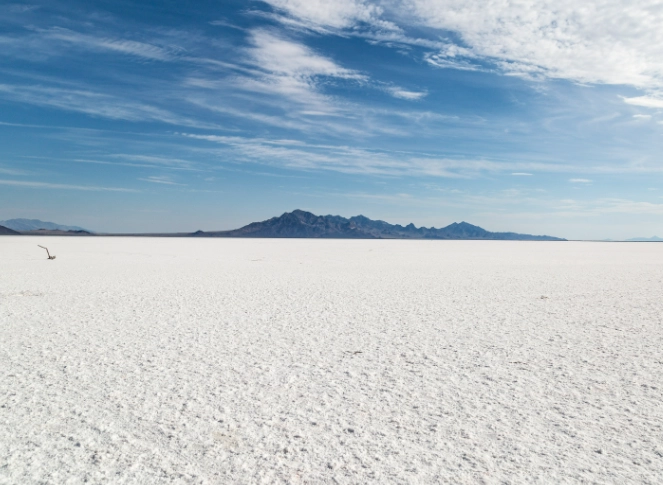
The state of Utah is aware. The Utah Department of Natural Resources maintains a dedicated page on the lake's future and conservation efforts. It's a complex issue with no easy fixes, involving water rights, agriculture, and urban planning. Visiting the Great Salt Lake Desert now feels different knowing this backdrop. That vast white expanse feels a little more fragile, a little more like a warning.
The future of the Great Salt Lake Desert is inextricably tied to the fate of the lake. It's a story still being written.
Answering Your Burning Questions (FAQ)
I get asked a lot of the same things about this place. Here are the straight answers.
Is it safe to walk on the Bonneville Salt Flats?
Generally, yes, when they are dry and hard. Stick to well-trodden areas near the rest area access. The crust is thick and solid there. Avoid any areas that look dark or damp, as they may be soft. And for heaven's sake, wear shoes. The salt is abrasive and can irritate your skin.
Why is the Great Salt Lake Desert so flat?
It's the bottom of that ancient lake, Lake Bonneville. When a huge, deep lake sits in one place for thousands of years, sediments settle evenly across the bottom. When the water vanished, it left behind this incredibly level, layered bed of clay, silt, and salt.
Can you collect salt from the flats?
Technically, collecting small amounts for personal use is usually tolerated on BLM land, but it's not encouraged. The salt is industrial-grade, not food-grade (it contains other minerals and potentially contaminants). It's also part of a fragile landscape. Taking a tiny vial as a souvenir is one thing; filling buckets is disruptive and against the spirit of "Leave No Trace."
What's the best time of day for photography?
Golden hour, without a doubt. The hour after sunrise and before sunset. The low angle of the sun casts long shadows and turns the white salt a gorgeous gold or pink. Midday light is harsh and flat, making the landscape look two-dimensional. At night, with no light pollution, the stargazing is phenomenal.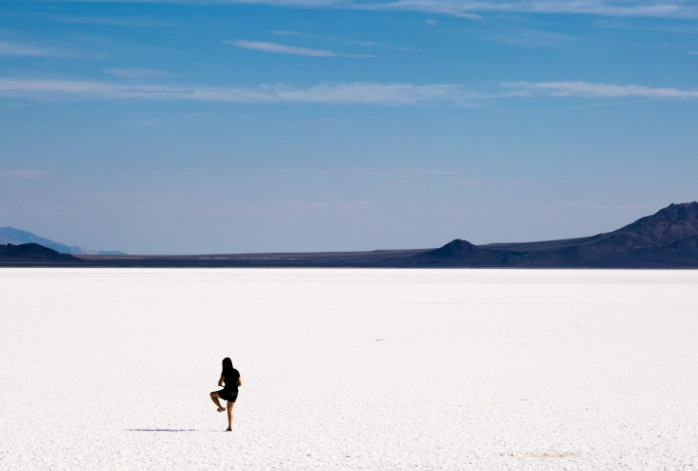
How is the Great Salt Lake Desert connected to the current dust problem?
Directly. The new dust source isn't the hard, crusty salt flats you visit. It's the vast areas of recently exposed lakebed around the edges of the shrinking lake, which are fine, loose silt. When the lake was higher, these areas were underwater. Now they're dry and become dust sources during wind events. The Great Salt Lake Desert, in its modern form, is literally expanding as the lake shrinks, and bringing new environmental challenges with it.
Final Thoughts: Respect the Silence
The Great Salt Lake Desert isn't a theme park. It doesn't care if you're there. It's a powerful, ancient, and increasingly vulnerable place. Its value isn't in rollercoasters or gift shops, but in its sheer otherworldliness, its silence that's so deep it rings in your ears, and its stark lesson about water in the West.
Go see it. Stand on the salt and feel small. But go prepared, go informed, and go lightly. Understand that the story of this desert is still unfolding, and we all have a stake in its next chapter. Whether you're a speed junkie dreaming of the Bonneville Speedway, a photographer chasing the perfect light, or just a curious traveler on I-80, the Great Salt Lake Desert will leave a mark on you. Let's make sure we leave only the gentlest of marks on it.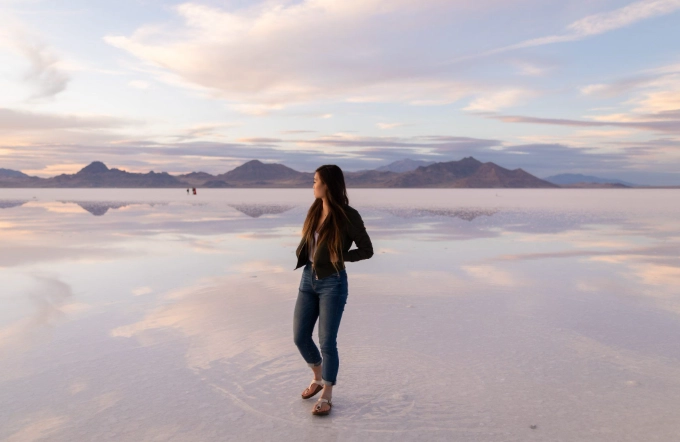
Reader Comments