Explore the Desert
Let's be honest. When you think of Arizona, you probably picture a vast, sun-baked landscape dotted with those classic, arm-raised cactus figures. I did too, before I moved here. But after spending years hiking the trails around Tucson, Phoenix, and up near Flagstaff, I realized how ridiculously simplistic that picture was. The variety is staggering. It's not just one type of cactus in Arizona; it's a whole cast of characters, each with its own personality, its own survival tricks, and its own unique look.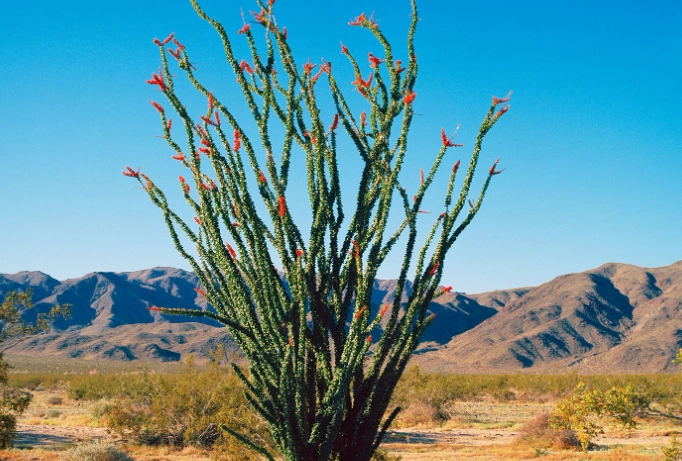
That initial curiosity—"What are the types of cactus in Arizona?"—opens a door to understanding the entire Sonoran Desert (and bits of others). It's not just about putting a name to a spiky thing. It's about reading the landscape. Knowing what you're looking at tells you about the soil, the elevation, the water history, and the animals that call that cactus home. It turns a boring walk into a treasure hunt.
I remember my first major hike in the Superstition Mountains. I pointed at a tall, branching cactus and confidently called it a Saguaro. My friend, a lifelong Arizonan, just chuckled. "That's a Tree Cholla," he said. "Totally different family." I felt a bit silly, but it was a great lesson. Identification matters. Some cacti are gentle giants, others are viciously barbed. Some offer sweet fruit, others... well, you just don't touch them.
This guide is the one I wish I had when I started. We'll go beyond the postcard image and dig into the real, diverse world of Arizona's cacti. We'll cover the famous ones, the common ones you'll see in suburbs, and a few quirky specialists. I'll even warn you about the ones that have left me picking spines out of my shoes (and legs) for days. Let's get into it.
The Absolute Classics: Cacti That Define Arizona
These are the rock stars. The ones that appear on license plates, in movie backdrops, and in every tourist's photo album. If you only learn a few types of cactus in Arizona, start here.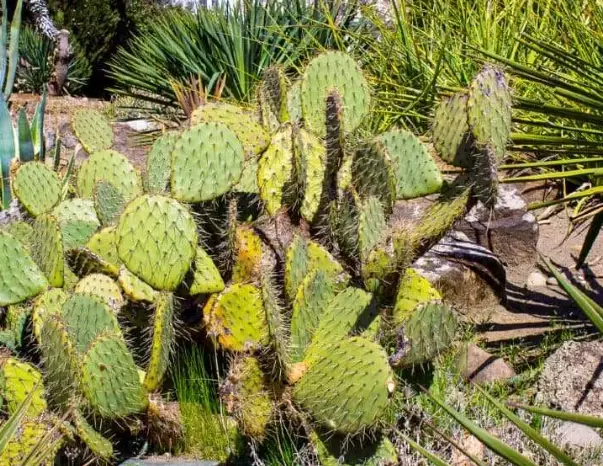
The Saguaro: More Than Just Arms
The Saguaro (Carnegiea gigantea) is the undisputed king. It's so iconic that its image is practically synonymous with the American West. But there's a lot of misunderstanding around it.
First, they grow incredibly slow. A 10-year-old Saguaro might only be 2 inches tall. Those majestic, arm-splayed giants you see? They're often 75 to 150 years old. They don't even start growing their characteristic arms until they're about 50-70 years old. So, a Saguaro without arms isn't a baby—it's a middle-aged adult.
Their distribution is also specific. You'll find dense forests of them around Tucson and in the western parts of the Sonoran Desert, but they're absent from higher elevations and the eastern parts of the state. They're a sure sign you're in the heart of the Sonoran Desert.
Ecologically, they're apartment buildings. Gila woodpeckers and flickers carve out nest holes in their flesh. When the birds abandon the holes, owls, bats, and even bees move in. The white, waxy flowers that crown the Saguaro in late spring become ruby-red fruit in summer, a crucial food source for birds and desert animals (and historically, for the Tohono O'odham people, who make a syrup from it).
Seeing a Saguaro silhouetted against a purple sunset never gets old. But remember, they're protected by law. You can't touch, move, or harm them on public or private land without serious permits.
Barrel Cactus: The Friendly Giant (Mostly)
If the Saguaro is the king, the Barrel Cactus is the stout, sturdy knight. Several species fall under this common name, but the most widespread in Arizona is the Fishhook Barrel Cactus (Ferocactus wislizeni). The name "fishhook" comes from the shape of its central spines, which are indeed curved like a hook.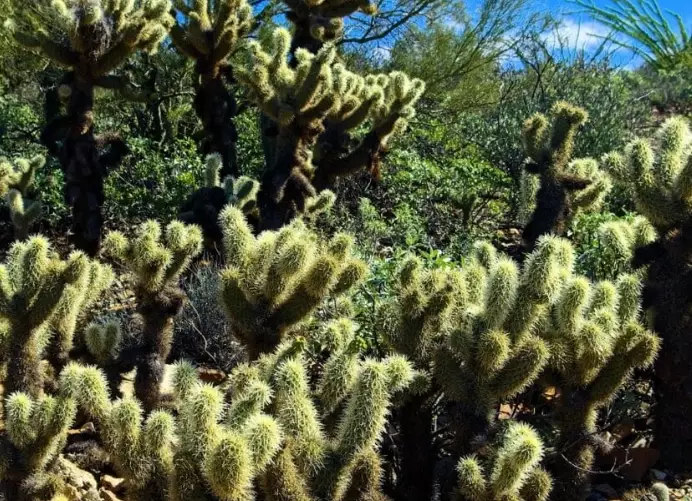
You can identify them by their cylindrical, ribbed shape—they look like a big, spiky barrel planted in the ground. They often lean towards the southwest, earning them the nickname "compass barrel." This lean is thought to be a way to maximize sun exposure or to protect the growing tip from the harsh afternoon sun.
They're surprisingly helpful. In a true survival situation, the pulp inside can be a source of water, though it's said to be acidic and might cause stomach upset—definitely not a first resort. The real treat is the yellow or orange flowers that bloom in a ring around the top in summer, followed by yellow, pineapple-shaped fruit that persists for months.
They seem friendlier than the Chollas (we'll get to those nightmares), but those fishhook spines are no joke. They're designed to catch and hold, so a brush against one is a painful lesson in attention.
The Prickly Pear Family: Arizona's Versatile Survivors
This group is huge. When people ask about types of cactus in Arizona, they often forget just how many variations of prickly pear there are. They're the workhorses of the desert.
Prickly pears (genus Opuntia) are easily recognized by their flat, pad-like segments. These pads are actually modified stems. They're masters of propagation—a pad that breaks off can easily root and grow into a new plant. This also means they can form dense, impenetrable thickets.
They have two types of spines: the large, fixed ones you see, and the tiny, hair-like glochids. The glochids are the worst. They detach at a touch, bury themselves in your skin, and are maddeningly difficult to remove. Always use extreme caution (and preferably tongs) around any prickly pear.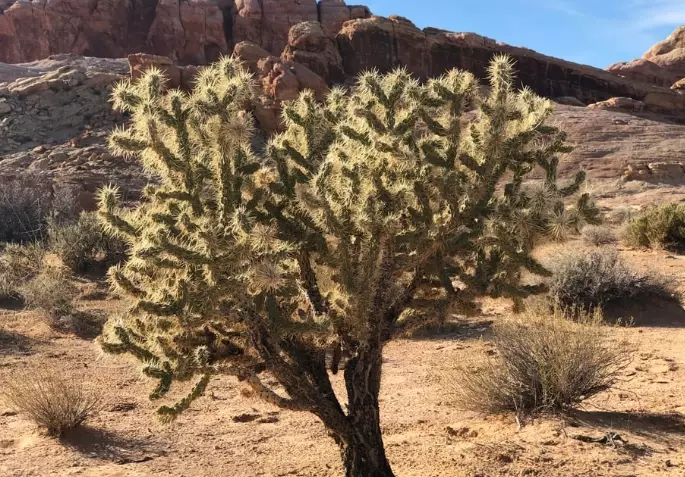
| Common Name | Scientific Name | Key Identifying Features | Where You'll See It |
|---|---|---|---|
| Engelmann's Prickly Pear | Opuntia engelmannii | Large, blue-green pads; yellow flowers turning orange-red; tall, sprawling form. | All over the Sonoran Desert, common in rocky slopes and flats. |
| Beavertail Cactus | Opuntia basilaris | Blue-gray, oval pads with no large spines (but plenty of glochids!). Vibrant magenta flowers. | Higher deserts, often in the Mojave transition zones and northern Arizona. |
| Santa Rita Prickly Pear | Opuntia santa-rita | Stunning purple or lavender pads, especially in cold/dry weather. Yellow flowers. | Southern Arizona, a favorite in xeriscape gardens for its color. |
The fruits, called "tunas," are edible and delicious, used in jams, candies, and drinks. The pads, or "nopales," are a staple in Mexican cuisine, often grilled or added to eggs. But harvesting requires skill to avoid the glochids.
The Chollas: Beautiful But Treacherous
Ah, the Chollas. My personal nemesis. If you want to know which types of cactus in Arizona command the most respect (and fear), this is the group. They belong to the genus Cylindropuntia, closely related to prickly pears but with cylindrical, jointed stems.
Their spines are uniquely dangerous. They're covered in a paper-like sheath, and the tip is barbed like a fishhook. The connection between segments is also incredibly weak. The slightest touch can cause a whole segment to break off and attach itself to you. The segment then seems to jump onto your leg or arm—hence the nickname "jumping cholla." It doesn't actually jump, of course, but the effect is startlingly convincing.
I learned this the hard way on a trail run near Scottsdale. I veered a little too close to what looked like a fuzzy, golden cactus. Next thing I knew, a golf-ball-sized segment was hanging from my calf. The pain was sharp, and removing it required a comb and a lot of swearing. The barbs held on like tiny grappling hooks.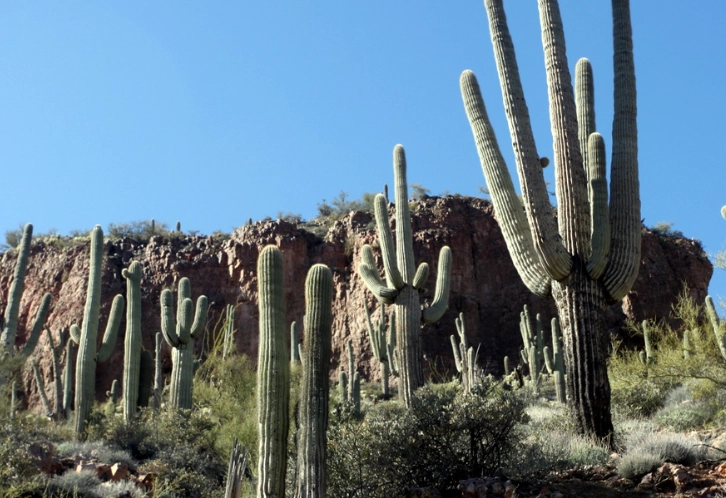
Teddy Bear Cholla: The Deceptive One
The Teddy Bear Cholla (Cylindropuntia bigelovii) is the most infamous. From a distance, its dense, golden-spined segments give it a soft, fuzzy, and cuddly appearance—hence the cute name. It's a trap. This is arguably the most "jumpy" of all. They form stunning, dense forests in places like the Joshua Tree National Park area and parts of central Arizona. The light shining through a forest of them is magical, but walk carefully.
Chain Fruit Cholla / Jumping Cholla
This one (Cylindropuntia fulgida) is known for hanging chains of green fruit that persist for years, often sprouting new flowers and fruit from old fruit—a process called "vivipary." These dangling chains are a dead giveaway. It's another major "jumping" offender.
Despite their hostility, chollas are vital. Their dense, spiny thickets provide excellent protection for bird nests and small mammal burrows. The wood that remains after they die is incredibly hard and beautifully patterned, often used for crafts.
Other Must-Know Arizona Cacti
Beyond the headline acts, Arizona's desert stages are full of fascinating supporting players. Here are a few more types of cactus in Arizona you're likely to encounter.
Hedgehog Cactus
These are the charming, smaller cacti that put on the most spectacular spring flower shows. Several species (genus Echinocereus) fall under this name. They form small clumps of short, cylindrical stems covered in spines, resembling a hedgehog (hence the name).
In spring, they crown themselves with large, brilliantly colored flowers—fiery reds, vibrant magentas, and shocking pinks. The Strawberry Hedgehog Cactus (Echinocereus engelmannii) is common and produces edible, strawberry-flavored fruit. They're a favorite for desert gardeners because of their manageable size and stunning blooms.
Pincushion Cactus
These are the tiny, cute ones. Genus Mammillaria. They're often globular or slightly cylindrical, covered in a dense array of spines that can be straight or hooked. They usually grow singly or in small clusters close to the ground. Their flowers are small but delicate, forming a ring or crown around the top of the cactus. You have to get down on your knees to appreciate them, but they're a delightful find on a hike.
Organ Pipe Cactus
This one (Stenocereus thurberi) is a close relative of the Saguaro but with a key difference: instead of a main trunk with a few arms, it grows multiple stems from ground level, all curving slightly upwards, resembling the pipes of a church organ. It's more heat-sensitive than the Saguaro and its range in the U.S. is limited primarily to the very southern part of Arizona, in the Organ Pipe Cactus National Monument. Seeing a stand of them is a special treat, indicating you're in a uniquely warm part of the Sonoran Desert. The National Park Service has great resources on this unique cactus on their Organ Pipe Cactus National Monument website.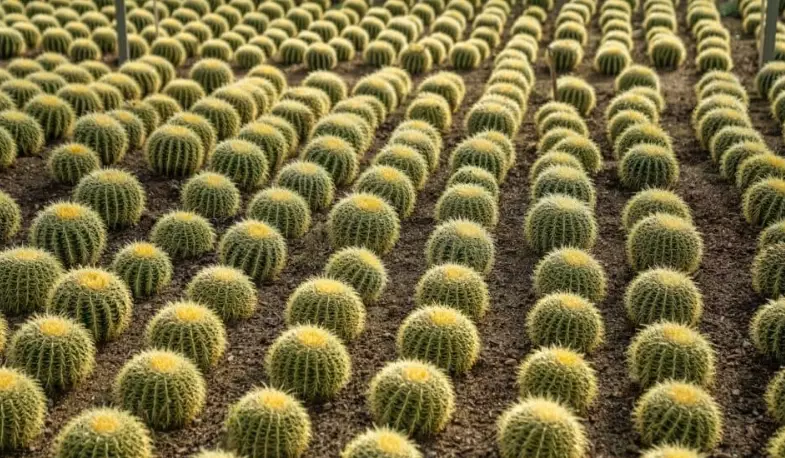
Senita Cactus
The "old one." This cactus (Lophocereus schottii) looks a bit like a smaller, messier organ pipe cactus. Its defining feature is on the top of its mature stems: a dense growth of long, hair-like, gray spines that look like a shaggy beard or the hair of an old man ("senita" means "old one" in Spanish). It's another southern Arizona specialist. The Arizona-Sonora Desert Museum's online guide provides excellent details on its ecology.
How to See and Identify These Cacti Safely
Knowing the types of cactus in Arizona is one thing. Knowing how to enjoy them without a trip to the urgent care clinic is another.
First, stay on the trail. This protects the fragile desert soil crust and keeps you away from the business end of low-growing cacti. Second, look with your eyes, not your hands. This seems obvious, but the textures are so intriguing that people are tempted to touch. Don't.
Carry a small pair of tweezers or a fine-toothed comb in your first-aid kit specifically for glochids. For larger spines, clean the area and use tweezers to pull straight out. If a spine breaks off deep in the skin or causes significant swelling, seek medical attention—spines can cause infections.
The best time to see cacti, especially in bloom, is spring (March-May). After a good winter rain, the desert explodes with color. Late April is often peak. Many botanical gardens, like the Desert Botanical Garden in Phoenix or the Tucson Botanical Gardens, have excellent, labeled collections where you can learn identification in a safe, controlled environment. The University of Arizona's Arizona Meteorological Network (AZMET) can give you a sense of the climate that drives these bloom cycles.
Answering Your Cactus Questions
Learning the different types of cactus in Arizona completely changes how you see the desert. It stops being a monotonous, prickly sea and becomes a diverse, living community. You start to notice the subtle differences: the purple hue of a Santa Rita pad after a cold snap, the precise angle of a barrel cactus's lean, the terrifying golden glow of a teddy bear cholla at dusk.
It gives you stories to tell. Now, when I see a Saguaro, I think of the century it took to grow. When I see a cholla, I give it a wide, respectful berth and remember my painful lesson. The desert is harsh, but it's not barren. It's packed with life that's figured out how to not just survive, but thrive in extreme conditions. These cacti are the ultimate proof of that.
So next time you're in Arizona, look beyond the arms. Get down low and check out a pincushion. Admire the shocking pink of a hedgehog bloom. And for heaven's sake, watch your step around anything that looks fuzzy and golden.
Comments