Quick Guide to Joshua Tree
- Getting to Know the Landscape: More Than Just One Tree
- Hitting the Trails: From Leisurely Walks to All-Day Adventures
- The Camping Conundrum: How to Secure Your Spot Under the Stars
- Capturing the Magic: A Photographer's Playbook
- Navigating the Practicalities: Your Survival Guide
- Answering Your Burning Questions (The FAQ)
- Wrapping It Up: Your Adventure Starts Here
Let's be honest. When you first see a picture of a Joshua tree, it looks... odd. Spiky, twisted, like something Dr. Seuss dreamed up after a long day. I thought the same thing. But then you go there. You stand in that quiet desert under a sky so big it feels like a different planet, with those strange, wonderful trees all around you, and it clicks. This place is magic. It's not just a park; it's an experience that gets under your skin.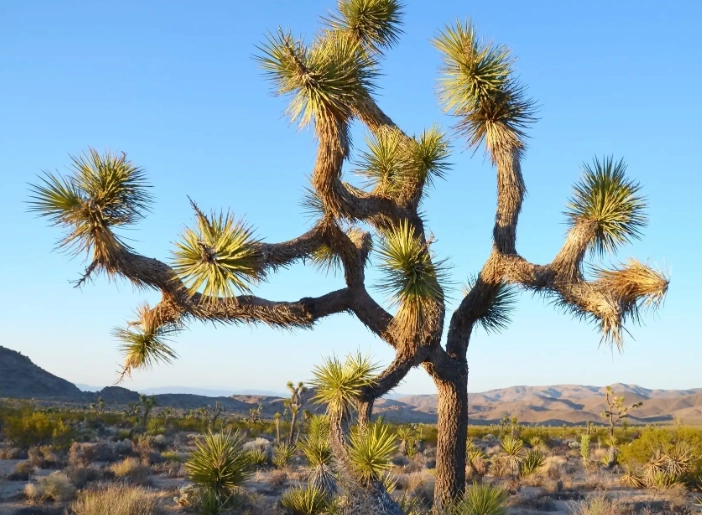
I've lost count of my trips to Joshua Tree National Park. I've been scorched by the midday sun, frozen under a blanket of stars, gotten lost (briefly, don't tell anyone) on a lesser-known trail, and spent hours just watching the light change on the rocks. This guide isn't a dry list of facts. It's everything I wish I'd known before my first visit, packed with the gritty, practical details and the sheer wonder that makes this park special. We're talking hiking, camping under those insane stars, finding the best spots for that perfect photo, and navigating the park's quirks.
Quick Reality Check: Joshua Tree is hugely popular. That pristine solitude you see in photos? You might have to work a bit for it, especially on weekends. But it's absolutely worth it. Planning is no longer a suggestion; it's a requirement.
Getting to Know the Landscape: More Than Just One Tree
First things first. The park is named after the Yucca brevifolia, the Joshua tree. But the park is a tale of two distinct desert ecosystems colliding. The western part, higher in elevation, is the Mojave Desert—home to the dense, famous Joshua tree forests. Drive east, and you descend into the lower, drier, and hotter Colorado Desert, characterized by creosote bushes, ocotillos, and fewer Joshua trees. This split personality dictates everything—what you'll see, when you should go, and what the weather will feel like.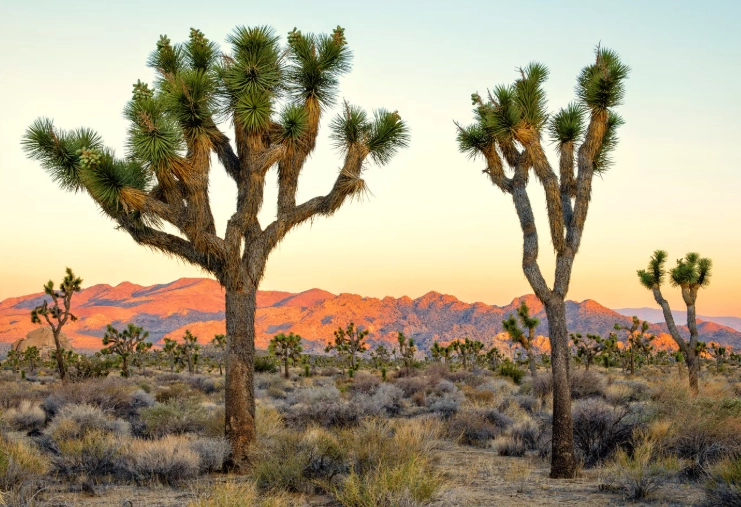
The other star of the show? The rocks. Giant, piled heaps of monzogranite, sculpted by millennia of wind and water. They create a playground for climbers, a maze for hikers, and dramatic silhouettes for photographers. Places like Jumbo Rocks and the Wonderland of Rocks aren't just stops; they're destinations where you can easily spend half a day exploring nooks and crannies.
When to Visit: Timing is Everything
This is the most critical decision you'll make. Get it wrong, and your trip can be miserable. The desert doesn't mess around.
- Prime Time (October to April): This is the sweet spot. Days are mild (60s-70s°F), nights are crisp. Perfect for hiking and camping. This is also when everyone shows up. Expect crowds, especially around holidays.
- Shoulder Seasons (Late April/May & September): Can be hit or miss. May and September can still see very hot days, but mornings and evenings are pleasant. A good option if you want slightly fewer people and don't mind the warmth.
- Summer (June-August): Only for the well-prepared and heat-tolerant. Temperatures routinely soar above 100°F (38°C+). Hiking is a pre-dawn or post-sunset activity. If you go, hydration isn't a joke—it's a survival tactic. The upside? You'll have the trails largely to yourself.
My Personal Take: I made the mistake of a mid-day hike in late May once. Just a "short" loop. The sun felt like a physical weight, and I drained my 3-liter water bladder frighteningly fast. I learned my lesson. Respect the desert.
Hitting the Trails: From Leisurely Walks to All-Day Adventures
Hiking is the best way to connect with Joshua Tree. The trails range from paved, wheelchair-accessible paths to rugged, unmarked scrambles. Here’s a breakdown of the classics and a few hidden gems.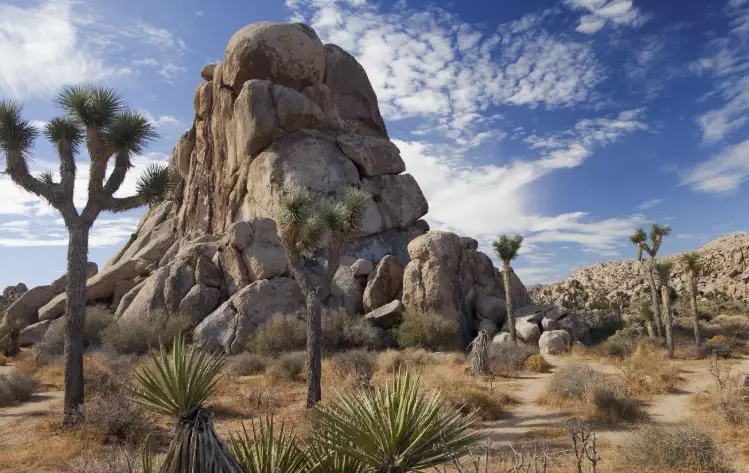
Top Hikes for First-Timers & Families
These are the iconic, must-do walks that deliver huge scenery for minimal effort.
| Trail Name | Distance & Difficulty | What You'll See & Why It's Great | My Tip |
|---|---|---|---|
| Hidden Valley | 1 mile loop / Easy | A legendary loop through a secluded "valley" rumored to have been used by cattle rustlers. Surrounded by towering rock walls, it feels like a secret garden of Joshua trees and boulders. | Go early or late. This is the park's most popular trail, and the small parking lot fills fast. The light for photography is also best then. |
| Barker Dam | 1.3 mile loop / Easy | A nature trail leading to a small, human-made reservoir. Often has water, attracting birds. Look for ancient petroglyphs on the rocks near the dam (please don't touch!). | Combine this with the Hidden Valley trail, as they're close together. The water here is a rare sight in the desert. |
| Skull Rock | 1.7 mile loop / Easy | Starts right at the famous skull-shaped rock formation on the roadside. The loop trail behind it winds through a fantastic boulder-strewn landscape. | Don't just snap a photo of Skull Rock from the road. The trail behind it is the real reward and is often less crowded. |
For the More Ambitious Hiker
Ready to stretch your legs and escape the main crowds? These offer deeper immersion.
- Ryan Mountain: A 3-mile out-and-back with a relentless 1,000-foot climb. The payoff? The single best 360-degree panoramic view in the entire park. You can see both desert ecosystems from the top. It's a workout, but absolutely worth every step.
- Lost Horse Mine Loop: A 6.5-mile loop that combines natural beauty with history. You'll hike to the site of the park's most productive gold mine, with the old mill and headframe still standing. It gives you a sense of the tough lives of the people who lived here long before it was a park.
- 49 Palms Oasis: A 3-mile round-trip trek starting outside the park's north boundary. The trail climbs a ridge and then descends into a canyon holding a true desert oasis—a cluster of fan palms around a spring. It feels like a discovery.
Ryan Mountain at sunset is my personal favorite. Watching the shadows stretch across the entire park as the sky turns orange and purple... it's a religious experience for someone who isn't religious. Just bring a headlamp for the hike down.
The Camping Conundrum: How to Secure Your Spot Under the Stars
Camping in Joshua Tree is the definitive way to experience its magic—the profound quiet, the ink-black sky, the sheer number of stars. But it's also the most competitive part of your trip planning.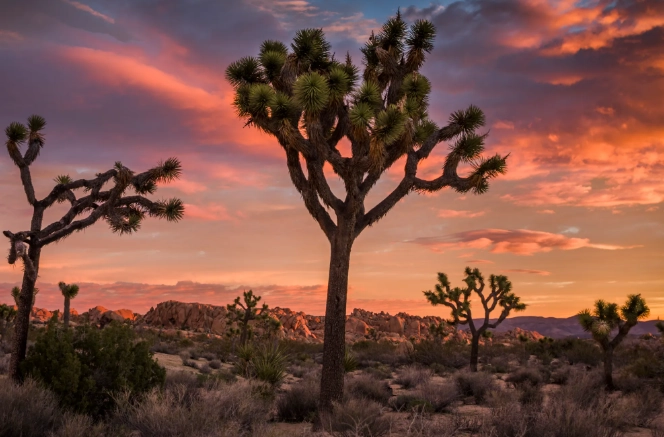
Developed Campgrounds: The Bookable Ones
These have pit toilets, picnic tables, and fire rings (check for fire restrictions!). Water is not available at most sites—you must bring all you need. Reservations are released 30 days in advance on Recreation.gov and vanish within minutes, especially for weekends.
Top picks: Jumbo Rocks (for its incredible boulder scenery), Hidden Valley (central location), and Ryan Campground (great for stargazing).
First-Come, First-Served & The Backup Plan
A few campgrounds (like White Tank or Belle) don't take reservations. To get a spot, you need to arrive early—think Thursday for a weekend spot. My strategy? Have a backup plan. The town of Twentynine Palms just north of the park has several hotels and private campgrounds like Hipcamp properties, which can be a lifesaver.
Backcountry Camping: For the Self-Sufficient
This is how you find real solitude. You register for free at one of the backcountry boards, hike at least one mile from any road, and set up camp. No facilities. You pack out everything. It's not for beginners, but for those who know what they're doing, it's the ultimate Joshua Tree experience. The park's official backcountry page is essential reading.
Capturing the Magic: A Photographer's Playbook
Joshua Tree is a photographer's dream, but it's also a challenge. The light is harsh for most of the day. The key is timing.
The Golden Hours & Blue Hour
The hour after sunrise and before sunset—the golden hour—is pure magic. The low-angle light paints the Joshua trees and rocks in warm, long shadows. The "blue hour," just after sunset, turns the sky a deep indigo, perfect for silhouettes of those iconic, spiky forms.
Best spots for sunset: Keys View (panoramic), anywhere in the Hidden Valley area, or the side of Park Boulevard near the Cholla Cactus Garden.
Best spots for sunrise: The rocks around Jumbo Rocks campground, or facing east from the Cap Rock area.
Beyond the Iconic Tree Shot
Look for details: the texture of the granite, a lone cactus backlit by the sun, the twisted shape of an old, weathered Joshua tree limb. At night, if you have a tripod, the Milky Way arches over the rock formations. The park's night sky program page has great info on astrophotography.
My Go-To Photo Gear for Joshua Tree: A wide-angle lens (16-35mm) for landscapes and stars. A mid-range zoom (24-70mm) for more intimate compositions. A sturdy tripod—the wind can howl. And lots of lens cloths; the dust is everywhere.
Navigating the Practicalities: Your Survival Guide
Water, Water, and More Water
I can't stress this enough. The park recommends drinking at least one gallon (4 liters) of water per person, per day. Double that if you're hiking in summer. There are only a few water fill stations (at the visitor centers and the Black Rock/Cottonwood campgrounds). Assume you will have no access to water inside the park. I carry two large reusable jugs in my car at all times.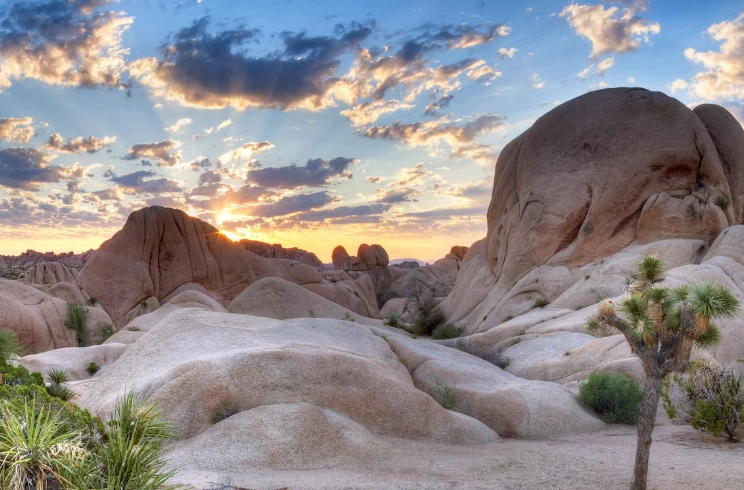
Getting Around and Entrance Fees
The park is huge. Driving from the West Entrance to the Cottonwood Entrance near I-10 can take over an hour. Gas up before you enter; there are no gas stations inside. The entrance fee is $30 per vehicle (valid for 7 days). If you plan to visit more national parks in a year, the America the Beautiful Annual Pass ($80) is a fantastic deal.
Leave No Trace, Seriously
This isn't just a nice idea. The desert ecosystem is fragile and recovers slowly. Stay on designated trails. Don't stack rocks (cairns). Pack out all trash—including toilet paper if you're in the backcountry. And for the love of all that is good, do not carve your name into the rocks or trees. Leave it as you found it.
Answering Your Burning Questions (The FAQ)
Wrapping It Up: Your Adventure Starts Here
Joshua Tree National Park is more than a checklist of sights. It's a feeling. It's the crunch of gravel under your boots, the smell of creosote after a rare rain, the awe of a sky so full of stars it looks fake. It demands respect—for its climate, its fragility, its sheer scale.
Plan meticulously for the practical stuff (water, campsites, permits). Then, once you're there, let go of the itinerary for a bit. Get lost on a safe trail. Find a quiet rock to sit on. Watch a Joshua tree silhouette against a twilight sky. That's when you'll understand why people keep coming back. It's not just a park you visit; it's a place that stays with you.
Now, go check the campsite reservations, fill up your water jugs, and get ready. Your desert playground is waiting.
Comments